

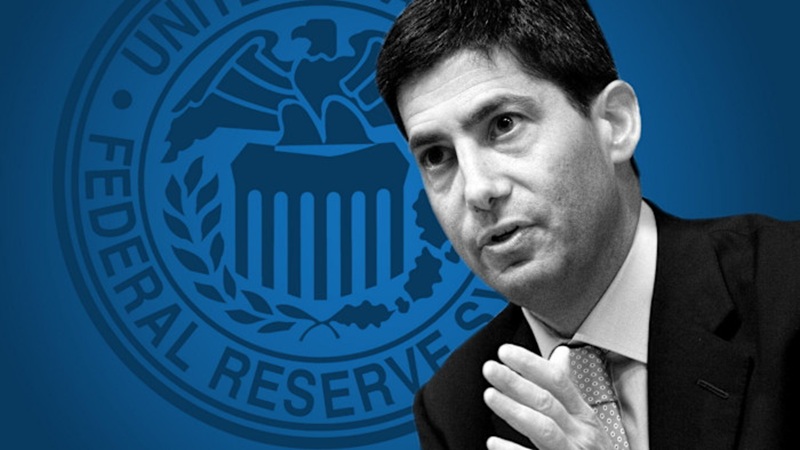
Goldman Sachs has effectively redrawn the Federal Reserve’s monetary policy timeline, now expecting interest rates to remain unchanged through 2026 and for the first rate cuts to be delayed until 2027.
The revision marks a sharp departure from earlier market expectations that the Fed would begin easing in 2026. Instead, Goldman now sees two quarter-point cuts in 2027, in June and December, replacing its prior forecast of reductions beginning late 2026.
The bank’s recalibration follows a stronger-than-expected U.S. employment report, which supported the view that the labor market is still operating above equilibrium.
Register for the next Tekedia Mini-MBA.
Register for Tekedia AI in Business Masterclass.
Join Tekedia Capital Syndicate and co-invest in great global startups.
Buoying the argument is a simple but consequential shift: the U.S. economy is not slowing in a way that forces the Fed’s hand. Hiring remains steady, wage growth has not collapsed, and consumer demand has shown persistence despite the highest interest rates in decades. In that environment, Goldman argues, policymakers have little incentive to ease prematurely.
“The resilient activity and employment data also lower the ?bar for a rate hike, less because they suggest a ?risk of overheating than because a stronger starting point for the economy reduces the ?risk ?that a hike could end up looking like a costly mistake,” Goldman said in a note.
Inflation dynamics remain the second constraint. The bank highlights multiple overlapping pressures that complicate the disinflation path: tariff-related cost pass-throughs, elevated energy prices tied to the Iran-linked geopolitical tensions, and lingering supply-chain fragilities. Each factor independently might be manageable, but together they create what Goldman views as a prolonged inflation “stickiness” problem rather than a clean return to target.

Energy markets are a particularly important variable. Oil prices have repeatedly reacted to developments in the Middle East, including disruptions linked to shipping routes and the Strait of Hormuz. Even short-lived spikes feed directly into headline inflation and risk-altering inflation expectations, something the Fed has been especially cautious about since the post-pandemic price surge.
Goldman’s note places significant weight on core PCE inflation, the Fed’s preferred gauge. The bank argues that policymakers will wait for a sustained convergence toward the 2% target before considering easing. That implies not just declining inflation prints, but confidence that price stability is durable across both goods and services components of the economy.
The AI’s Growing Impact
A more unusual element in Goldman’s assessment is its treatment of artificial intelligence-driven investment. The firm suggests that part of the current strength in economic activity may be inflated by unusually large and concentrated capital spending tied to AI infrastructure. That includes hyperscale data centers, semiconductor manufacturing, networking equipment, and power systems.

The AI buildout has become one of the most powerful demand engines in the global economy, driving revenue growth for firms such as Nvidia, Microsoft, Amazon, Alphabet, and Meta. It has also supported industrial activity across semiconductors, construction, and energy infrastructure. However, Goldman warns that if this cycle moderates, it could reveal underlying demand that is less robust than current headline data suggests.
In that sense, AI is functioning as both a growth driver and a statistical distortion factor. It boosts GDP, employment in specific sectors, and capital expenditure, while potentially masking softer consumption or investment elsewhere in the economy.
The labor market remains the Fed’s strongest justification for staying on hold. Historically, rate cuts have followed clear deterioration in employment conditions. That signal is absent today. Instead, hiring momentum suggests firms are still adjusting to structural labor shortages rather than preparing for downturn conditions.
This resilience creates a policy dilemma. A strong labor market supports growth but also risks keeping wage inflation elevated, particularly in the services sectors where labor costs are a dominant input. For the Fed, this reduces the urgency of easing and increases the risk that cutting too early could reignite inflation pressures.
Goldman also notes that while rate hikes are not its base case, the probability has edged higher than before. That subtle shift reflects a more uncertain macro environment where upside inflation surprises are no longer viewed as remote. It does not imply imminent tightening, but it signals that policy risk is no longer one-directional.
The broader market context supports Goldman’s reassessment. Other major institutions, including Nomura, have also pushed back expectations for rate cuts, reflecting a growing consensus that monetary easing will be slower and more conditional than previously assumed. Treasury yields remain elevated, indicating that investors are pricing in a prolonged period of restrictive policy rather than an imminent pivot.
Analysts believe this outlook carries important implications for the Federal Reserve. This is because extended high rates tend to favor sectors with strong cash flow visibility and structural growth drivers, while compressing valuations in rate-sensitive industries such as real estate and speculative technology. It also increases the cost of capital for leveraged firms and could slow deal activity in private equity and M&A markets.
At the same time, it bolsters a bifurcated equity environment: companies tied to AI infrastructure, energy systems, and industrial capacity expansion continue to benefit from structural investment cycles, while more cyclical or rate-dependent segments face tighter conditions.
Ultimately, Goldman’s revised forecast is less about a single economic variable and more about convergence. Strong employment, persistent inflation risks, geopolitical energy volatility, and AI-driven capital expenditure are all pointing in the same direction: an economy that is not yet ready for monetary easing.
Economists note that it translates into a familiar but uncomfortable position. The longer the economy remains resilient, the longer policy may need to stay restrictive, even as markets continue to price in relief that keeps getting pushed further into the future.