

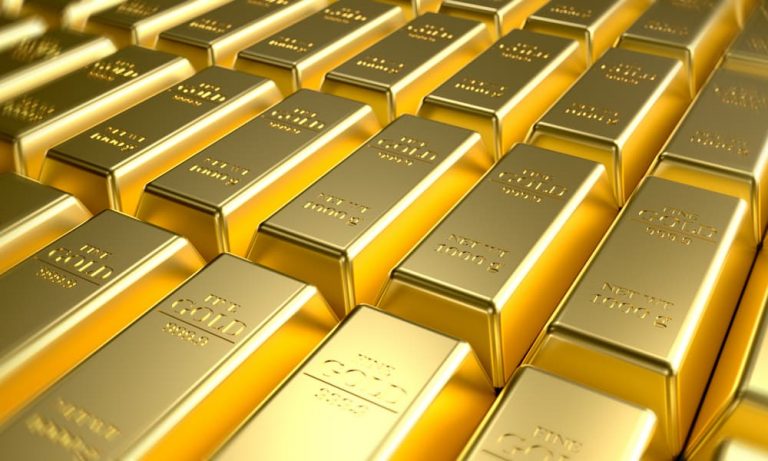
Gold is no longer moving through this market as a quiet insurance policy. At roughly $4,390 an ounce, the metal remains dramatically above where it began its latest cycle, even after retreating from its January peak.
Yet the more important story is not the distance gold has already travelled. It is whether the forces behind the rally can generate another wave of demand.
J.P. Morgan remains constructive on that possibility. Its latest research expects gold to average around $6,000 an ounce during the fourth quarter of 2026, with the bank projecting prices could move toward $6,300 in 2027.
Register for the next Tekedia Mini-MBA.
Register for Tekedia AI in Business Masterclass.
Join Tekedia Capital Syndicate and co-invest in great global startups.
That outlook is not based on a single catalyst. It rests on a combination of central-bank accumulation, geopolitical fragmentation, inflation risks, fiscal concerns and continued diversification away from traditional reserve assets.
That distinction matters because gold’s next leg higher would require more than momentum. It would require capital. Central banks have already demonstrated how powerful structural demand can become.
According to J.P. Morgan, central banks accumulated gold at an average pace of roughly 225 metric tons per quarter between 2021 and 2025—about twice their average quarterly purchases during 2016–2020. Even though officially reported purchases slowed at the beginning of 2026.

Estimates based on broader market flows suggest underlying central-bank demand remained considerably stronger. The private-investor market presents another potential source of demand. Gold occupies a relatively small position in many conventional portfolios.
That means investors do not necessarily need to abandon stocks, bonds or cash for gold prices to receive a meaningful boost. A modest increase in portfolio allocations across millions of investors could translate into substantial additional demand.
This is where the supply equation becomes important. Gold production cannot respond instantly to higher prices. New mines require exploration, permitting, financing and years of development. Existing mines also face geological and operational constraints.

Consequently, when investment demand accelerates faster than physical supply can adjust, prices can become the mechanism through which the market balances itself. But the current environment also contains an important counterweight.
Gold does not generate income. When Treasury yields rise and the dollar strengthens, investors can become less willing to hold an asset whose return depends entirely on price appreciation.
Reuters reported on September 18 that the Federal Reserve had raised its policy rate to 3.75%-4%, while traders were pricing a meaningful possibility of another increase in October. Those conditions can create pressure on bullion.
That explains why gold’s path toward J.P. Morgan’s forecast is unlikely to be linear. The metal is effectively caught between two powerful forces: rising structural demand for a scarce monetary asset and tighter financial conditions that increase the opportunity cost of holding it.
The outcome will depend on which force becomes dominant. If central banks continue accumulating, geopolitical uncertainty remains elevated and private investors gradually increase their gold exposure, the demand equation could tighten considerably.
If yields remain high and the dollar strengthens, however, gold could face further periods of consolidation or correction. The $6,000 projection, therefore, should not be treated as a guaranteed destination. It is a scenario built around assumptions about monetary policy, institutional demand and global diversification.
What makes the market fascinating is that gold does not need every investor to become bullish. It only needs marginal capital to keep moving toward an asset whose supply cannot quickly expand. That is where the next repricing could begin.