

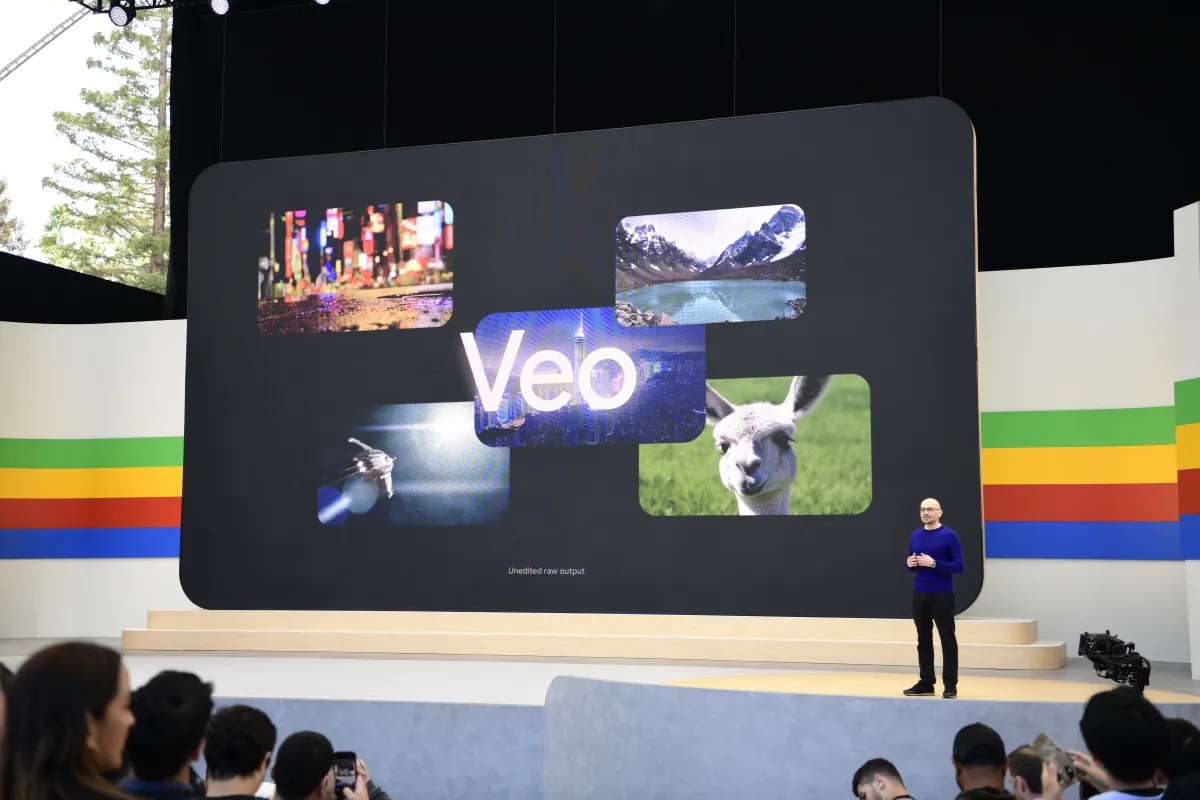
Google is expanding the reach of its artificial intelligence tools by bringing its latest video-generation model, Veo 3, to Google Photos, allowing U.S. users to transform still images into short video clips.
The new capability is rolling out on the app’s Create tab, positioning one of Google’s most widely used consumer products as a showcase for its most advanced AI models.
Google Photos already supports video generation through its “Photo to video” feature, but that function relies on the older Veo 2. The company says Veo 3 will provide noticeably higher-quality video, representing a step-change in realism and detail. It also underscores how Google is leveraging its 1.5 billion monthly active users on Photos (as of May 2025) to bring its cutting-edge AI work directly to consumers — a way of mainstreaming innovations that were initially introduced only in premium AI services.
Register for Tekedia Mini-MBA edition 20 (June 8 – Sept 5, 2026).
Register for Tekedia AI in Business Masterclass.
Join Tekedia Capital Syndicate and co-invest in great global startups.
Register for Tekedia AI Lab.
Veo 3’s path to Google Photos
Google first introduced Veo 3 at its I/O developer conference in May, highlighting the model’s new ability to generate video directly from still images. In July, it became available through the Gemini app for subscribers to the AI Ultra and AI Pro plans, with limits of three videos per day. Those videos came with both visible and invisible watermarks to make clear they were AI-generated.
With the integration into Google Photos, Veo 3 becomes accessible to a much wider audience. The feature will remain free with a limited number of generations, while paying AI Pro and AI Ultra subscribers will be granted more usage. Unlike some of Google’s other creative tools, however, Veo 3 in Photos will not support audio, and videos will be capped at four seconds in length.
How it works inside Photos
The new tool sits within the Create hub, a redesigned section in the Google Photos app that groups together AI-driven creative tools. Alongside Veo 3, the hub also offers:

- A remix tool for restyling photos
- Collage and montage creation
- “Cinematic” 3D-style moving photos
- GIF generation from static images
The prior video-generation option in Photos, powered by Veo 2, already let users select an image from their gallery and choose between “subtle movements” or a surprise animation via an “I’m feeling lucky” button. That model would generate a six-second clip to share. Veo 3 replaces and enhances this with more realistic visuals, though with slightly shorter four-second clips.
A broader strategy in the AI race
The rollout illustrates how Google is weaving advanced AI into products that billions of users already rely on. Much as the company once integrated features like smart photo search or automatic collage creation to make Photos indispensable, the new video capabilities mark its latest attempt to keep pace with — and distinguish itself from — rivals like OpenAI and Microsoft that are rapidly pushing consumer-facing AI tools.
AI-driven image and video generation is currently dominated by nimble startups like Runway and Pika Labs, but Google’s ability to drop Veo 3 into Photos overnight shows how incumbents can leverage scale to reshape markets.

For Google, which has faced criticism for moving too slowly in the AI boom despite pioneering much of the underlying research, Photos represents a proving ground: a space where AI isn’t abstract, but directly animates a user’s own memories. If successful, it could mark a turning point in how everyday consumers engage with generative video, while reinforcing Google’s ambition to lead in a space it once risked ceding to smaller rivals.
This shift also demonstrates how search visibility and discoverability shape user adoption in the digital landscape, a dynamic often associated with strategic approaches such as Google SEO used to strengthen brand presence and engagement.