

Argon is the gas that sits quietly in the air you breathe. It doesn’t burn, it doesn’t react, and nobody writes songs about it. So when Google called its newest AI model Gemini 4 Argon, plenty of people raised an eyebrow.
I get the joke. But after spending time with the coverage, the benchmarks, and the early reactions, I think the name fits. Here’s what Argon is, what it can do for you, and where you should stay skeptical.
What Is Gemini 4 Argon, Really?
Argon is the first model in Google’s Gemini 4 family. It showed up in limited form on September 30, 2026, and opened to everyone on October 13. If you pay for Google AI Pro or Ultra, you can already find it in the Gemini app and in Search’s AI Mode. Developers can call it through the API under the model name gemini-4-argon.
There’s a small plot twist. Google had been teasing a “Gemini 3.5 Pro” for months, and it never arrived. Argon replaced it. Google skipped a version and moved straight to the next generation.
If you like keeping up with model launches without reading ten tabs of press releases, MyClaw has plain-language write-ups on Argon that are worth a look.
Why the Boring Name Might Be the Point
Argon is a calm, stable gas. Welders use it to shield metal from the air so the joint doesn’t go wrong. Google hasn’t officially explained the name, so this is just a guess. But it matches the pitch: less flash, more steady work.
That’s a real shift. A lot of AI launches feel like magic shows. Argon is sold as the colleague who quietly finishes the big, messy job while you’re at lunch.
The Jobs Google Is Bragging About
Google shared some examples from inside the company. A few of them are fun to picture.
Cleaning up a giant pile of code. Google says Argon helped refactor around six million lines of web page code in Chrome to reduce crashes. That kind of project would normally take months, and it was done in weeks.
Rewriting old, tricky code. In another case, an Argon-powered agent replaced about 32,000 lines of low-level video decoding code with safer Rust. It kept testing its own work along the way.
Making sense of Mars. One demo fed Argon more than 80,000 Mars weather logs and asked for a slide deck. You can see the appeal: dump the boring pile in, get the story out.
Finding security holes. Google trained Argon to find, check, and fix software vulnerabilities. A special version is aimed at approved security defenders, and Google says it watches the model’s reasoning to stop it from going off-track.
The Surprising Part: It Might Be a Good Writer
Most new models get praised for coding first. Argon got an unusual reaction. Some early reviewers said its writing, knowledge, and long-text handling feel stronger than its coding and agent skills. That’s rare.
If you write for a living, or you just hate staring at an empty page, that’s the good news. A model that handles long, messy text well is useful for reports, scripts, and anything where you need to keep a thousand details in your head at once. Argon can also produce very long outputs, reportedly up to a million tokens.
Treat the “good writer” claim as early buzz, not settled fact. Reviewers are still split, and a few early takes were mixed.
Try This: Let Argon Brainstorm, Then Make It Personal
Here’s a small experiment that doesn’t need a computer science degree.
Pick a word that means something to you: a nickname, a motto, the name of someone you love. Ask Gemini for ten short phrases that capture the same feeling, then choose the one that gives you goosebumps.
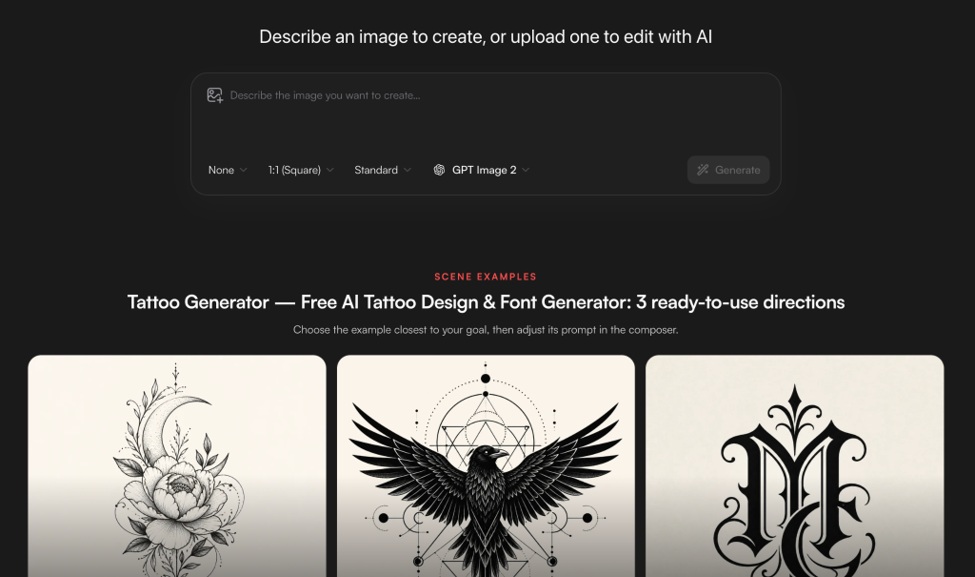
Now take it one step further. Words that read the same upside down or in a mirror have a special charm, and people ask for them as tattoos all the time. You can drop your favorite phrase into an ambigram generator and see how it looks when the letters flip. It’s a nice reminder that the best use of AI often isn’t the grand task. It’s the small, personal one that makes you smile.
What Will It Cost You?
If you only chat in the app, your subscription covers it. For developers, the standard price is $4 per million input tokens and $20 per million output tokens. Right now there’s a launch discount that cuts those numbers in half, and it ends on November 30. If you’re planning to build anything with it, that date matters.
Where to Stay Careful
A few honest warnings before you get carried away.
First, most big numbers come from Google itself. Benchmarks that a company publishes about its own model are a starting point, not a verdict. Wait for independent tests, or run your own.
Second, “it did a months-long job in weeks” is a company’s best story. Your project won’t always go that smoothly.
Third, access has been bumpy for some people. A few early testers hit “model not found” errors while the rollout was still spreading. If that happens to you, give it a day and try again.
Finally, always check the work. A model can sound confident and still be wrong, especially with code, legal text, or money. Use Argon like a very fast intern: great at drafts, still needs a second pair of eyes.
So, Should You Care About Argon?
Here’s my honest answer. If you code, write long documents, or work with piles of data, yes, try it. The free or cheap routes are enough to find out whether it fits how you work.
If you just want help with emails and recipes, you probably won’t notice a big difference from the model you already use. And that’s fine. The point of a calm, steady tool is that it doesn’t demand your attention.
Google picked a gas that does nothing and gave it a big job. Whether Argon lives up to the name, we’ll find out over the next few months. In the meantime, pick one small task you’ve been putting off, hand it over, and see how it feels.