

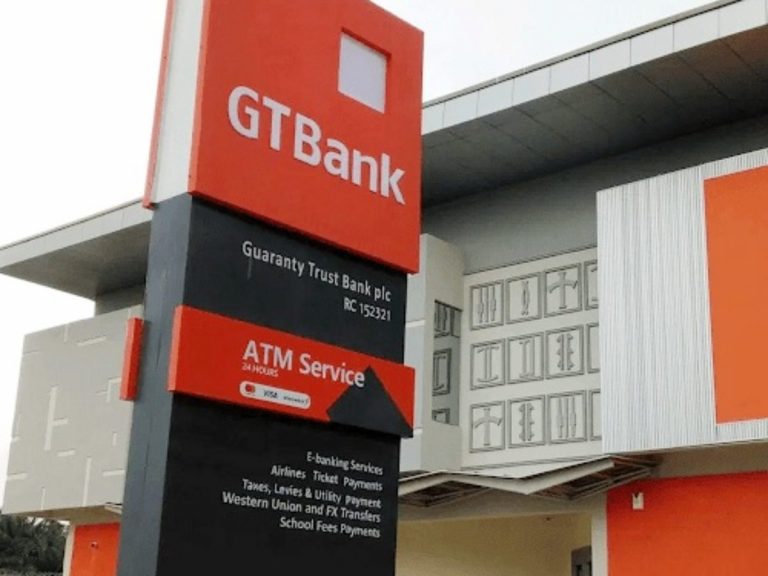
Guaranty Trust Holding Company Plc (GTCO) has announced a capital injection of N365.85 billion into its flagship subsidiary, Guaranty Trust Bank Limited (GTBank), in a bold move to comply with the Central Bank of Nigeria’s (CBN) new capital requirements for internationally licensed banks.
The transaction, disclosed in a regulatory filing on Friday and signed by Company Secretary Erhi Obebeduo, was executed through a rights issue involving nearly 7 billion ordinary shares issued to GTCO. This raises GTBank’s share capital from N138.186 billion to N504.037 billion—pushing it above the CBN’s N500 billion threshold.
“Through this capital injection, the share capital of GTBank has been increased from N138.186 billion to N504.037 billion and ensures the bank’s compliance with the new minimum capital requirement for commercial banks with international authorization stipulated by the Central Bank of Nigeria,” a statement from the company read.
Register for Tekedia Mini-MBA edition 20 (June 8 – Sept 5, 2026).
Register for Tekedia AI in Business Masterclass.
Join Tekedia Capital Syndicate and co-invest in great global startups.
Register for Tekedia AI Lab.
The CBN Recapitalization Directive
The CBN’s recapitalization mandate, issued in March 2024, requires all commercial banks to significantly strengthen their balance sheets by March 2026. The policy was introduced against a backdrop of persistent inflation, the naira’s steep depreciation, and global financial uncertainties that have increased systemic risks in Nigeria’s banking sector.
Internationally licensed banks were ordered to meet a minimum capital base of N500 billion, while national and regional banks were given lower thresholds. The directive sparked an industry-wide scramble, with lenders pursuing capital raises through rights issues, public offers, and in some cases, mergers and acquisitions.
This is not the first time Nigerian banks have faced such a directive. In 2004, under then-CBN Governor Charles Soludo, banks were required to increase their capital base from N2 billion to N25 billion, a policy that triggered a wave of mergers and acquisitions, reducing the number of banks from 89 to 25. That exercise created today’s stronger tier-1 institutions, such as GTBank, Zenith, and Access.

As of July, Cardoso confirmed that at least eight banks had met the new requirements, while others continue to explore mergers and acquisitions to remain competitive. Analysts say this current recapitalization wave could reshape the industry again, forcing smaller banks to consolidate or risk losing relevance.
GTCO’s London Stock Exchange Milestone
GTCO has taken a more global route in its recapitalization strategy. On July 9, the holding company made history by listing all its ordinary shares for trading on the London Stock Exchange (LSE), becoming the first Nigerian banking group to achieve a full direct listing on the UK bourse.
The listing marks a shift from its earlier Global Depositary Receipts (GDR) programme and is accompanied by a fresh public offering aimed at raising approximately $100 million (about N154 billion at an exchange rate of N1,540/$). The accelerated bookbuild, managed by Citigroup, opened on July 2 and is scheduled to close on July 31.

GTCO said the equity raise is designed to bolster its capital buffers and directly support its compliance with the CBN’s recapitalization requirement for international banks.
Strategic Deployment of Capital
The group confirmed that the additional equity will be channeled into GTBank’s branch expansion, asset growth—including loans, advances, and investment securities—and the strengthening of its technology infrastructure. GTBank will also leverage the funds to tap into emerging opportunities both within Nigeria and in its other operating markets.
“The additional equity capital will be deployed by GTBank primarily for branch network expansion and asset growth (loans/advances and investment securities portfolio), fortification of its information technology infrastructure, and to leverage emerging opportunities in Nigeria and the operating environments where it maintains banking presence,” GTCO stated.
GTBank now joins other tier-1 lenders in crossing the recapitalization threshold, reinforcing its standing as one of Nigeria’s most resilient banks. With over eight lenders already confirmed to have met the new CBN capital levels, the race continues as smaller banks explore mergers to survive.