

Amid the escalating conflict between the United States, Israel, and Iran—which began with joint U.S.-Israeli strikes on Iranian territory around February 28, 2026, resulting in the death of Iranian Supreme Leader Ayatollah Ali Khamenei and subsequent Iranian retaliatory missile and drone attacks across the Gulf region.
Several Middle Eastern countries, particularly Gulf states, have initiated discussions about withdrawing significant investments from the U.S. to mitigate economic pressures. This comes as Iran has targeted U.S. allies in the region, including Saudi Arabia, the United Arab Emirates (UAE), Kuwait, Qatar, Bahrain, and Oman, leading to disruptions in energy infrastructure, heightened security costs, and broader regional instability.
The war has rapidly expanded beyond Iran, with retaliatory strikes affecting Gulf countries that host U.S. military bases or have aligned with American interests. Iran has launched waves of drones and missiles, causing material damage to civilian and military sites, such as hotels and residential buildings in Bahrain’s Manama and intercepted attacks on Saudi Arabia’s Prince Sultan Air Base.
Register for Tekedia Mini-MBA edition 20 (June 8 – Sept 5, 2026).
Register for Tekedia AI in Business Masterclass.
Join Tekedia Capital Syndicate and co-invest in great global startups.
Register for Tekedia AI Lab.
Gulf states, which had previously urged President Donald Trump to avoid military action and pursue diplomacy with Iran, now find themselves “caught in the middle,” facing direct threats despite not initiating the conflict. UAE billionaire Khalaf al-Habtoor publicly criticized Trump, stating, “Who gave you the authority to drag our region into a war with Iran? And on what basis did you make this dangerous decision?”
He accused the U.S. of placing Gulf Cooperation Council countries “at the heart of a danger they did not choose.” U.S. officials, including Admiral Brad Cooper of U.S. Central Command, have reported progress in degrading Iranian capabilities, with a 90% decrease in ballistic missile attacks and an 83% decline in drone strikes since the conflict’s onset, alongside the sinking of over 30 Iranian vessels.
However, the ongoing hostilities—expected by Trump to last four to five weeks but with potential for prolongation—have disrupted key trade routes like the Strait of Hormuz, which handles about 20% of global oil and gas supplies. Key Gulf economies—Saudi Arabia, UAE, Kuwait, and Qatar—are jointly reviewing billions of dollars in overseas investments, including those in the U.S., as a direct response to the war’s financial toll.

These nations manage some of the world’s largest sovereign wealth funds and had pledged hundreds of billions in U.S. investments following Trump’s regional visit in 2025. According to reports, officials are assessing whether to invoke force majeure clauses in contracts to withdraw from commitments, while redirecting funds toward defense, security, and domestic stability.
A Gulf official cited in the Financial Times stated that these countries have “begun an internal review to determine whether force majeure clauses can be invoked in current contracts while also reviewing current and future investment commitments in order to alleviate some of the anticipated economic strain from the current war.”
This potential pullback is framed as a way to avenge or counter the “imposition” of the war, with some viewing it as leverage to pressure the White House into seeking a quicker resolution. An adviser to a Gulf government noted that the prospect of such reviews “had caught the White House’s attention,” potentially amplifying calls for diplomacy.

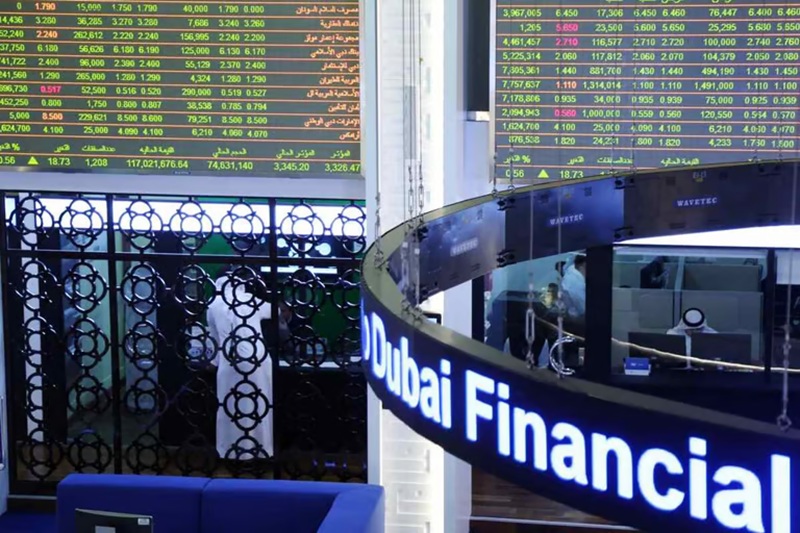
The conflict has triggered sharp market declines across the Middle East: Saudi Arabian and Egyptian stocks fell significantly, with Egypt’s main index dropping over 8% since mid-February 2026. Global markets plunged on March 2, with U.S. crude oil prices jumping 8%, U.S. stock futures down 1%, and European shares down 2%.
Treasuries pulled back amid renewed inflation concerns from potential oil supply disruptions. Capital market activities, including fundraisings and mergers, are disrupted, with travel halted and Chinese investors pausing talks on Middle Eastern assets.
Volatility persists, with trading halts and fears of sustained declines if hostilities continue. From a Gulf viewpoint, the U.S. alliance is under scrutiny, with questions about whether investments in America are “funding peace or war” while exposing the region to risks.
Iranian perspectives, as reflected in X posts and analyses, portray this as a successful attrition strategy weakening U.S. regional hegemony. U.S. and Israeli stances emphasize dismantling Iran’s military infrastructure, but some investors see long-term potential for a “peace dividend” if the Iranian regime falls, leading to greater Middle East stability.
However, the immediate outlook remains uncertain, with risks to energy supply chains and cross-border investments.