

The global economic fallout from the Iran war is now extending far beyond oil, with helium emerging as one of the most strategically vulnerable commodities in the conflict’s wake.
Often dismissed as a gas for party balloons, helium has become a critical industrial input whose sharp price surge is already sending ripples through semiconductor manufacturing, healthcare, and aerospace. With Qatar accounting for roughly one-third of global supply, the disruption to its gas-processing infrastructure has exposed just how fragile the helium market has become.
Market estimates now suggest that spot helium prices have doubled since the conflict escalated in late February, following attacks on Qatar’s Ras Laffan energy hub and subsequent production halts. Reuters and industry consultants say the rise is among the steepest supply shocks the market has seen in years, though the absence of a formal global benchmark makes precise pricing difficult.
Register for Tekedia Mini-MBA edition 20 (June 8 – Sept 5, 2026).
Register for Tekedia AI in Business Masterclass.
Join Tekedia Capital Syndicate and co-invest in great global startups.
Register for Tekedia AI Lab.
The significance lies in helium’s irreplaceability. Unlike many industrial commodities, helium has no viable substitute in several high-precision applications because of its unique physical properties. It is chemically inert, extremely light, and exceptionally effective at transferring heat at cryogenic temperatures. Those characteristics make it indispensable in industries where stability, cooling, and contamination control are non-negotiable.
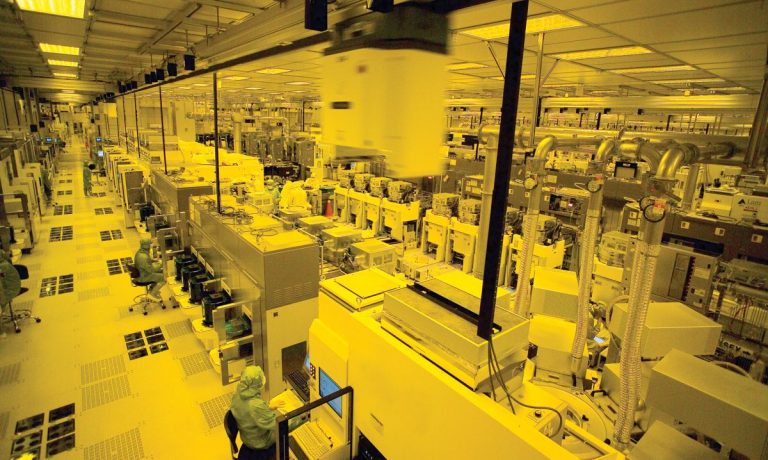
The semiconductor industry is among the first sectors likely to feel the pressure. Helium is central to advanced chip fabrication, where it is used for rapid cooling, vacuum chamber cleaning, and maintaining controlled manufacturing environments. This comes at a time when the global technology sector is already under strain from the explosive growth in AI-related demand for processors, servers, and fiber-optic infrastructure.
According to U.S. Geological Survey data, about 17% of helium consumption is tied to controlled atmospheres, fiber optics, and semiconductor production. That means any sustained rise in helium costs could eventually feed into the pricing of consumer electronics, cloud infrastructure, and electric vehicles, all of which rely heavily on advanced chips.

The immediate threat may not be an outright shutdown, at least not yet. South Korean chipmakers, including Samsung Electronics and SK Hynix, reportedly hold four to six months of helium inventory, offering a temporary cushion. But analysts warn that if the disruption persists beyond the second quarter, supply chain pressures could intensify sharply.
Healthcare Faces A Different Kind Of Risk
MRI scanners depend on liquid helium to cool superconducting magnets to extremely low temperatures. Without helium, the machines cannot function. This is not a marginal use case. Medical imaging accounts for about 15% of helium demand, making hospitals and diagnostic centers particularly exposed to price spikes and supply delays.
The risk is not merely higher equipment costs for new installations. Existing machines also require helium replenishment, especially after a quench, when the magnet loses superconductivity and rapidly vents gas.

As industry expert Tobias Gilk noted, a single MRI system can use the equivalent of roughly 90,000 party balloons’ worth of helium. If supply chains tighten further, maintenance providers may struggle to service hospitals promptly, potentially affecting patient care timelines.
“The ability to deliver new MRI scanners [is] probably not at risk (though at significantly higher cost), but if deployed MRIs quench, service organizations’ ability to respond promptly with adequate quantities of liquid [helium] will tested,” said Tobias.
The aerospace sector is equally exposed as helium is used in rocket propulsion systems for fuel tank pressurization, leak detection, and cooling. It remains a crucial input for both public and private space missions.
This includes missions involving NASA’s Artemis programme as well as launches by SpaceX and other commercial operators. With aerospace accounting for roughly 9% of U.S. helium use, higher prices could translate into increased launch costs and added pressure on research budgets, some of which are taxpayer-funded.
The broader issue is that helium’s supply chain is unusually concentrated. The U.S. and Qatar together account for roughly three-quarters of global supply, leaving the market highly vulnerable to geopolitical disruptions. Because helium is extracted as a byproduct of natural gas processing, any damage to LNG infrastructure directly constrains output.
This makes the current crisis more than a temporary commodity spike. It is a strategic supply-chain risk that could raise costs across technology, healthcare, and scientific research.
But the impact is not expected to be immediately visible in a line-item price increase. Instead, it is more likely to appear through higher prices for smartphones, cloud services, medical scans, and even space-sector contracts.
In effect, a gas commonly associated with balloons is becoming one of the more consequential hidden inflation drivers of the conflict.