

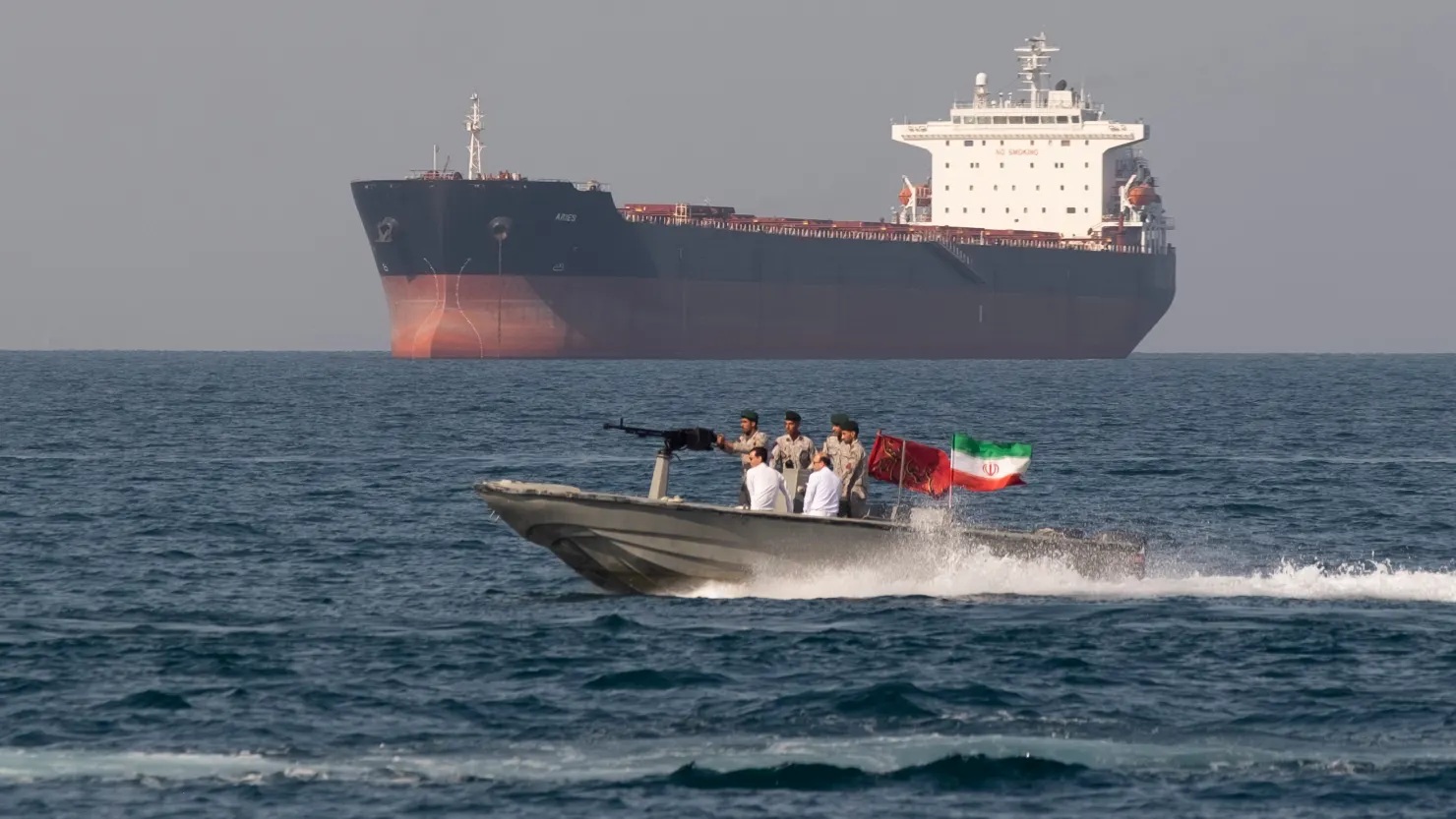
Shipping through the Strait of Hormuz remains far below normal levels even after the U.S.-Iran ceasefire, heightening concern over the possibility of a permanent peace deal.
The Strait of Hormuz remained severely disrupted on Friday, underscoring that the ceasefire between the United States and Iran has done little, at least for now, to restore normal flows.
According to vessel-tracking data, only 15 ships had entered or exited the strait since the ceasefire was announced on April 8, a fraction of the prewar average of about 138 to 140 vessels a day. The numbers point to a waterway that is technically open but functionally constrained. This is the crucial distinction now confronting oil markets, insurers, and Asian importers.
Register for Tekedia Mini-MBA edition 20 (June 8 – Sept 5, 2026).
Register for Tekedia AI in Business Masterclass.
Join Tekedia Capital Syndicate and co-invest in great global startups.
Register for Tekedia AI Lab.
A ceasefire can halt active hostilities, but it does not automatically restore navigational confidence, war-risk insurance cover, or the operational certainty needed for hundreds of tankers to resume passage through a militarized chokepoint.
The Strait of Hormuz is not merely another shipping route. It is the single most important oil transit corridor in the world, handling close to 20% of global crude and petroleum-product flows, much of it bound for Asia, particularly China, India, Japan, and South Korea.
The collapse in traffic since the conflict began on February 28 has already removed roughly one-fifth of global oil supply from normal seaborne circulation, creating what traders describe as the largest supply disruption in modern oil-market history. That has fed directly into the roughly 50% surge in crude prices seen during the conflict.

The ceasefire was meant to begin easing that pressure. Instead, the shipping data suggest the waterway remains under de facto Iranian control. On Thursday, Iran’s Islamic Revolutionary Guard Corps issued a revised maritime routing directive, instructing vessels to use a northern passage near Larak Island and remain within Iranian territorial waters to avoid suspected mine risks in the usual traffic lanes.
Tehran is effectively asserting operational control over transit through the strait without formally declaring a closure by redirecting vessels through Iranian-monitored waters. This allows it to retain leverage while staying within the framework of the temporary truce.
But the route around Larak Island has now become central to the ceasefire’s practical implementation. Some vessels have already begun taking the unusual corridor, according to tracking data.

British maritime security firm Ambrey warned that vessels not explicitly authorized by Iran, especially those linked to the United States or Israel, remain vulnerable.
In one of the most telling assessments of the current environment, the company said: “Even shipping with apparent approval has been turned back in recent weeks mid-transit.”
That line captures why traffic has not normalized. The issue is no longer simply whether ships are legally permitted to pass. It is whether shipowners, charterers, insurers, and crews believe the risk-adjusted economics justify moving.
War-risk premiums have surged, in some cases rising from near-negligible levels to multiple percentage points of hull value. For large crude carriers, that can translate into millions of dollars per voyage.
This is where reports of possible Iranian tolls add an additional challenge. Multiple media outlets and shipping monitors have reported that Tehran may be considering charging as much as $2 million per ship for passage, though the legality of such fees under international maritime law remains deeply contested.
Western governments have already pushed back strongly. President Donald Trump has warned Tehran against imposing any transit fees, arguing that the waterway must remain open under internationally recognized navigation rights.
Lack of consensus means the implication for oil and shipping markets remains. Even if the ceasefire holds for the full two-week period, the backlog itself will take time to unwind.
Hundreds of tankers and cargo vessels remain stranded inside the Gulf, and maritime analysts say clearing that congestion could take days or weeks even under ideal conditions.
That means supply restoration will lag diplomatic headlines. Thus, crude prices may remain elevated because physical barrels are still not moving at normal volumes. Asian buyers are particularly exposed, given their heavy dependence on Gulf crude. Japan’s decision to announce an additional emergency oil release underscores how seriously governments are treating the continued disruption.
There is concern that if Tehran cannot or will not fully reopen Hormuz during the ceasefire window, Washington and its allies may conclude that Iran is using the truce to consolidate strategic leverage rather than de-escalate.
Conversely, Iran may argue that continued regional military actions, particularly Israeli operations in Lebanon, amount to breaches of the wider understanding, thereby justifying continued control measures.
However, as long as the waterway remains effectively choked, hopes for a durable peace will remain under a cloud, and the two-week ceasefire will continue to look less like a pathway to de-escalation.