

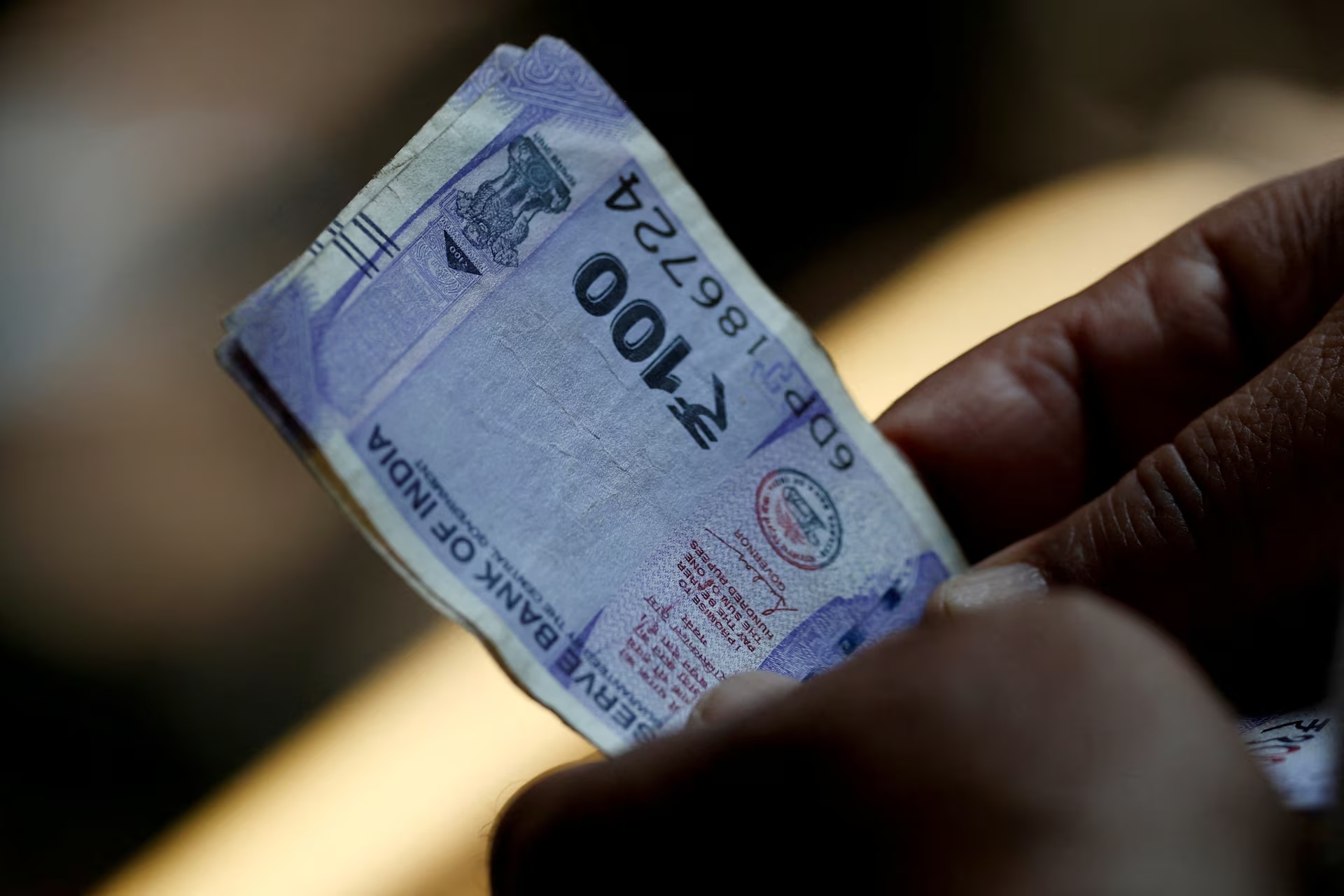
India’s financial markets came under heavy pressure on Wednesday after U.S. President Donald Trump declared that the interim peace accord with Iran was “over,” triggering a sharp rise in global oil prices that weakened the rupee, sent stocks to their steepest decline in more than three months, and pushed government bond yields higher.
The Indian rupee fell 0.6% to close at 95.5550 against the U.S. dollar after touching an intraday low of 95.60, its weakest level since June 11. Traders said the Reserve Bank of India (RBI) likely stepped into the foreign exchange market through state-run banks to slow the currency’s decline by selling dollars.
The move came as Brent crude oil surged 6.3% to around $79 a barrel, reaching a two-week high after Trump said the memorandum of understanding that had ended the conflict with Iran was “over,” reigniting fears of disruptions to oil shipments from the Middle East.
Register for the next Tekedia Mini-MBA.
Register for Tekedia AI in Business Masterclass.
Join Tekedia Capital Syndicate and co-invest in great global startups.
The renewed geopolitical tensions rattled financial markets worldwide, with investors moving away from riskier assets. U.S. stock index futures fell sharply, Nasdaq futures touched a four-week low, while the yield on the benchmark 10-year U.S. Treasury note climbed to 4.585%, its highest level in more than a month.
India, the world’s third-largest importer and consumer of crude oil, is particularly vulnerable to sustained increases in energy prices because higher oil costs widen the country’s import bill, increase inflationary pressures, weaken the rupee, and raise production and transportation costs across the economy. Rising crude prices also complicate monetary policy by making it more difficult for the Reserve Bank of India to maintain price stability while supporting economic growth.
Dhiraj Nim, economist and foreign exchange strategist at ANZ, said crude oil would remain the dominant driver of the rupee in the near term.

“Oil prices (are) squarely where the focus will be in the near term, alongside any signs of broad strengthening in the dollar.”
He added: “Long as oil prices remain elevated, INR is likely to face pressure.”
The renewed tensions have interrupted what had been an improving macroeconomic backdrop for India following the earlier ceasefire and government efforts to attract more foreign capital.

A trader at a Mumbai-based bank was quoted by Reuters as saying that investors had become increasingly cautious after the latest escalation.
“Just when it looked like the macros are improving, Middle East uncertainty is back on the table,” the trader said.
The trader added that the shift in sentiment had reversed the optimism that followed the interim ceasefire and recent policy measures designed to encourage dollar inflows into India.
Referring to the popular market acronym suggesting investors often expect President Trump to soften his positions after initially taking a hard line, the trader added:
“It’s likely that TACO (‘Trump Always Chickens Out’) trades could play out but markets may not be as easily convinced as last time.”
The turbulence extended to India’s equity market, where benchmark indices recorded their worst daily performance in more than three months. The Nifty 50 index fell 2.12% to close at 23,882.05, while the BSE Sensex dropped 2.15% to 76,503.6 as investors reacted to the deteriorating geopolitical outlook.
The latest selloff followed a renewed flare-up in the Middle East after Iran said it targeted U.S. military facilities in Bahrain and Kuwait in retaliation for U.S. strikes on Iranian targets following attacks on commercial tankers transiting the Strait of Hormuz.
The escalation renewed fears over global energy supplies, particularly because the Strait of Hormuz remains one of the world’s most important oil shipping routes, handling roughly one-fifth of global petroleum consumption.
Kranti Bathini, Director of Equity Strategy at Wealthmills Securities, said the renewed conflict had revived concerns about one of India’s biggest macroeconomic vulnerabilities.
“The developments have reignited worries over energy supplies and oil prices, a key pressure point for India’s markets and macros.”
Bathini added: “This could also spark fresh foreign outflows, potentially slowing a market that was on the verge of recovery.”
Two traders told Reuters that the sharp decline during the final trading hours was likely driven by renewed selling from foreign institutional investors after three consecutive sessions of net inflows, as rising crude prices revived concerns over India’s economic outlook.
The pressure was broad-based across sectors.
Financial stocks, which are among the largest holdings for overseas investors, declined 2.5%, while information technology shares fell 1.4%.
All 16 major sectoral indices finished lower.
The broader small-cap index dropped 2.2%, while the mid-cap index lost 1.6%. Companies whose profitability is highly sensitive to crude oil prices suffered some of the steepest declines. The oil and gas, automobile, and fast-moving consumer goods (FMCG) indices each fell between 2.2% and 2.5%.
Oil marketing companies, airlines, tyre manufacturers, and paint makers also came under heavy selling pressure as investors anticipated higher input costs and weaker profit margins if elevated crude prices persist.
The bond market also reflected growing investor caution. India’s benchmark 10-year government bond yield rose more than seven basis points to 6.7692%, as falling bond prices signaled expectations that higher oil prices could fuel inflation and reduce the scope for further monetary easing by the Reserve Bank of India.
The simultaneous decline in the rupee, equities, and bonds indicates that India’s financial markets remain tied to global energy prices. While domestic economic indicators had shown signs of stabilizing in recent weeks, the renewed conflict in the Middle East has quickly shifted investor focus back to oil prices, inflation risks, capital flows and the outlook for the Indian economy.
The recent sharp depreciation of the Indian rupee has severely squeezed the purchasing power of ordinary people, significantly increasing their living pressures.