

Indian space technology startup SatSure has raised 600 million rupees ($7 million) from a government-backed venture capital fund as part of a larger 2 billion rupees ($22 million) Series B round, strengthening its capacity to develop satellite imaging technology and expand its data analytics business.
The investment was made by the Antariksh Venture Capital Fund at a post-money valuation of 8.7 billion rupees ($93 million), SatSure said on Friday.
The 16 billion rupee fund is anchored by IN-SPACe, India’s regulator for the private space sector, and managed by SIDBI Venture Capital, an investment arm of state-owned small-business lender SIDBI.
Register for the next Tekedia Mini-MBA.
Register for Tekedia AI in Business Masterclass.
Join Tekedia Capital Syndicate and co-invest in great global startups.
The funding comes as India seeks to build a larger commercial space industry through reforms that have opened a sector historically dominated by government agencies to private companies and investors. The government’s involvement in SatSure’s financing also highlights the role of public capital in supporting businesses developing capabilities for India’s expanding space ecosystem.
Bengaluru-based SatSure uses satellite imagery and artificial intelligence to provide data and analytical tools to banks, insurers, infrastructure companies and government agencies. Its subsidiary, KaleidEO, develops satellite imaging systems for Earth observation.
The startup’s Series B round comprises 1.65 billion rupees in fresh equity, 250 million rupees in venture debt and 100 million rupees in secondary transactions. SatSure expects to complete the fundraising by December 2026.

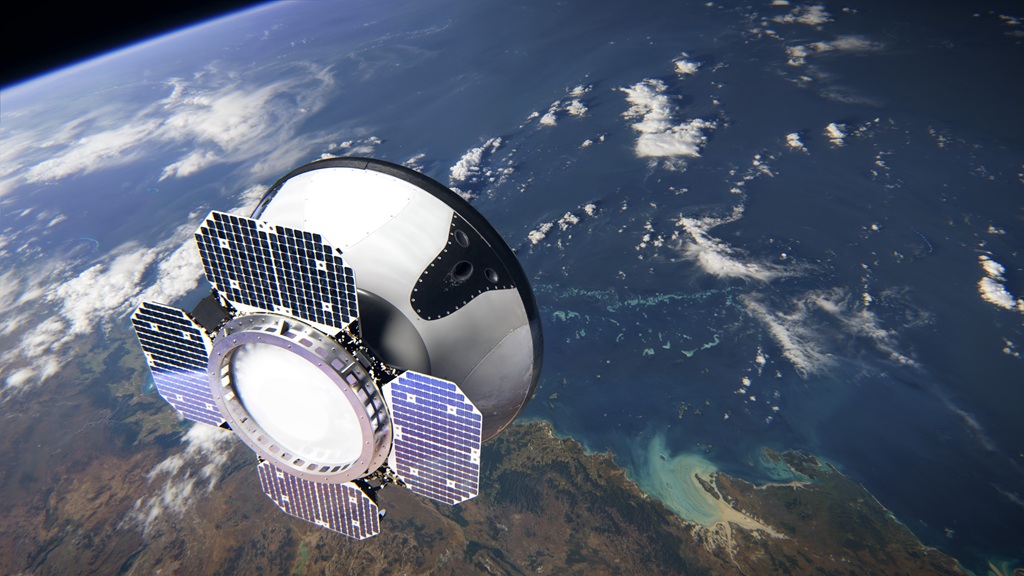
Part of the aims of the funding is to support satellite launches and an Earth observation network.
SatSure plans to use the proceeds to prepare its satellite imaging payloads for launch in 2027, support its participation in India’s planned Earth-observation satellite network, and expand its data analytics capabilities.
The company also intends to increase its international operations, extending the commercial reach of its satellite data and analytics services beyond India. Its business model combines satellite imagery with AI-based analysis to help organizations make decisions involving assets, infrastructure and physical risks. Customers include HDFC Bank, ICICI Bank and Axis Bank, as well as consumer goods company ITC, agricultural chemicals producer Bayer and the Airports Authority of India.

The customer base gives SatSure exposure to several sectors where satellite data can support operational and financial decisions. Banks and insurers can use geospatial information to assess assets and risks, while infrastructure operators and government agencies can apply it to monitoring and planning.
The planned 2027 payload launches are also important to the company’s longer-term ambitions. Developing its own imaging capabilities could give SatSure greater control over the data it uses and the services it provides, although the commercial benefits are tied to successful deployment and the ability to translate satellite observations into products customers are willing to pay for.
India’s private space industry has gradually been attracting investment interest.
SatSure has raised 4.27 billion rupees from institutional investors, excluding grants, since its establishment. Previous backers include Baring Private Equity Partners India, Promus Ventures and Asian Development Bank Ventures.
Its latest funding adds government-backed capital to a financing base that already includes private equity and venture investors.
India has been working to attract private investment into space technology by opening activities previously concentrated within the public sector. The emergence of specialist companies such as SatSure reflects the expansion of commercial opportunities beyond satellite launches into Earth observation, data services and applications for industries outside the traditional space sector.
SatSure’s next phase involves moving from analytics built around satellite imagery towards a larger role in developing the imaging infrastructure itself. The combination of payload development, participation in India’s planned satellite network, and international expansion will require sustained investment and successful execution.
The Series B round provides additional capital for those plans, while the government’s investment gives the company backing from an institution established to support India’s private space industry.