

At a time when many of the world’s most valuable technology companies are tightening control as they scale, Anthropic appears to be moving in the opposite direction, building a culture in which employees are encouraged to publicly challenge even the chief executive.
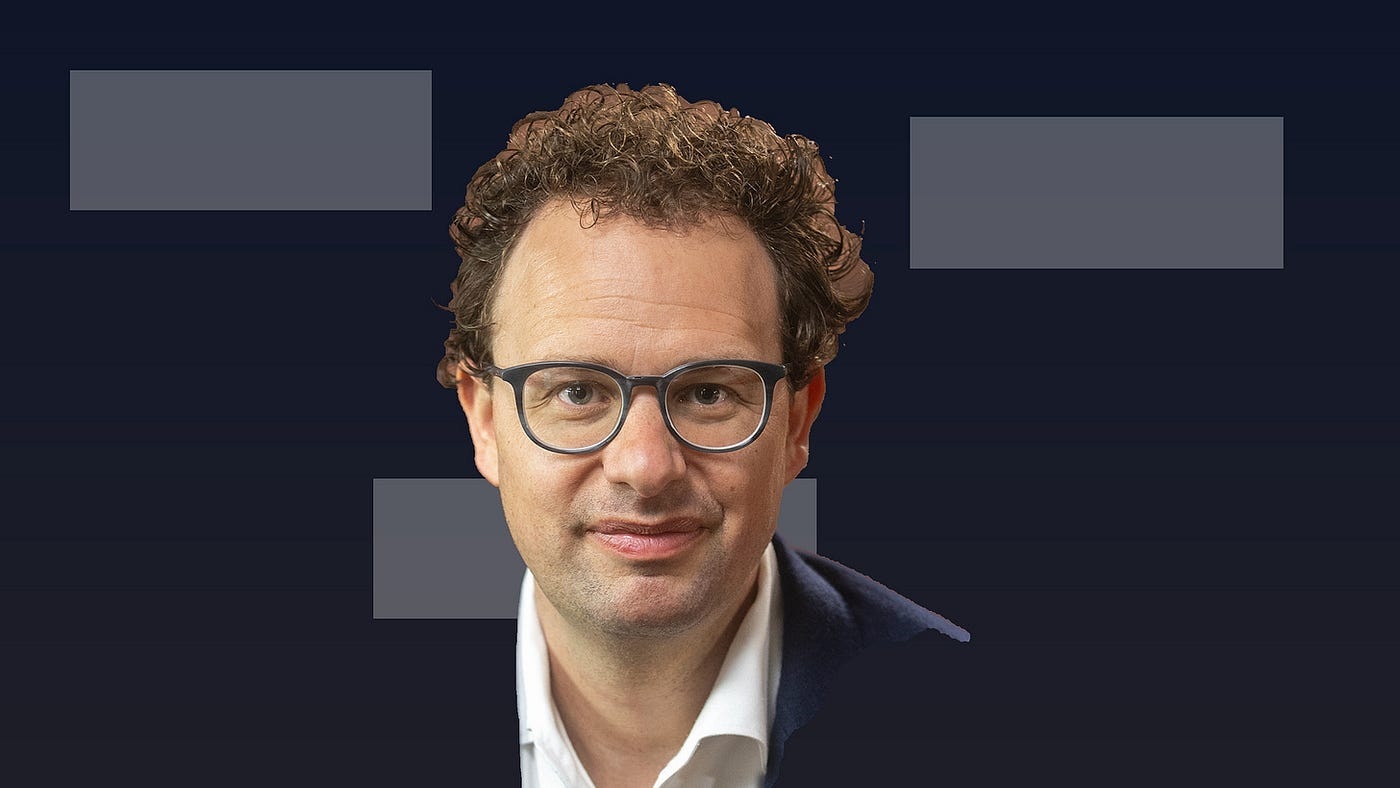
The unusually open internal structure was laid bare by Amol Avasare, the company’s head of growth, who said staff are actively encouraged to “just argue with Dario,” a reference to chief executive Dario Amodei, during an appearance on Lenny’s Podcast released Sunday.
Avasare described an internal Slack system that functions less like a traditional workplace messaging tool and more like an open newsroom or public research forum. Every employee, from engineers to senior executives, maintains a personal “notebook” channel visible across the company, allowing colleagues to follow projects, ideas, and disagreements in real time.
Register for Tekedia Mini-MBA edition 20 (June 8 – Sept 5, 2026).
Register for Tekedia AI in Business Masterclass.
Join Tekedia Capital Syndicate and co-invest in great global startups.
Register for Tekedia AI Lab.
“You can go and join the Slack channel, the notebook channels of people on research, and all these other areas, and you can learn whatever you want,” Avasare said.
He added that employees are encouraged to directly challenge leadership in those channels, including the CEO himself.
In one example, Avasare recounted how an employee who took issue with a remark Amodei made during an all-hands meeting went straight to the CEO’s public Slack notebook to register the complaint.

“The person goes onto Dario’s notebook channel and just says: ‘Hey, I didn’t appreciate how you said this or that.’ And then it sparked a whole big debate,” he said. “It’s encouraged to go to leadership and disagree with them, challenge them publicly, and I think that just leads to a level of trust.”
The comments offer a revealing look inside one of the fastest-scaling companies in the artificial intelligence race. Anthropic’s growth has been extraordinary even by Silicon Valley standards. According to details shared on the same podcast, the company’s annual recurring revenue surged from about $1 billion to more than $19 billion in just 14 months, underlining the breakneck commercial adoption of its Claude models and enterprise AI tools.
That commercial momentum has been matched by investor appetite. In February, the company announced a $30 billion Series G funding round led by GIC and Coatue, pushing its valuation to roughly $380 billion and cementing its position among the world’s most valuable private technology firms.

What makes Anthropic’s internal culture particularly notable is the tension between hypergrowth and openness. Companies at this valuation level typically become more layered, more process-driven, and more risk-averse. Anthropic, at least by Avasare’s account, is trying to preserve the intellectual friction more commonly associated with academic labs and early-stage startups.
Anthropic was founded by former OpenAI researchers and has long positioned itself as a research-first company focused on AI safety and model alignment. In such environments, institutional disagreement is often seen as a safeguard rather than a threat. It is believed that encouraging staff to contest assumptions, especially those coming from the top, can help reduce blind spots in research, product design, and governance.
The approach also mirrors a broader shift among elite technology firms that increasingly view flattened hierarchies as a competitive advantage. Leaders such as Brian Chesky at Airbnb and Elon Musk at Tesla have previously championed direct communication channels that bypass traditional reporting lines. Musk famously wrote to employees that communication should travel “via the shortest path necessary to get the job done, not through the chain of command.”
But in an industry where product cycles are measured in weeks, and strategic missteps can alter market leadership, a culture that surfaces dissent early may be as much a business tool as a management philosophy.
The deeper question is whether such openness can survive scale. As headcount expands and commercial pressures intensify, preserving a culture of visible internal debate becomes harder. Yet if Anthropic succeeds, many believe it may offer a model for how frontier AI firms can remain intellectually agile even as they become corporate giants.