

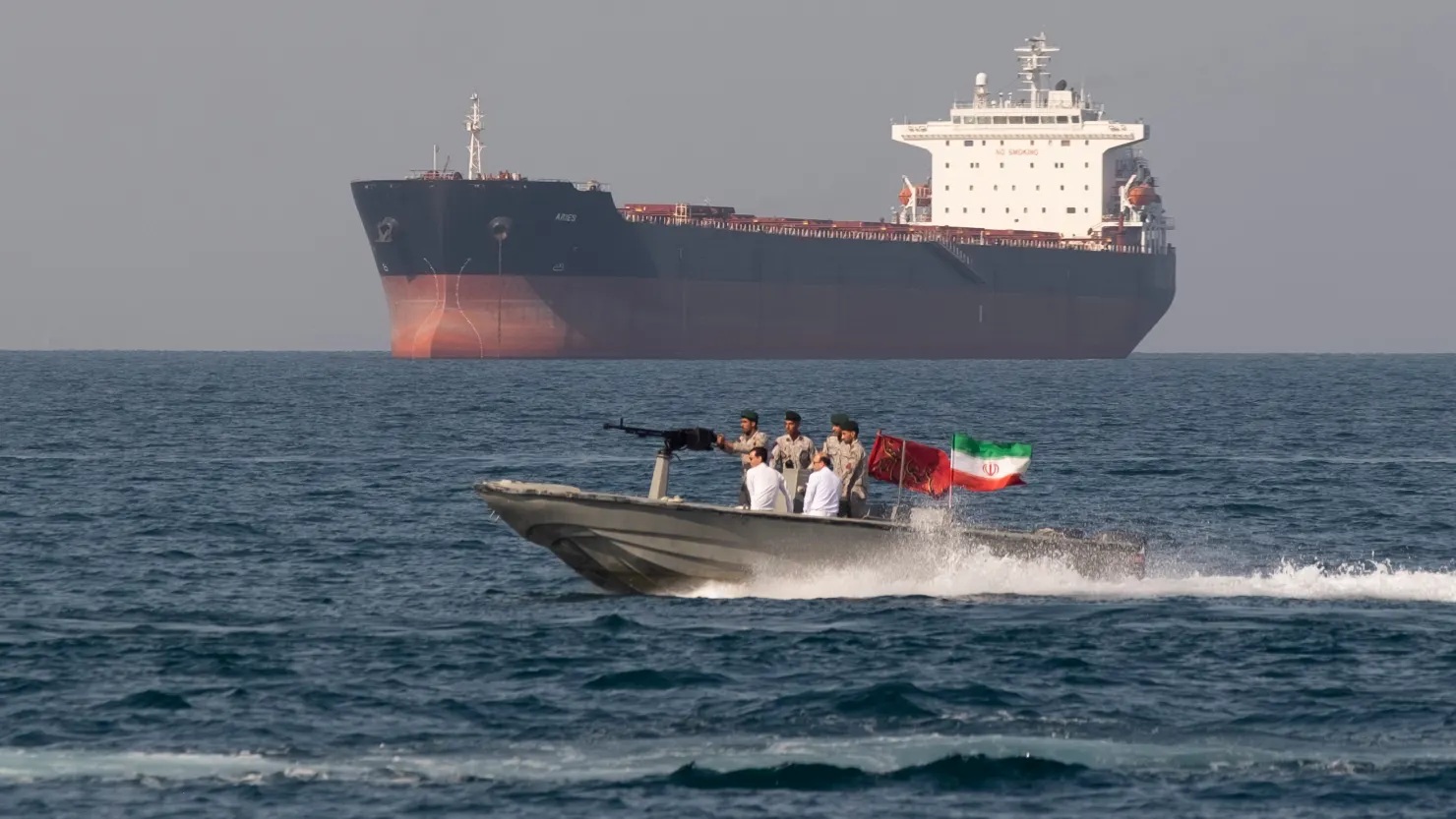
Iranian crude oil exports have collapsed in August as President Donald Trump’s administration relies increasingly on a naval blockade and financial sanctions to squeeze Tehran into accepting a deal to fully reopen the Strait of Hormuz.
Iran has loaded about 260,000 barrels per day of crude for export at its ports so far this month, down more than 80% from 1.7 million bpd in August 2025, according to data from trade intelligence firm Kpler.
The decline has accelerated from July, when Iranian crude loadings averaged about 893,000 bpd. August shipments are therefore running roughly 70% below the previous month, sharply reducing one of Tehran’s most important sources of hard-currency revenue.
Register for the next Tekedia Mini-MBA.
Register for Tekedia AI in Business Masterclass.
Join Tekedia Capital Syndicate and co-invest in great global startups.
The collapse in exports highlights the economic impact of Washington’s strategy as the Trump administration shifts away from sustained military strikes and toward restricting Iran’s ability to sell and transport its oil.
“The blockade has been very effective,” said Matt Smith, director of commodity research at Kpler. The restrictions have “walloped Iran’s crude export loadings,” he said, adding that much of the oil Iran manages to load may not ultimately make it through the blockade.
The pressure is weighing heavily on Tehran because oil exports provide a critical source of government revenue. The Trump administration believes prolonged restrictions will eventually leave Iran short of cash and force it to compromise, according to Bob McNally, president of Rapidan Energy.

Iran still has a substantial buffer. About 20 million barrels of Iranian crude are currently held on tankers in Asia awaiting discharge to China, its main customer, according to Kpler. Smith estimates Iran could store another 20 million barrels onshore before a lack of storage capacity begins to constrain production.
That creates a race against time for Tehran. If export restrictions persist long enough to fill both floating and onshore storage, Iran could be forced to reduce production, creating additional pressure on an economy already dependent on oil revenues.
U.S. Escalates Economic Warfare
Trump reimposed the blockade on July 14 following Iranian attacks on oil tankers transiting the Strait of Hormuz.

The U.S. military has since intensified efforts to enforce the restrictions. Central Command said Thursday that U.S. forces had redirected 75 commercial ships, disabled three vessels and boarded two as part of the operation.
The administration has also expanded the campaign beyond maritime enforcement.
Treasury Secretary Scott Bessent on Monday announced “Operation Economic Outcast”, a plan aimed at severing Iran’s financial connections with the global economy.
“We have the blockade and we are going to have the toughest sanctions in history,” Bessent said last week. “It worked in Venezuela once we put up the blockade. It is working in Cuba right now and it is going to work in Iran, and we are going to collapse this regime.”
The strategy represents a significant escalation in the stated objective of U.S. sanctions policy, according to Jeremy Paner, a former Treasury Department official who worked on Iran sanctions.
“Instead of saying we’re going limit the revenue, they’re saying we’re going to completely economically isolate Iran,” Paner said. “That had never been the goal of the U.S economic sanctions. Bessent saying that is a big deal.”
The practical impact of the new financial campaign will depend on how effectively Washington can prevent Iran from accessing alternative payment channels, intermediaries and buyers willing to continue trading with Tehran.
China remains crucial in the conflict because it is the main destination for Iranian crude. The oil currently sitting on tankers in Asia demonstrates that Iran can still generate some revenue if those barrels can eventually be discharged.
Hormuz Remains Tehran’s Main Bargaining Chip
Iran has rejected Washington’s demands and insists that any reopening of the Strait of Hormuz must take account of its own conditions.
Two tankers have been attacked this week in and around the waterway, adding to concerns over the security of one of the world’s most important energy corridors.
Tehran is also negotiating with Oman over a possible arrangement for sharing control of the strait, potentially involving a fee-based system. The United States and its allies oppose such an arrangement.
Yet Iran’s ability to use Hormuz as leverage appears to be weakening as alternative shipping arrangements expand. The U.S. military is helping tankers from allied Gulf states navigate a southern corridor along Oman’s coast, allowing some vessels to bypass areas where Iranian forces exert greater pressure, according to Michelle Wiese Bockmann, senior maritime intelligence analyst at Windward.
“My assessment is that it’s scaling and it’s scaling quickly despite the fact that Iran is placing enormous pressure on maritime security,” Bockmann said. “While this southern corridor scales, Iran loses its leverage.”
The reopening of even a portion of Hormuz is important because the waterway handled about 15 million barrels per day of crude exports before the war began on Feb. 28.
Traffic remains far below that level.
President Trump said on Wednesday that about 10 million barrels of oil had exited the waterway on Tuesday. Independent shipping and commodity-data providers, however, are reporting substantially lower volumes.
Kpler estimates that between 5 million and 6 million bpd of crude is currently moving through the strait, roughly one-third of pre-war flows. Windward estimates exports through Hormuz increased to about 5 million bpd in July, up from 4 million bpd in June and only 1.6 million bpd in May.
The contrast between Washington’s figures and independent estimates underscores the uncertainty surrounding the actual scale of the reopening and the extent to which the global oil market can rely on Hormuz as a functioning supply route.
Pressure On Iran, But Risks Remain For Oil Markets
The sharp reduction in Iranian exports does not automatically translate into a comparable global oil shortage. Other Gulf producers can potentially increase shipments when security conditions permit, while weaker Iranian exports can be offset partly by lower demand and changes in inventories.
The bigger risk is that the conflict continues to disrupt the broader flow of crude through Hormuz. The waterway carries oil from several major Gulf producers, meaning a prolonged disruption could eventually put upward pressure on global prices even if Iran’s own exports remain depressed.
For Tehran, the calculation is becoming more difficult. Holding Hormuz effectively closed provides Iran with a powerful strategic bargaining tool, but it also restricts the country’s own ability to monetize its oil reserves. That creates a fundamental tension at the center of the standoff: Iran can use the strait to constrain its adversaries, but prolonged restrictions also threaten the revenue stream needed to sustain its economy.
Washington is betting that the financial pressure will eventually become more painful for Tehran than the strategic value of keeping the waterway under tight control.