

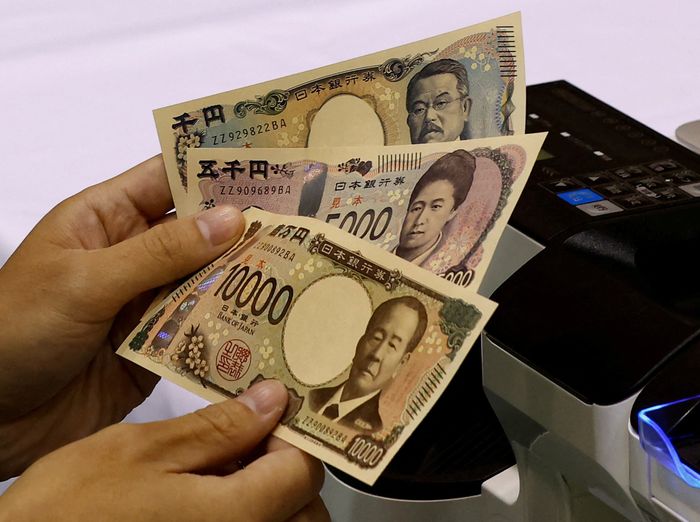
Japanese corporate executives are calling for a stronger and more stable yen, even as some of their companies continue to benefit financially from a weaker currency.
Yoshinori Kanehana, chairman of Kawasaki Heavy Industries, said currency volatility has become the company’s biggest problem because unpredictable exchange rates make long-term investment decisions more difficult.
“When the yen fluctuates, we cannot make [a] strategy,” Kanehana told CNBC on the sidelines of the Gastech conference on Tuesday.
Register for the next Tekedia Mini-MBA.
Register for Tekedia AI in Business Masterclass.
Join Tekedia Capital Syndicate and co-invest in great global startups.
Kanehana said a yen at around 150 to the dollar could be strong enough to prompt Kawasaki to consider shifting some manufacturing currently carried out in the United States back to Japan. The company operates 27 production sites outside Japan, including in the U.S., and 17 in its home country, according to a company report published last year.
The statement underpins how the yen’s weakness, which has supported the overseas earnings of many Japanese companies, can also complicate decisions about where to locate production. A weaker currency can make Japanese exports more competitive and increase the yen value of overseas earnings, but a highly volatile exchange rate makes it harder for companies to determine future costs, investment returns and production economics.
For Kawasaki, the exchange rate can alter the relative attractiveness of manufacturing in Japan and overseas. Kanehana’s comments suggest that a stronger yen could narrow that gap sufficiently to make domestic production more attractive. Inpex President and CEO Takayuki Ueda went further, saying a yen at around 100 to the dollar would be an “appropriate” level for the Japanese economy.

Ueda’s view appears to ring a bell because nearly 90% of Inpex’s business is conducted outside Japan and largely in dollars. That gives the company a direct benefit when dollar-denominated profits are converted into a weaker yen.
Inpex said in its latest earnings report that revenue declined in the first half of the year as crude oil sales volumes fell. A 6.7% depreciation in the yen to 158.37 per dollar, however, helped offset part of the decline.
“But if we look at the Japanese economy as a whole, the current exchange rate is perhaps too weak,” Ueda told CNBC on the sidelines of the Gastech conference in Bangkok on Monday.

The comments come as the yen has strengthened sharply over the past two weeks but remains weak by longer-term historical standards. The currency was trading at around 156.3 per dollar on Thursday, compared with a 10-year average of about 123, based on Macrotrends data.
The differing preferences among Japanese corporate leaders also show how the impact of the yen varies across industries. Companies with large overseas revenues can benefit from a weak currency because foreign earnings translate into more yen. Manufacturers with substantial domestic operations, however, may face different considerations because exchange-rate movements affect the relative cost of producing in Japan versus other countries.
Takeshi Hashimoto, chairman of Mitsui O.S.K. Lines, the world’s largest tanker owner and operator, has also called for stability rather than a particular direction for the currency.
Hashimoto said he would be “comfortable” with the yen at between 150 and 155 per dollar. Mitsui O.S.K. Lines generates most of its revenue in dollars and therefore benefits from a weaker yen, but Hashimoto said the currency’s weakness had raised concerns about broader financial-market distortions.
“We had some concern that the [weak yen] would create a confused situation in the financial market,” he said.
Japanese companies have been building their budgets around a considerably weaker currency. Businesses surveyed by the Bank of Japan in July were using an average exchange-rate assumption of 152.51 yen per dollar for the second half of the year. That assumption could come under pressure if the yen continues to strengthen as markets anticipate a further tightening of monetary policy by the Bank of Japan.
Investors expect the BOJ to raise its policy rate by 25 basis points to 1.25% at its two-day meeting, which concludes on Friday. Such a move would further narrow the gap between Japanese and U.S. interest rates and could provide additional support for the yen, although the currency will also remain sensitive to developments in global markets and U.S. monetary policy.
“The stakes are extremely high” for the BOJ, Matthew Ryan, head of market strategy at Ebury, said in a note Monday.
He expects the central bank to raise rates and deliver sufficiently hawkish guidance to signal a quarterly pace of increases thereafter.
For Japanese companies, the policy challenge extends beyond whether the yen ultimately settles at 150, 130 or another level. The recent comments from Kawasaki, Inpex and Mitsui O.S.K. Lines point to a broader corporate concern: large and unpredictable currency movements can be harder to manage than a consistently strong or weak yen.
A weaker yen can boost the translated value of overseas earnings and support exporters, while a stronger yen can reduce imported costs and improve the economics of domestic production. But when the currency moves rapidly between those extremes, companies can struggle to establish reliable assumptions for investment, sourcing and manufacturing decisions.
That is considered essential for Japanese manufacturers with global supply chains. Kawasaki’s willingness to consider moving U.S. production back to Japan at a yen rate of 150 is believed to be an indication that exchange rates can influence not only reported earnings but also the physical location of industrial capacity.