

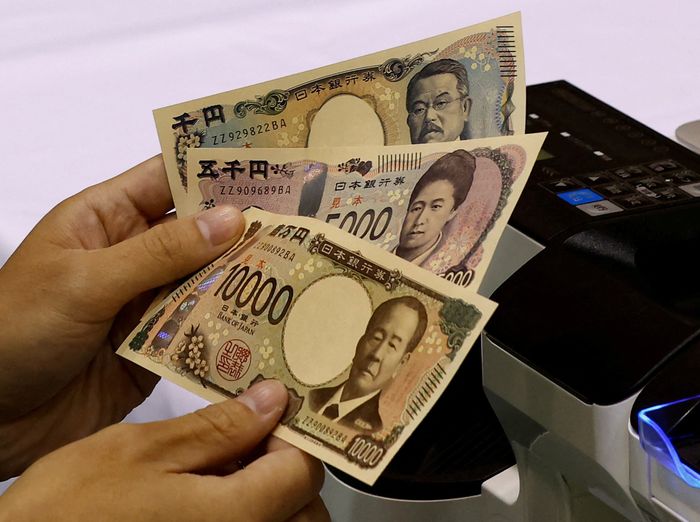
Japan’s wholesale inflation accelerated to its fastest pace in more than three years in June, bolstering expectations that the Bank of Japan could raise interest rates again later this year even as the government sought to reassure investors that it would not interfere with monetary policy.
Data released on Friday showed Japan’s Producer Price Index (PPI), which measures prices companies charge one another for goods and services, rose 7.1% in June from a year earlier. The increase exceeded economists’ expectations of 6.8%, accelerated from May’s revised 6.6% gain, and marked the strongest annual rise since March 2023.
The figures add to evidence that inflationary pressures are becoming more deeply embedded in the Japanese economy after decades of persistently low inflation, increasing the likelihood that businesses will continue passing higher costs on to consumers.
Register for the next Tekedia Mini-MBA.
Register for Tekedia AI in Business Masterclass.
Join Tekedia Capital Syndicate and co-invest in great global startups.
The data also followed a Bank of Japan report released on Thursday, warning that companies are transferring higher input costs to customers more quickly than in previous inflation cycles, a development that could push consumer prices higher in the second half of the year.
Energy, Metals, and Weak Yen Fuel Inflation
The surge in producer prices was driven largely by rising commodity costs. Fuel prices climbed 22.8% from a year earlier, while prices for non-ferrous metals jumped 39.2%, reflecting the combined impact of higher energy costs linked to renewed conflict in the Middle East and robust global demand for industrial metals used in artificial intelligence infrastructure.
The latest escalation between the United States and Iran has added fresh upward pressure to oil markets after President Donald Trump declared the interim agreement ending the conflict was “over” and U.S. forces resumed military strikes on Iranian targets.

Brent crude has already risen roughly 6% this week as investors increasingly price in the risk of prolonged supply disruptions through the Strait of Hormuz, one of the world’s most important oil shipping routes.
For Japan, which imports almost all of its energy needs, sustained increases in oil prices feed directly into higher production costs, transportation expenses and electricity prices, making the economy particularly vulnerable to geopolitical shocks in the Middle East.
Adding to those pressures, the weak yen continues to make imported commodities significantly more expensive.

Japan’s yen-based import price index surged 29.7% in June from a year earlier, accelerating from May’s revised 26.1% increase and recording its fastest pace of growth since October 2022.
The combination of higher global commodity prices and a depreciating currency means Japanese manufacturers are paying substantially more for imported raw materials, raising the probability that inflation will continue filtering through supply chains.
Masato Koike, Senior Economist at Sompo Institute Plus, expects producer price pressures to remain elevated.
“Wholesale inflation will remain elevated with negotiations between the U.S. and Iran hitting a roadblock. The impact of supply constraints and past rises in energy costs will also spread to prices for various goods,” he said.
Koike added that the persistence of inflation could force the Bank of Japan to tighten monetary policy sooner than markets currently anticipate.
“If prices rise sharply for various goods, the BOJ may be forced to raise rates early, including in October.”
Rate Hike Expectations Build
The producer price data are likely to feature prominently when the Bank of Japan holds its next monetary policy meeting later this month.
While economists widely expect policymakers to leave the benchmark interest rate unchanged at 1%, investors will closely examine the central bank’s updated quarterly forecasts for inflation and economic growth for signals about the timing of the next increase.
Last month, the Bank of Japan raised interest rates to 1%, the highest level in 31 years, while warning that the conflict involving Iran could generate additional inflationary pressure by pushing up energy prices.
Most economists surveyed by Reuters now expect the central bank to raise rates again to 1.25% before the end of 2026.
The challenge facing policymakers is becoming increasingly complex.
Higher oil prices strengthen the case for further monetary tightening because they fuel inflation. At the same time, they threaten to slow economic growth by increasing costs for businesses and households in one of the world’s largest energy-importing economies.
Government Moves to Reassure Markets
The inflation data also arrive at a time when financial markets have become increasingly concerned about the independence of Japan’s central bank.
Japanese government bond yields have climbed to multi-decade highs amid speculation that Prime Minister Sanae Takaichi’s administration could pressure the Bank of Japan to delay additional rate increases. Those concerns intensified after a draft government economic blueprint urged the central bank to align monetary policy with the administration’s objective of supporting economic growth.
Seeking to calm markets, Economy Minister Minoru Kiuchi said the government would revise the language in the draft document to avoid creating the impression that it was directing monetary policy.
“There’s no change to the government’s stance that specific monetary policy means are left for the BOJ to decide,” Kiuchi said.
“The government will never convey in advance its views to the BOJ about the timing and range of rate hikes or cuts, or the direction of monetary policy.”
Separately, Finance Minister Satsuki Katayama emphasized that preserving the Bank of Japan’s independence remains essential.
She said respecting central bank independence was “very important to maintain market trust” in government economic policy.
The comments were aimed at easing investor concerns that political considerations could influence future monetary policy decisions, potentially undermining the credibility of the Bank of Japan’s inflation-fighting efforts.
Pension Reform Lifts the Yen
Separately, on Friday, the yen strengthened after Katayama announced plans to encourage Japanese pension funds to increase investments in domestic financial assets rather than overseas markets. The proposal includes the Government Pension Investment Fund (GPIF), the world’s largest pension fund, increasing allocations to Japanese assets.
The yen strengthened from above 162 per dollar to an intraday high of 161.285 before trading around 161.70, up approximately 0.4% on the day. The appreciation helped reverse some of the currency’s recent weakness, with the yen having hovered near four-decade lows before Friday’s announcement.
Fabien Yip, market analyst at IG, said the proposal could provide stronger support for the currency than direct intervention by Japanese authorities.
“The pension funds are pretty large in size (and) currently, 50% is allocated to foreign investments in their strategic allocation, (so) a shift in that would definitely create a lot more inflows for domestic assets,” he said.
“That’s supportive of the currency and at the same time, also supportive of equities and bonds.”
A shift by large institutional investors such as the GPIF toward domestic assets would require selling foreign investments and repatriating capital into Japan, increasing demand for the yen while potentially supporting domestic stock and bond markets.
The yen’s advance also pushed the U.S. dollar slightly lower against a basket of major currencies, while the euro, British pound, and Australian dollar all weakened against the Japanese currency.
Although financial markets stabilized somewhat on Friday, investors remain focused on developments in the Middle East after the collapse of the U.S.-Iran ceasefire. Renewed military strikes and the possibility of further disruptions to shipping through the Strait of Hormuz continue to cloud the global outlook for inflation, interest rates and economic growth.
Thierry Wizman, Global FX and Rates Strategist at Macquarie Group, said geopolitical uncertainty remains a dominant market theme.
“The spectra of war still hangs over sentiment,” he said. “The question confronting traders is whether Iran is willing to return to large-scale kinetic war with the U.S. and its allies if necessary to strengthen its claim of control over the Strait of Hormuz.”