

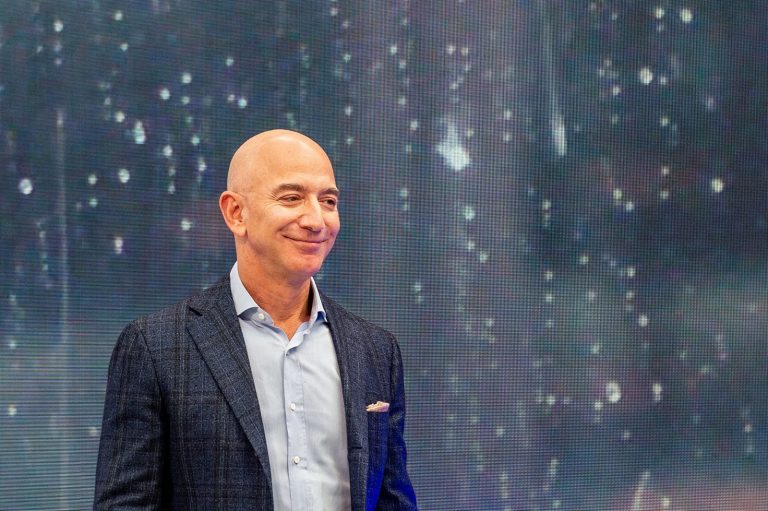
Jeff Bezos is stepping back into the spotlight as a chief executive for the first time since leaving Amazon four years ago, taking the helm of a new artificial intelligence venture called Project Prometheus.
The startup, which remains largely secretive, already commands an extraordinary $6.2 billion in funding and has hired about 100 employees, many of them poached from OpenAI, DeepMind, and Meta, according to the New York Times. Bezos will run the company as co-CEO alongside Vik Bajaj, a well-known physicist and chemist whose résumé spans Google’s X lab and the health-tech outfit Verily.
Project Prometheus is focused on applying advanced AI to engineering and manufacturing across multiple fields, including computing hardware, cars, aerospace, and other industries that depend on complex physical systems. Unlike the mainstream wave of consumer-facing AI products such as chatbots, the company is targeting the “physical economy,” betting that AI capable of design, simulation, and optimization in real-world manufacturing will become the next frontier of industrial technology.
Register for Tekedia Mini-MBA edition 20 (June 8 – Sept 5, 2026).
Register for Tekedia AI in Business Masterclass.
Join Tekedia Capital Syndicate and co-invest in great global startups.
Register for Tekedia AI Lab.
The company has not disclosed where it is headquartered or how its models work, but Bezos has been directly involved in shaping the project. It is the first formal operating role he has taken on since handing Amazon’s leadership to Andy Jassy, though he has remained deeply engaged in his aerospace company Blue Origin as founder and sole shareholder. This new move places him back at the center of the tech industry’s highest-stakes competition.
His return also draws immediate comparisons to Elon Musk, who founded xAI in 2023 after falling out with OpenAI, the company he cofounded in 2015. Musk had long argued that OpenAI had drifted from its original nonprofit mission, particularly after accepting major commercial investments and forming a for-profit arm.
By 2023, he accused OpenAI of becoming too closely aligned with corporate interests, especially Microsoft. His frustration eventually led him to launch xAI, positioning it as a direct competitor to OpenAI with an emphasis on transparency, open systems, and what he described as “maximally truth-seeking” AI. xAI’s flagship product, Grok, became known for its real-time information access and its integration into Musk’s X platform.

The moment news broke about Bezos’s startup, Musk fired off a familiar jab on X, calling Bezos a “copycat.” Musk has used that taunt before, especially when Bezos ventures into fields Musk already occupies, including spaceflight through Blue Origin and now artificial intelligence. The barb underscores the rivalry between the two billionaires, which has spanned rockets, satellites, and now cutting-edge AI.
Bezos’s move comes at a time when immense amounts of capital are flowing into AI research companies. Tens of billions of dollars are being poured into building the next generation of foundation models, state-of-the-art data centers, and specialized hardware.
The heavy spending has fueled both optimism and anxiety in the market. Michael Burry, famous for predicting the 2008 mortgage crisis, recently placed a $1 billion bet against several AI-exposed companies, including Palantir and Nvidia. Days before, he accused some big tech firms of using accounting tactics to “artificially boost earnings,” questioning whether current AI valuations are sustainable.

Still, Bezos appears prepared to dig in for the long haul. The scope of Project Prometheus suggests a strategy aligned with his long-standing interests in engineering, robotics, and space technologies. The company’s recruitment drive and its enormous early funding signal an ambition to build a deeply technical enterprise rather than a consumer-layer AI tool.
And with Musk already publicly reacting, the stage is set for a fresh chapter in one of tech’s defining rivalries — now unfolding inside the global race to build the most powerful artificial intelligence systems on earth.