

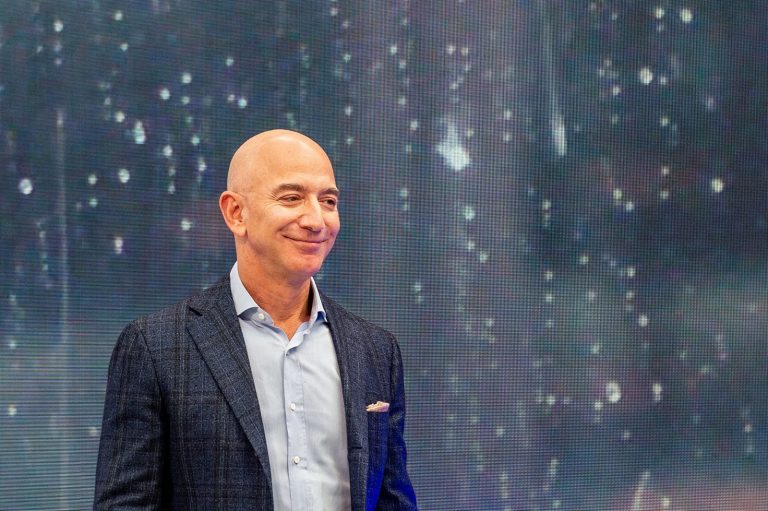
Jeff Bezos has recently argued that artificial intelligence could create an unusual macroeconomic paradox: instead of eliminating jobs in a straightforward substitution effect, AI may eventually generate a labor shortage.
This claim runs counter to the dominant narrative that automation primarily displaces workers and depresses employment. Bezos’s view instead reflects a more dynamic interpretation of technological change, where productivity gains reshape demand for labor faster than economies can adapt.
At the core of this argument is the idea that AI significantly amplifies productivity across nearly every sector. As systems become capable of writing code, managing logistics, generating content, and performing analytical tasks, firms can scale output with far fewer human constraints. In theory, this should reduce demand for certain categories of labor.
Register for the next Tekedia Mini-MBA.
Register for Tekedia AI in Business Masterclass.
Join Tekedia Capital Syndicate and co-invest in great global startups.
History suggests that productivity shocks often expand total economic activity rather than contract it. When production becomes cheaper and faster, consumption tends to rise, creating new industries and increasing demand for services that did not previously exist.
Bezos’s perspective, echoed in discussions by Jeff Bezos, is that AI-driven productivity could push global GDP growth higher than labor supply can match. In such a scenario, the binding constraint shifts from capital or technology to human availability.
Even if AI automates large portions of existing work, the economy may generate entirely new categories of jobs—many of which are difficult to predict in advance.
These could include roles in AI supervision, model auditing, synthetic data curation, human-AI coordination, and entirely new forms of creative or interpersonal services. A key mechanism behind a potential labor shortage is demographic stagnation in many advanced economies.

Aging populations in countries such as Japan, parts of Europe, and increasingly the United States are already reducing workforce participation. If AI accelerates economic expansion while population growth slows, the mismatch between labor demand and labor supply could intensify.
In this framing, AI does not reduce the need for workers; it increases the scale of economic activity that requires human participation in complementary roles. Another factor is the complementarity between AI and human labor. While AI systems excel at pattern recognition, optimization, and scalable computation, they still rely on humans for goal-setting, oversight, ethical governance, and contextual judgment.
As AI systems become more embedded in critical infrastructure, the demand for skilled human operators may increase rather than decrease. This could shift labor markets toward higher specialization, creating shortages in technical, managerial, and hybrid cognitive roles.
However, the labor shortage hypothesis is not without controversy. Critics argue that transitional unemployment could be severe, particularly if reskilling systems lag behind technological adoption.

In the short term, automation could concentrate productivity gains among capital owners while displacing routine workers faster than new jobs emerge. The eventual equilibrium Bezos describes assumes efficient retraining and institutional adaptation, conditions that are not guaranteed.
The argument that AI may cause a labor shortage reframes the debate about automation. Rather than focusing solely on job loss, it highlights the possibility of structural scarcity in human labor under conditions of rapid technological acceleration.
Whether this outcome materializes will depend on demographic trends, policy responses, education systems, and the speed at which economies can translate AI-driven productivity into broadly distributed economic opportunity.