

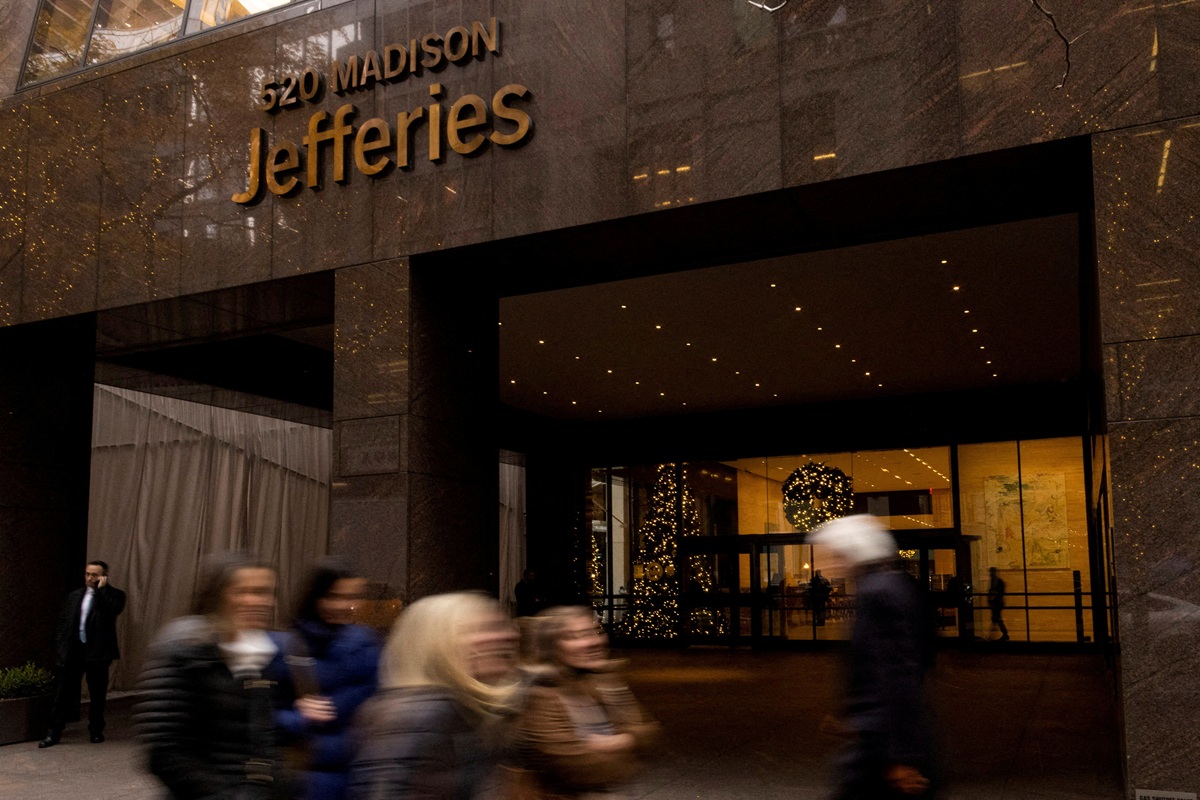
Jefferies Financial Group CEO Rich Handler said Thursday that the Wall Street investment bank was defrauded by bankrupt auto parts manufacturer First Brands Group, marking the latest fallout from a corporate collapse that has rattled U.S. credit markets.
“I’ll just say this is us personally — we believe we were defrauded,” Handler told analysts and investors during the firm’s investor day, according to a regulatory filing released Friday.
He did not provide specific details about the alleged fraud, but said Jefferies remains confident in the overall business environment despite the episode.
Register for Tekedia Mini-MBA edition 20 (June 8 – Sept 5, 2026).
Register for Tekedia AI in Business Masterclass.
Join Tekedia Capital Syndicate and co-invest in great global startups.
Register for Tekedia AI Lab.
His comments come as the U.S. Department of Justice investigates First Brands Group and as several financial institutions have reported potential losses tied to the company. The auto parts maker filed for bankruptcy protection in late September, listing more than $10 billion in liabilities, sending shockwaves through leveraged credit markets.
Fallout Across Credit Markets
The collapse of First Brands — alongside that of subprime lender and car dealership Tricolor — has deepened concerns in Wall Street’s multitrillion-dollar credit ecosystem, which spans leveraged loans, collateralized loan obligations (CLOs), trade-finance funds, and subprime auto lending.
“I’m not saying there aren’t other issues like this,” Handler said. “I think there’s a fight going on right now between the banks and direct lenders who each want to point fingers at each other and say, ‘It’s your fault, no, it’s your fault.’”

Those remarks point to growing tension between traditional banks and private credit funds, as both sides grapple with defaults that threaten to expose weaknesses in risk management and underwriting standards across the market.
Jefferies’ stock tumbled sharply after First Brands’ bankruptcy filing, though it rebounded 5% on Friday after Thursday’s steep selloff. Analysts at Oppenheimer said the drop was driven largely by “atmospheric” credit concerns rather than by any material financial weakness at Jefferies, noting that credit managers, business development companies (BDCs), and several banks had come under similar pressure.
Jefferies President Brian Friedman stressed that the investment bank’s exposure to First Brands was isolated from its core operations.

“Kind of Chinese Wall 101. Nothing more to be said,” Friedman told investors. “The two have absolutely no relationship and, in fact, the decision in 2019 of the asset management Point Bonita team to engage with First Brands was absolutely independent and disconnected from anything on the investment banking side.”
Friedman said the fund involved was managed by Leucadia Asset Management, a Jefferies subsidiary that oversees alternative investments. Jefferies disclosed earlier this month that Leucadia holds about $715 million in receivables tied to First Brands but reiterated that its direct exposure after potential recoveries is under $100 million.
“We’ve estimated the firm’s direct exposure to the First Brands fallout to be relatively small — comfortably under $100 million,” said Morningstar analyst Sean Dunlop, noting that the potential loss is “readily absorbable” given Jefferies’ capital position.
Broader Sector Ripples
The First Brands bankruptcy has compounded broader credit jitters in the U.S. banking sector. Shares of several regional lenders slumped this week after Zions Bancorporation disclosed a $50 million charge-off in the third quarter, while Western Alliance Bank filed a lawsuit alleging borrower fraud.
The concerns briefly spilled over into European and Asian markets, where investors reacted to fears of contagion in corporate credit. However, U.S. banking stocks later recovered after a series of strong earnings reports reassured investors about the sector’s underlying health.
DOJ Probe Deepens
Meanwhile, the Justice Department’s probe into First Brands is said to be focusing on accounting irregularities and the company’s relationships with key creditors, according to people familiar with the investigation. The inquiry is expected to widen as regulators examine whether the company’s financing structure concealed deeper liquidity problems.
Handler’s acknowledgment of fraud adds a personal dimension to Jefferies’ response and underscores how the First Brands collapse has become a flashpoint for tensions between traditional and private lenders in the $1.6 trillion leveraged-loan market.
Jefferies insists the damage is currently contained. But the episode highlights a larger question looming over Wall Street: whether the boom in complex, high-yield lending over the past decade has left the financial system vulnerable to more hidden risks — risks that may only surface when credit conditions tighten.