

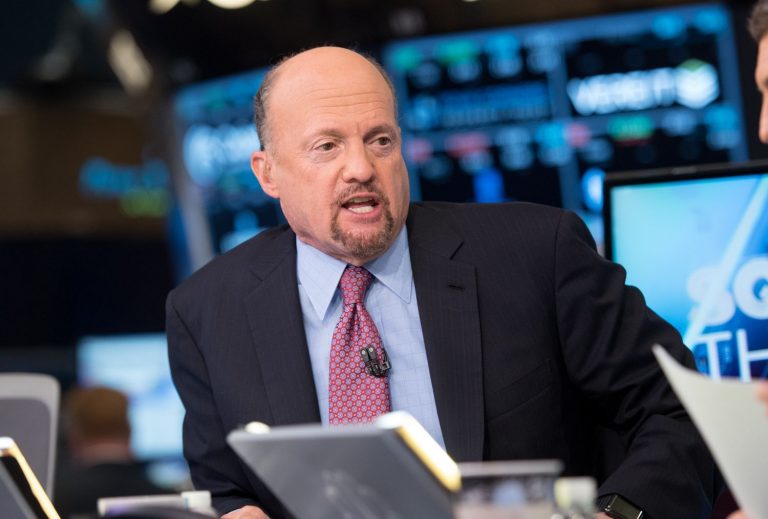
CNBC host Jim Cramer raised fresh warnings about the artificial intelligence sector on Monday, suggesting that some companies may start to underperform after months of easy gains, with OpenAI at the center of concern.
Cramer highlighted the enormous infrastructure commitments OpenAI has undertaken and questioned the company’s ability to finance the billions of dollars it has pledged to spend.
“In this kind of environment, you need to start diversifying into other growth areas, perhaps in time to keep all the king’s horses and all the king’s men sidelined,” Cramer said. “Maybe OpenAI can come public and Humpty-Dumpty won’t have a great fall, but in the meantime, it’s something you need to keep an eye on.”
Register for Tekedia Mini-MBA edition 20 (June 8 – Sept 5, 2026).
Register for Tekedia AI in Business Masterclass.
Join Tekedia Capital Syndicate and co-invest in great global startups.
Register for Tekedia AI Lab.
OpenAI has signed deals with numerous technology companies, cumulatively worth hundreds of billions of dollars, creating potential exposure across the industry. Cramer warned that if OpenAI were forced to borrow money to meet its commitments, the situation could become riskier. He noted that while the AI buildout so far has largely been fueled by cash rather than debt, reliance on borrowing could leave companies vulnerable, particularly in a market that is increasingly scrutinizing valuations and profitability.
Cramer also cited comments from OpenAI CFO Sarah Friar, who recently floated the idea of using government support to fulfill the company’s spending obligations. While Friar later clarified that OpenAI is not currently seeking government funding, the initial suggestion spooked some investors and added to sector concerns.
Drawing historical parallels, Cramer likened the current rush of AI investment to the U.S. railroad boom of the 19th century, when companies borrowed heavily and many ultimately failed.

“I’m not suggesting OpenAI will end up bankrupt, but I wish these guys would just slow down,” he said, highlighting the risk that problems at a central player like OpenAI could ripple across the broader AI ecosystem.
To mitigate potential risks, Cramer recommended that OpenAI consider going public through an IPO, which could raise billions and provide greater transparency into its finances. He also encouraged the sector to shift focus toward profitability: “I’m proclaiming that for the rest of the year it’s the era of investing not as if by magic, but as if by profits,” he said, cautioning that the next phase of AI investing would likely produce far fewer winners and a lot more losers.
Cramer added that he hopes investors will see returns “from the miners and not just from those who make the Nvidia picks and the AMD shovels,” underscoring a need for real earnings rather than speculative gains tied to the AI hype.

The warning comes as AI companies, including OpenAI and chip suppliers like AMD and Nvidia, continue to see extraordinary demand for computing infrastructure. Against this backdrop, these companies are racing to expand their AI infrastructure to contain the demand.
OpenAI’s rapid growth has been supported by massive infrastructure investments across the AI ecosystem. The company is investing tens of billions of dollars in cloud computing, servers, and AI accelerators, partnering with multiple providers, including Microsoft Azure, Nvidia, and chipmakers like AMD.
OpenAI’s Azure partnership is central to scaling ChatGPT and GPT-4 services, with Microsoft reportedly committing over $10 billion in cloud credits and infrastructure resources.
In addition to AMD, OpenAI has acquired hardware and AI acceleration capacity from Nvidia, leveraging H100 GPUs for generative AI workloads.
OpenAI has invested in and contracted other startups and smaller firms providing AI-specific software tools and high-performance computing solutions, reinforcing its reliance on a broad ecosystem.
Collectively, these investments have positioned OpenAI at the center of the AI infrastructure market but also exposed it to substantial financial and operational risk given the scale of its commitments.
While the sector’s growth story remains compelling, Cramer believes that investor caution may be warranted as the pace of spending accelerates and exposure to debt increases.