

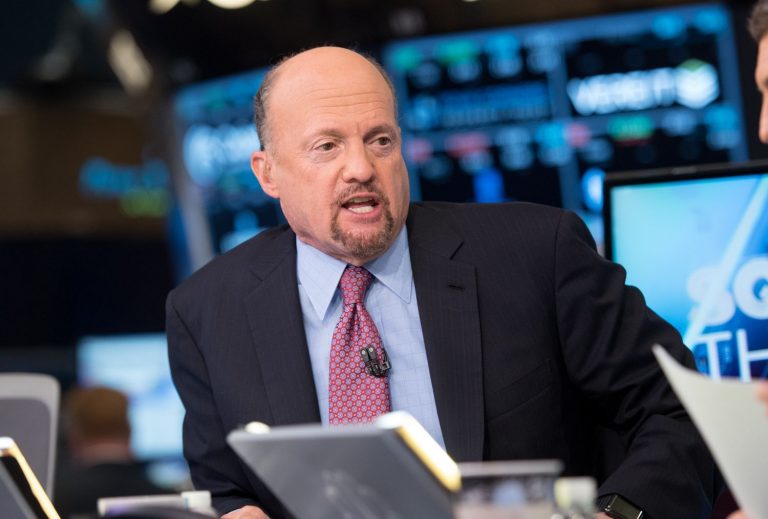
CNBC’s Jim Cramer believes Wall Street is paying attention to the wrong risk.
While investors have been focused on renewed tensions between the United States and Iran and their potential impact on global markets, Cramer has noted that the more immediate threat to the bull market is the unprecedented amount of new stocks and bonds being sold to investors.
According to the “Mad Money” host, companies have raised so much fresh capital in recent weeks that they are beginning to absorb the cash available on the sidelines, potentially leaving investors with less capacity to support further gains in the broader market.
Register for the next Tekedia Mini-MBA.
Register for Tekedia AI in Business Masterclass.
Join Tekedia Capital Syndicate and co-invest in great global startups.
“At least when it comes to the stock market, I’m a lot more worried about supply, specifically, the flood of new equity and bonds that have inundated this market, sopping up a lot of sidelined capital,” Cramer said on Wednesday.
As a fundamental principle of financial markets, stock prices are influenced not only by investor demand but also by the amount of securities available for purchase. When companies issue large volumes of new shares or debt, investors must commit fresh capital to those offerings, reducing the money available to buy existing stocks.
Over the past month, Wall Street has witnessed one of the busiest periods for capital raising in recent years. Among the largest transactions was Alphabet’s major share sale, while SpaceX completed a record-breaking $85 billion initial public offering before returning to the market with a $25 billion bond offering.

Other technology giants, including Amazon, have also issued substantial amounts of debt, adding to the wave of securities entering the market.
Although investors have so far absorbed those offerings without causing widespread market disruption, Cramer warned that the market’s capacity to continue doing so may be approaching its limits.
“I fear it’s getting to be too much,” he said.

“If the issuers and their investment banking minions don’t rein things in, I think the bull is going to get hurt.”
His concern is not centered on the financial health of the companies raising money but rather on the cumulative effect of repeated offerings arriving in quick succession.
Each IPO, secondary stock offering, or corporate bond sale requires institutional investors to allocate capital. As those transactions multiply, portfolio managers may eventually need to reduce existing positions to participate in new offerings, creating selling pressure across the broader market.
Cramer pointed to two recent transactions that he believes illustrate growing signs of investor fatigue.
The first was electric vehicle manufacturer Rivian’s discounted secondary share offering. According to him, the fact that Rivian had to offer new shares at a discount suggests investors are becoming less willing to buy fresh equity at premium valuations.
The second transaction drawing his attention is South Korean memory chipmaker SK Hynix’s planned $28 billion Nasdaq listing. The offering is expected to become one of the largest foreign listings in the United States in recent years.
Cramer questioned whether institutional investors would need to sell existing holdings to free up capital for the transaction, potentially putting downward pressure on other stocks.
The concern comes as the market has already been digesting several of the year’s largest equity offerings, raising questions about whether demand can continue matching supply if companies maintain the current pace of fundraising.
Despite those warnings, Cramer stopped short of suggesting that the market has reached a critical turning point. Instead, he argued that buyers still appear capable of supporting the current level of issuance.
“We are still at equilibrium,” he said.
“The buyers still have some spare cash.”
Wednesday’s trading provided some evidence supporting that view. Semiconductor stocks recovered during the session, led by Nvidia, which had previously lost nearly $1 trillion in market value from its peak amid concerns over AI spending and export restrictions.
Investor sentiment toward the chipmaker improved after The Information reported that Chinese authorities would allow a limited number of domestic artificial intelligence companies to purchase restricted quantities of Nvidia’s H200 AI chips.
The rebound suggested investors remain willing to buy growth stocks when presented with positive catalysts, even after weeks of heavy capital raising across financial markets.
Nevertheless, Cramer believes the current balance remains fragile.
He warned that if companies continue issuing new shares and bonds at the present rate over the coming weeks, the cumulative effect could eventually overwhelm investor demand.
“We haven’t reached the danger zone yet, but if these offerings keep coming, we will not be safe from oversupply,” he said, arguing that the healthiest outcome for the market would be a temporary slowdown in new equity issuance.
A pause in initial public offerings and secondary stock sales would allow investors to absorb recent transactions before additional securities come to market.
Cramer also suggested that mergers and acquisitions could provide a more supportive environment for stocks than fresh equity issuance.
Unlike IPOs or secondary offerings, many acquisitions reduce the number of publicly traded shares by consolidating companies rather than creating additional supply.
“IPO abstention and M&A activity can still save the bull,” he said.
“But if we keep getting this level of supply for a few more weeks? The bull will suffocate under the weight of all that new paper.”