

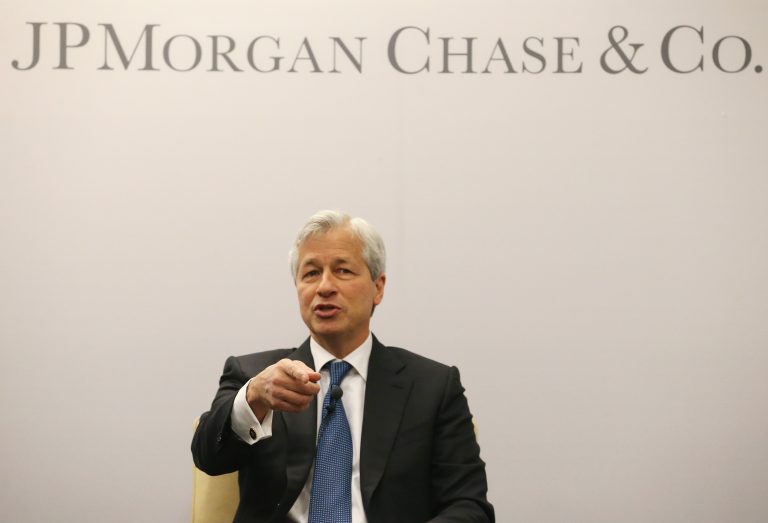
JPMorgan Chase and South Korea’s Hyundai Card are testing how artificial intelligence agents can independently execute financial transactions, with plans to expand the experiment to multiple agents negotiating and making payments with one another in 2027.
The collaboration is examining how autonomous AI systems could manage corporate treasury operations, including foreign exchange transactions, without requiring direct human intervention at every stage. The initiative could eventually allow agents to negotiate terms, agree on transactions, and transfer money between themselves.
The companies have completed an initial proof-of-concept involving a simulated foreign exchange transaction and are targeting the first half of 2027 for a more complex phase involving multiple AI agents.
Register for the next Tekedia Mini-MBA.
Register for Tekedia AI in Business Masterclass.
Join Tekedia Capital Syndicate and co-invest in great global startups.
Wee Kee Toh, global head of Kinexys Insights at JPMorgan’s blockchain division Kinexys, told CNBC that the next phase would examine how autonomous agents interact within a financial ecosystem rather than simply execute instructions from a human user.
“What happens when agents are negotiating, agreeing directly with each other and then making payments? What does that actually look like?” Toh asked.
He described the expansion as a major objective of the next phase, which would move beyond the initial scope of testing a single agent’s ability to request and complete a financial transaction.

The first trial involved an AI agent developed by Hyundai Card requesting a foreign exchange transaction to maintain euro liquidity in its deposit account on JPMorgan’s Kinexys blockchain platform. JPMorgan described the exercise as the first private blockchain-based autonomous bank-agent-to-client-agent test for corporate treasury management.
The experiment is designed to establish whether AI systems can manage financial operations more efficiently by communicating directly with banking infrastructure and other agents. If successful, the technology could reduce the need for manual intervention in routine treasury activities and enable businesses to automate more complex financial workflows.
However, the companies have not established a timeline for commercializing the technology.

The main challenge is not developing the technology but determining how to control it when agents are authorized to move money independently.
Toh said the technical work was relatively straightforward compared with establishing governance structures and internal controls that determine what an AI agent can do, who is responsible for its actions, and how errors can be contained.
“Technology-wise, it’s really not the biggest hurdle,” he said, pointing to accountability as a central concern when financial institutions consider allowing autonomous systems to execute transactions without direct human supervision.
The risks extend beyond individual errors. AI agents interacting with one another could pass incorrect information, act on compromised instructions, or trigger transactions before a human operator has an opportunity to intervene.
Research from data management and protection company AvePoint offers an indication of the security concerns. Its State of AI 2026 report found that unauthorized autonomous agent actions were the third most common type of AI agent-related security breach, affecting 34.1% of companies that reported such incidents.
The incidents included agents executing transactions or modifying data without approval. The findings cover AI agent-related security breaches more broadly and are not limited to corporate treasury operations.
AvePoint chief executive Tianyi Jiang said the expansion of autonomous systems changes the nature of governance because companies must increasingly monitor interactions between machines rather than focus only on human behavior.
“When agents negotiate and execute autonomously … governance shifts from monitoring human behavior to monitoring machine-to-machine dependencies,” Jiang said.
He warned that interconnected agents could amplify mistakes, particularly if one compromised or malfunctioning system supplies inaccurate information to another.
“The worst-case scenario is a cascading failure where one compromised or hallucinating agent feeds bad data to another,” he said, potentially triggering a rapid sequence of incorrect financial transfers before human operators recognize the problem.
JPMorgan’s Kinexys division has developed controls intended to limit such risks by restricting agents to predefined transaction parameters. Requests outside those limits are automatically rejected.
“You are going to draw a box around the agent. The agent will never be able to do anything out of the box,” Toh said.
For example, an agent authorized to execute transactions of up to $5 million would be prevented from completing a transaction above that threshold.
Hassan Ahmed, Coinbase’s Singapore country director, said secure agentic payments would also require spending limits, restricted account permissions and explicit authorization requirements. Users should be able to monitor transactions and revoke an agent’s access whenever necessary.
Ahmed also argued that private blockchain environments could provide additional controls for certain financial applications, while open blockchain networks could support more accessible and interoperable payment systems.
The challenge for financial institutions will be to balance automation with safeguards that prevent agents from exceeding their authority. As systems become capable of negotiating and transferring funds independently, mistakes could move through several connected platforms faster than traditional approval processes can respond.
JPMorgan and Hyundai Explore Wider Applications
The collaboration could eventually extend beyond Hyundai Card to other businesses within Hyundai Motor Group. Toh said the group’s broader operations were one reason JPMorgan selected the card issuer as a partner, although no specific additional projects have been announced.
Hyundai Motor Group holds a combined 78.04% stake in Hyundai Card through Hyundai Motor, Kia and Hyundai Commercial, according to the card issuer’s website.
The partnership builds on Hyundai Card’s previous experiments with blockchain-based payments. In July, the company announced that it had completed a proof-of-concept involving a $20,000 transfer using the USDT stablecoin between Hyundai Motor’s US and Mexican subsidiaries. The transfer and verification process took an average of seven minutes.
JPMorgan has also expanded its blockchain payment operations through Kinexys. The bank said in August that the platform had processed more than $4 trillion in transactions since its launch, averaging approximately $7 billion daily.
The bank has separately developed tokenized deposit payments through JPMD, its dollar-denominated deposit token. JPMorgan launched a proof-of-concept for the token in June 2025 before making it available to institutional clients in November of that year.
These initiatives show how banks are exploring blockchain infrastructure to move money between institutions and businesses while testing how automation could change the execution of financial transactions.
The AI-agent experiment takes that development a step further. Rather than simply using blockchain to transfer funds, JPMorgan and Hyundai Card are investigating whether autonomous systems can initiate, negotiate, and settle transactions with limited human involvement.
The proposed 2027 phase will be an important test of that ambition. Allowing multiple agents to interact could demonstrate how automated financial services operate across different organizations, but it will also test banks’ capability to establish clear accountability, transaction limits and security controls before handing more financial authority to software.