

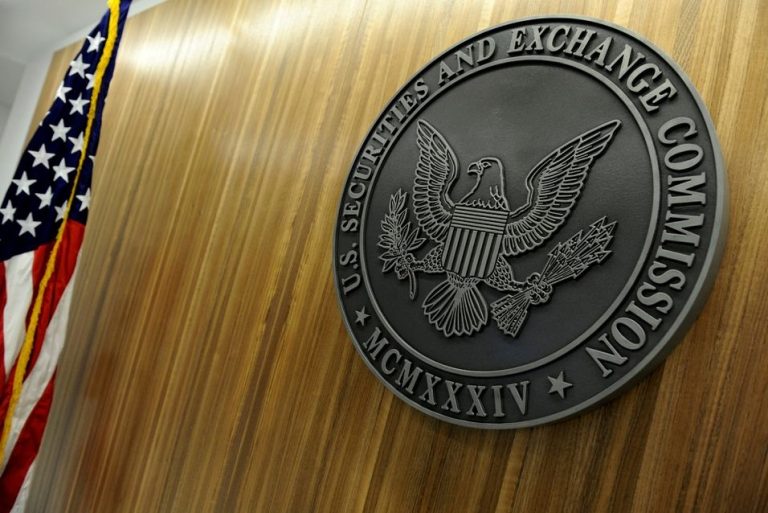
A U.S. federal judge on Wednesday approved a settlement between the Securities and Exchange Commission (SEC) and trillionaire Elon Musk over allegations that he failed to promptly disclose his purchases of Twitter shares in 2022, while making clear she had serious reservations about the agreement and the questions it raises about regulatory enforcement.
U.S. District Judge Sparkle Sooknanan, sitting in Washington, D.C., approved the settlement after concluding that her authority was limited to determining whether the agreement satisfied the minimum legal standards of fairness, adequacy and reasonableness.
In her ruling, however, Sooknanan said she had “significant misgivings” about the settlement and noted that it presented several “red flags,” suggesting the penalty may not fully address the conduct alleged by the SEC.
Register for the next Tekedia Mini-MBA.
Register for Tekedia AI in Business Masterclass.
Join Tekedia Capital Syndicate and co-invest in great global startups.
The judge said broader questions about whether the SEC had done enough to hold Musk accountable were matters for public debate and political oversight rather than judicial review.
“The Court’s role is not to determine whether the settlement is the best possible outcome or whether the SEC pursued the strongest available remedy,” the ruling effectively makes clear. Instead, the court’s responsibility is confined to evaluating whether the agreement complies with applicable legal standards.
Settlement Resolves Disclosure Dispute
Under the settlement, a trust established in Musk’s name will pay $1.5 million to resolve the SEC’s civil lawsuit without any admission or denial of wrongdoing.

The regulator alleged that Musk violated federal securities laws by waiting 11 days too long to disclose that he had accumulated more than a 5% stake in Twitter during March and April 2022.
Under U.S. securities regulations, investors acquiring more than 5% of a publicly traded company’s shares are generally required to disclose their holdings within a specified period through a filing with the SEC. The disclosure requirement is intended to provide transparency to the market by alerting investors that a significant shareholder has emerged.
According to the SEC, Musk’s delayed filing allowed him to continue purchasing Twitter shares at prices that did not yet reflect his growing ownership stake and the market’s likely reaction. The agency estimated that the delay enabled Musk to acquire additional shares at artificially lower prices, generating approximately $150 million in what it described as ill-gotten gains.

Musk has consistently denied intentionally violating securities laws, saying the late disclosure resulted from an inadvertent mistake rather than an effort to mislead investors.
The dispute concerns the early stages of Musk’s acquisition of Twitter, which ultimately culminated in his $44 billion purchase of the social media company in October 2022 after months of legal battles and negotiations.
Following the acquisition, Musk renamed the platform X as part of his broader vision of transforming it into an “everything app” integrating social media, payments, and artificial intelligence services. X now operates as part of SpaceX, Musk’s privately held aerospace and satellite company, while he also continues to serve as chief executive of electric vehicle maker Tesla.
Another Chapter In Musk’s Long-Running Battles With Regulators
The settlement adds to a lengthy history of legal disputes between Musk and the SEC. The regulator has repeatedly scrutinized Musk’s public statements and securities disclosures, most notably after his 2018 social media post claiming he had secured funding to take Tesla private.
That case resulted in a settlement requiring Musk and Tesla to pay $40 million in penalties and led to governance reforms, including oversight of certain communications that could affect investors.
The latest case is considerably narrower, focusing solely on compliance with disclosure requirements governing large share acquisitions. Even so, the judge’s unusually pointed criticism of the agreement is likely to draw attention because courts generally approve SEC settlements without extensive public commentary.
By emphasizing her “significant misgivings” while nonetheless approving the deal, Sooknanan highlighted the limited role judges play in reviewing settlements negotiated by federal regulators.
Her decision leaves the agreement intact while underscoring continuing debate over whether penalties imposed on some of the country’s most prominent corporate leaders are sufficient to deter future violations of U.S. securities laws.