

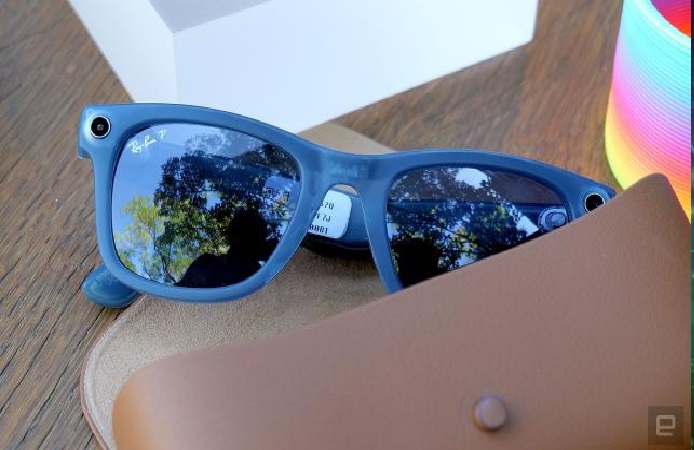
Before Kylie Jenner even finished showing off her new Meta smart glasses, the internet had already split into two camps.
To some, the glasses represent the next leap in wearable technology, blending artificial intelligence, cameras, and voice assistance into an accessory that looks increasingly like ordinary eyewear.
To others, they symbolize a future where privacy is constantly at risk and surveillance becomes embedded in everyday life.
The backlash surrounding Jenner’s debut illustrates that the biggest challenge facing smart glasses is not the technology itself, but public trust. Meta has spent years refining its wearable ambitions.
Register for the next Tekedia Mini-MBA.
Register for Tekedia AI in Business Masterclass.
Join Tekedia Capital Syndicate and co-invest in great global startups.
Unlike earlier generations of bulky smart glasses, the latest models are designed to resemble fashionable eyewear while quietly integrating cameras, microphones, speakers, and AI-powered assistants.
Users can capture photos, record videos, answer calls, translate languages, receive navigation guidance, and interact with AI without ever reaching for a smartphone. From a technological standpoint, the devices represent significant progress toward hands-free computing.
Celebrity endorsements are central to Meta’s strategy. Kylie Jenner, with hundreds of millions of followers across social media platforms, offers the company unparalleled visibility among younger consumers.

By placing the glasses on one of the world’s most influential fashion icons, Meta hopes to reposition smart glasses from niche gadgets into mainstream lifestyle products.
Yet the reaction online revealed just how uneasy many people remain.
Critics quickly questioned whether those around the wearer would always know when they were being recorded. Although Meta includes an LED indicator that lights up during recording, skeptics argue that the signal can easily go unnoticed or be ignored in crowded environments.
For many observers, the concern is not simply whether the glasses comply with privacy standards but whether they normalize constant recording in public spaces. Others viewed the promotion through a broader cultural lens.

Jenner’s influence has long shaped fashion and consumer trends, meaning her endorsement could accelerate adoption among millions who may pay little attention to the ethical debates surrounding wearable AI.
Critics worry that normalizing camera-equipped glasses through celebrity culture may outpace society’s ability to establish clear social norms about consent, data collection, and digital privacy. The controversy also reflects growing skepticism toward Meta itself.
The company continues to carry the legacy of past privacy controversies involving user data and targeted advertising. As a result, every new hardware product faces heightened scrutiny.
Even if the technology functions exactly as advertised, many consumers remain reluctant to trust a company whose reputation has been shaped by years of debates over data protection and transparency.
Supporters, argue that the criticism overlooks the broader evolution of consumer technology. Smartphones initially faced similar concerns when cameras became ubiquitous.
Today, nearly everyone carries a device capable of recording high-quality video, yet society has largely adapted through evolving etiquette and legal frameworks. From this perspective, smart glasses may simply represent the next stage of personal computing, eventually becoming as common as wireless earbuds or smartwatches.
The debate extends beyond Meta. Apple, Google, Samsung, and numerous startups continue investing heavily in augmented reality and AI-powered wearables, convinced that glasses will eventually replace smartphones as the primary interface for digital interaction.
Success, will depend not only on engineering breakthroughs but also on convincing the public that these devices enhance daily life without compromising personal privacy.
Kylie Jenner’s Meta glasses debut therefore became more than a celebrity product showcase. It exposed the unresolved tension between technological innovation and public confidence. The future of wearable AI will not be determined solely by better cameras or smarter assistants.