

Between April 23 and July 6, 2025, an in-depth analysis of Nigerian influencers’ social media activity revealed fascinating patterns that speak volumes about how influence is built and sustained in the digital age. From the rapid-fire conversations of Twitter to the quieter corridors of LinkedIn, Nigerian social, business, and political influencers are making deliberate choices about where, how, and what they post.
In a country where social media platforms have become the new public square, understanding these choices offers valuable lessons for anyone seeking to shape narratives, build credibility, or mobilize audiences. In this piece, our analyst explores what the data tells us about platform preferences, content formats, and untapped opportunities. The article also states key lesson for aspiring influencers, brands, and strategists can learn from those who are already leading the way.
Twitter is the primary arena for digital influence
The analysis reveals that Twitter stands out as the most heavily used platform by Nigerian influencers. During the period under review, influencers posted 553 text messages on Twitter, far outpacing Facebook’s 63 and LinkedIn’s 14. Twitter also saw the highest number of picture posts at 162, compared to 32 on Facebook and 13 on LinkedIn.
Register for Tekedia Mini-MBA edition 20 (June 8 – Sept 5, 2026).
Register for Tekedia AI in Business Masterclass.
Join Tekedia Capital Syndicate and co-invest in great global startups.
Register for Tekedia AI Lab.
Exhibit 1: Content type by social media type
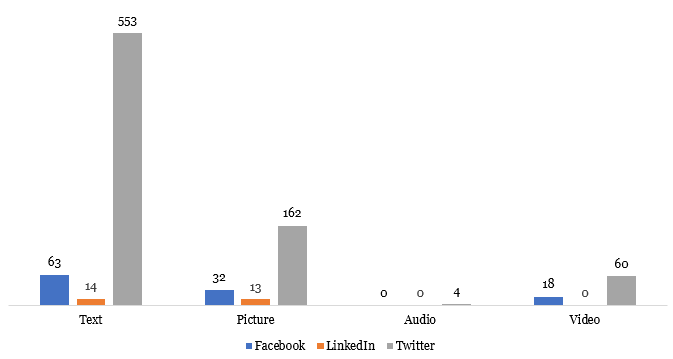
This pattern highlights Twitter’s role as the main stage for public discourse in Nigeria. Influencers use the platform’s immediacy and reach to share opinions, respond to events in real time, and participate in national conversations. The dominance of text posts is consistent with Twitter’s design as a text-first platform that encourages concise, impactful communication. The significant number of picture posts further suggests that influencers understand the power of visuals to drive engagement and virality.
The key lesson here is that Twitter is indispensable for those who want to shape conversations, mobilize followers, or assert thought leadership in Nigeria’s dynamic social and political landscape. Success on the platform requires not just frequent posting, but also an ability to deliver timely, relevant, and engaging content that resonates with fast-moving audiences.

Facebook plays a supporting role
Facebook emerged as a secondary platform in terms of message volume. Nigerian influencers shared 63 text posts, 32 picture posts, and 18 video posts on Facebook during the study period. These figures indicate that while Facebook remains part of the influencer toolkit, it is no longer the first choice for driving mass engagement.
Facebook’s strength lies in its community-building features and its support for diverse content formats. Influencers may use the platform to connect with specific audience segments, share longer updates, or participate in group discussions. However, the data suggest that Facebook is used more selectively, possibly for deeper engagement with established followers rather than for broad public influence.
The lesson from this is that Facebook should not be ignored, but its use should be strategic. Influencers and brands can benefit from tapping into the platform’s community features and its capacity for richer storytelling, but they must integrate Facebook into a broader, multi-platform approach that leverages other channels for greater reach.

LinkedIn remains a niche platform
LinkedIn recorded the lowest activity among the three platforms studied. Influencers posted only 14 text messages and 13 picture messages, with no audio or video content during the period. This reflects LinkedIn’s position as a platform for professional networking rather than mass communication.
Nigerian influencers appear to use LinkedIn sparingly, focusing on targeted messages aimed at professional audiences. This may involve sharing achievements, industry insights, or thought leadership content designed to enhance personal or organizational reputation. The limited activity suggests that LinkedIn is not the platform of choice for influencers seeking widespread visibility or rapid engagement.
The key lesson is that LinkedIn serves a specialized role. For influencers and organizations looking to build credibility within specific industries or professional communities, LinkedIn offers value. However, it should not be relied upon as the primary channel for broad-based influence.
Rich media formats are underutilized
One of the more striking findings is the limited use of rich media formats such as video and audio. Across all platforms, audio messages were rare, with just four recorded on Twitter and none on Facebook or LinkedIn. Video posts were more common but still relatively low, with 60 on Twitter and 18 on Facebook. LinkedIn had no video posts at all during the period analyzed.
This underuse of rich media stands in contrast to global trends where video and audio formats are becoming central to digital engagement. The data suggest that Nigerian influencers have yet to fully embrace these formats on Facebook, LinkedIn, and Twitter. It is likely that many influencers are turning to platforms like YouTube, Instagram, or TikTok for video and audio content, which were not included in this particular analysis.
The lesson here is that there is significant untapped potential in using video and audio to enhance digital influence. Influencers who are willing to invest in creating high-quality rich media content could differentiate themselves and build deeper connections with their audiences.
Editor’s Note: This article is a product of Infoprations’ Communicative Strategies of Nigerian Influencers Project, 2025. The team includes Abdulazeez Sikiru Zikirullah, Moshood Sodiq Opeyemi, Bello Opeyemi Zakariyha, and Oni Oluwaseun.