

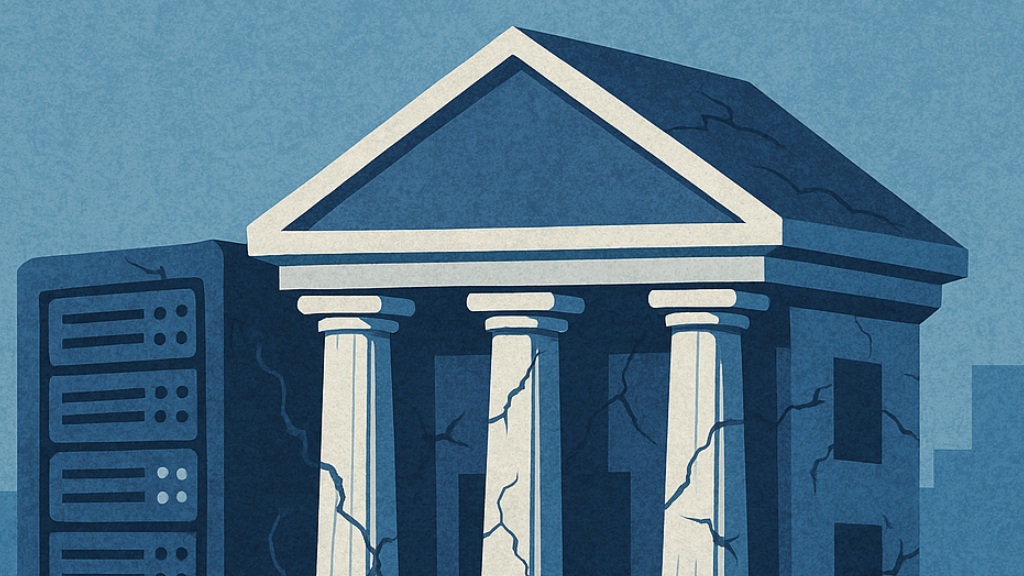
Major banks in the United States are tightening restrictions on third-party artificial intelligence agents after concerns that automated systems have performed unauthorized actions while accessing financial accounts.
The development highlights growing tensions between the rapid adoption of AI technology and the need to protect customers, financial information, and banking infrastructure from emerging digital risks.
AI agents are increasingly designed to perform tasks on behalf of users, including organizing financial information, monitoring transactions, managing subscriptions, and assisting with payments.
Register for the next Tekedia Mini-MBA.
Register for Tekedia AI in Business Masterclass.
Join Tekedia Capital Syndicate and co-invest in great global startups.
Unlike traditional chatbots, which primarily respond to questions, these agents can interact with websites, navigate applications, and execute multistep operations. However, granting autonomous systems access to sensitive financial accounts creates security challenges that banks cannot afford to ignore.
The restrictions reflect concerns about how third-party AI agents interact with banking platforms. Some automated systems may use browser controls, saved credentials, or other mechanisms to access accounts and perform actions.
If an agent misunderstands instructions, encounters misleading information, or operates beyond its intended permissions, it could initiate transactions or change account settings without proper authorization.

For financial institutions, even a small number of incidents can raise serious questions about accountability. Banks must determine whether responsibility lies with the customer, the AI developer, or the institution providing access to the account.
They must also establish whether existing security controls are sufficient to distinguish legitimate customer activity from automated behavior that could expose accounts to fraud.
Unauthorized actions are particularly concerning because banking systems handle highly sensitive information and irreversible financial transactions. A mistaken payment, an improperly modified account setting, or the exposure of personal data could cause significant harm.

Although conventional banking protections remain essential, autonomous AI systems introduce new possibilities for errors that may occur at machine speed. Consequently, restricting third-party agents offers banks a way to limit exposure while they evaluate the technology.
Institutions may block certain automated connections, strengthen authentication requirements, monitor unusual access patterns, or require additional confirmation before sensitive actions can proceed. These measures can reduce immediate risks, although they may also inconvenience customers who want AI tools to simplify their financial lives.
The restrictions could also affect technology companies developing personal AI assistants. Many are competing to build agents capable of handling increasingly complex responsibilities, from booking services to managing household expenses.
Reliable access to financial accounts would make these products more useful, but banks are unlikely to grant broad permissions without clear evidence of security, reliability, and accountability.
The challenge is finding a balance between innovation and protection. Banks must defend customers against unauthorized activity without unnecessarily preventing legitimate technological progress.
Meanwhile, AI developers need to design systems that respect user permissions, verify instructions, maintain transparent activity records, and request confirmation before carrying out consequential financial operations.
One potential solution is a permission-based framework that allows agents to access only the information and functions necessary for specific tasks. Read-only access, transaction limits, temporary authorization, and independent confirmation could help reduce the consequences of mistakes.
Stronger technical standards could also improve cooperation between financial institutions and AI providers. The restrictions demonstrate that trust will be essential to the future of AI-powered banking. Customers may welcome automation, but convenience cannot come at the expense of financial security.
As AI agents become more capable, banks, regulators, and technology companies will need to establish clear rules governing access, consent, and responsibility. The success of financial AI will depend not simply on what these systems can accomplish, but on whether they can operate safely, transparently, and within the boundaries customers establish.