

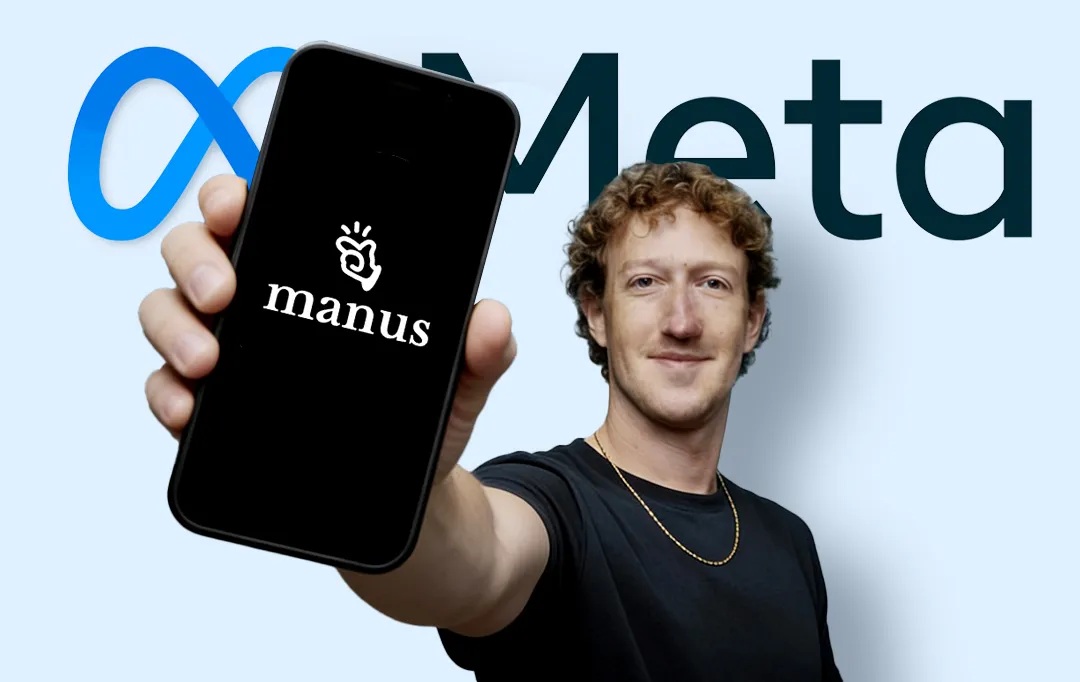
Chinese AI-agent startup Manus has raised more than $500 million in its first major funding round since Beijing blocked Meta’s proposed $2 billion acquisition of the company, underscoring continued investor interest in AI agents despite intensifying competition in the sector and growing regulatory scrutiny of Chinese technology companies.
Butterfly Effect, the parent company of Manus, said on Thursday that the funding round was led by private equity firm Boyu Capital and venture investor IDG Capital. Existing shareholders Tencent, HSG and ZhenFund also participated in the financing.
The company did not disclose its post-money valuation. Bloomberg reported last month that Manus was expected to double its valuation to $4 billion through the round, potentially making it the most valuable AI-agent company in China.
Register for the next Tekedia Mini-MBA.
Register for Tekedia AI in Business Masterclass.
Join Tekedia Capital Syndicate and co-invest in great global startups.
The scale of the financing indicates that investors remain willing to back Manus as an independent business even after the collapse of its high-profile deal with Meta. The acquisition had been viewed as a potential route for Manus to gain global scale and access to Meta’s resources, but Chinese regulators intervened before the transaction could be completed.
“The fundraising shows that the short-term fallout from the Meta case has been contained and investors are willing to back Manus as an independent company,” said Dan Wang, China director at Eurasia Group, adding that the financing also points to renewed confidence in the commercial potential of AI agents.
However, the new capital also raises the pressure to demonstrate that Manus can build a sustainable business without Meta. The company now has to translate its technology and international ambitions into revenue and profitability while restructuring its ownership and operations in a way that satisfies Chinese regulatory requirements.

“The immediate task for Manus now is proving scale, profitability and regulatory alignment,” said Han Lin, China country director at The Asia Group.
Manus emerged in early 2025 as one of the more prominent Chinese AI-agent startups, positioning its technology around systems capable of carrying out tasks rather than simply generating text or answering questions.
The company subsequently moved its staff to Singapore after receiving backing from US venture capital firm Benchmark, an important step in its effort to establish an international footprint. Meta announced the acquisition in December, setting the stage for the integration of Manus’ team and technology into the US social media giant.

That plan was later halted by Chinese regulators. The National Development and Reform Commission said it had decided to “prohibit foreign investment in the Manus project.”
By that point, Meta had already begun integrating Manus employees and technology into its own operations. The regulatory intervention therefore created an unusual situation in which a transaction involving a Chinese-founded AI company and a major US technology company was interrupted after integration work had already begun.
Manus has since resumed independent operations. Earlier this month, the company said its founding team would continue developing generative AI agents for users globally following its separation from Meta.
The startup has also moved quickly to demonstrate that it is not simply returning to its pre-acquisition business. It has unveiled Manus 2.0, built around a new in-house execution system called Cascade, as it seeks to improve the underlying infrastructure supporting its agents.
It has also launched Cue, a standalone personal-agent application in which each AI agent is assigned its own email address, phone number, and mobile wallet. The product points to Manus’ broader ambition to build agents capable of interacting with digital services and carrying out tasks on behalf of users rather than functioning solely as conversational assistants.
That strategy puts Manus directly into one of the most competitive areas of the AI industry. As foundation models become more capable and cheaper to operate, startups developing agentic applications face pressure to establish differentiation beyond access to increasingly commoditized underlying models.
The financing suggests investors still see value in Manus’ ability to build an independent agent platform, but the company’s next challenge will be converting that technological momentum into a business capable of supporting its reported valuation.
Meta Relationship May Outlast the Failed Deal
The failed acquisition has also not necessarily erased the technological connection between Manus and Meta.
Meta has continued developing its own personal AI agent, launching Muse in early September and modeling it on the open-source AI agent OpenClaw. The company’s continued investment in personal agents means the technology and expertise developed during its brief integration with Manus could remain relevant to its own products even though the acquisition itself was blocked.
“The close integration with Manus does not disappear when the transaction is reversed,” said Matthias Hendrichs, a Singapore-based adviser to global AI firms.
“You can separate companies, but you cannot make engineers forget what they learned.”
That dynamic could make the aftermath of the acquisition as important as the failed transaction itself. Meta gained exposure to Manus’ technology and engineering capabilities before the deal was reversed, while Manus has emerged with additional experience of operating at the scale and pace expected of a global technology company.
However, the new funding provides Manus with the financial capacity to continue that expansion independently. But the company’s position remains shaped by a difficult combination of commercial competition and regulatory constraints.
The $500 million-plus financing demonstrates that the collapse of the Meta deal did not eliminate investor appetite for the company. At the same time, it places a higher burden on Manus to prove that it can achieve scale and profitability without the strategic and financial support that a major technology-company owner could have provided.
A future public listing could eventually become part of that path, analysts say, but the more immediate test is whether Manus can build a profitable standalone business while maintaining regulatory alignment in China and continuing to compete internationally.