

Billionaire entrepreneur says communities should secure enforceable limits, financial guarantees and independent oversight before data-center developers break ground
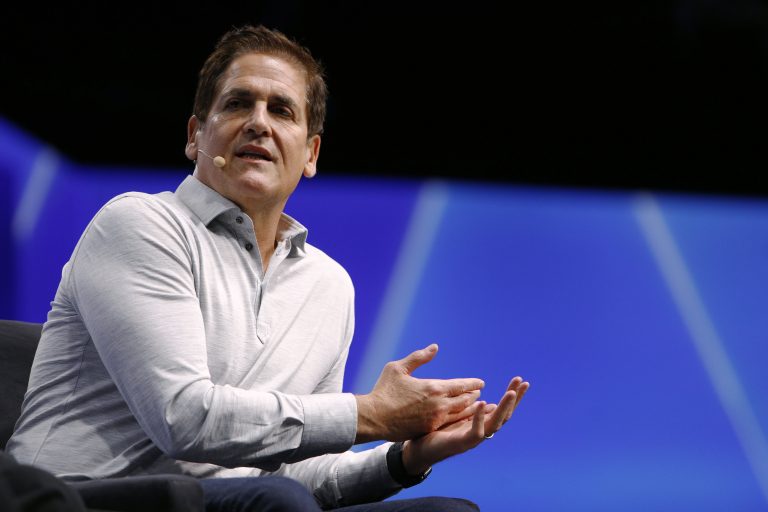
Mark Cuban is urging local governments to negotiate aggressively with data-center developers before approving new projects, noting that communities have their greatest bargaining power before construction begins.
In a series of posts on X on Monday, the billionaire technology entrepreneur laid out a 10-part framework for towns considering their first data center. His central message was that major commitments from developers should not be left to promises or broad assurances.
Register for the next Tekedia Mini-MBA.
Register for Tekedia AI in Business Masterclass.
Join Tekedia Capital Syndicate and co-invest in great global startups.
Instead, Cuban said every significant undertaking should have measurable limits, independent oversight, financial backing and a practical remedy if the developer fails to meet its obligations.
A data center can deliver construction jobs, expand a local tax base and bring investment in roads, power infrastructure and other services. But the facilities can also impose long-term demands on electricity, water and public infrastructure while affecting nearby residents for decades.
Cuban advised communities to hire their own lawyers and technical experts rather than relying solely on information supplied by developers. Local officials should also evaluate the project’s full planned build-out, rather than negotiating around only the first phase of construction.

Among the safeguards he recommended are explicit limits on water consumption and noise, restrictions on backup-generation equipment and provisions requiring developers to cover infrastructure costs associated with their projects.
Water And Noise Emerge As Key Battlegrounds
Cuban placed particular emphasis on water use, cautioning communities against assuming that a data center using closed-loop cooling will have no significant water requirements.
Even systems marketed as closed-loop can consume water under certain conditions, including periods of extreme heat, he said.

Noise is another major concern. Cuban noted that conventional noise standards may not adequately address the low-frequency sound generated by cooling systems and other equipment at large data centers.
“Noise is now the most common post-approval complaint and the most active area of litigation,” Cuban said in a separate post, pointing to proposed class actions in Wisconsin and Mississippi alleging that data-center noise can travel more than a mile from facilities.
The issue has become a growing source of friction between data-center operators and communities as the rapid expansion of AI computing brings large facilities into residential and rural areas.
Cuban’s recommendations extend beyond environmental and quality-of-life concerns to the financial risks communities could face if projects are delayed, downsized, or abandoned.
He called for developers to provide decommissioning funds before construction begins, as well as guarantees from financially credible parent companies. Other protections could include cash escrow accounts or letters of credit that municipalities could draw on if developers fail to meet contractual obligations.
The objective, Cuban said, is to prevent communities from being left responsible for infrastructure or cleanup costs after a project fails to materialize.
Data-Center Backlash Grows
Cuban has repeatedly warned that communities should use their leverage while AI companies and data-center developers are competing aggressively for sites and infrastructure.
In July, he said municipalities should pursue operators that violate laws or cause documented damage, arguing that the extraordinary demand for computing infrastructure gives communities negotiating power.
“The AI companies need the data centers more than they need air,” Cuban said at the time, urging communities to impose financial consequences for documented harm.
Later that month, he told the “All-In” podcast that technological advances could eventually make some of today’s computing infrastructure obsolete. He joked that unused data centers could ultimately become “pickleball courts,” underscoring the risk of communities being left with large facilities whose economics deteriorate faster than expected.
Public opposition is already presenting a significant challenge for the industry. A Gallup poll conducted in March found that 71% of Americans opposed having a data center built where they live, compared with 53% who opposed a nearby nuclear power plant.
Environmental and community groups have focused particularly on water consumption and noise. The Environmental Health Project has warned that cooling systems and diesel backup generators can generate persistent noise audible to surrounding communities, while cooling requirements can consume substantial quantities of water in areas already facing supply constraints.
The backlash has even entered popular culture. Former NFL player Jason Kelce recently appeared in a satirical advertisement for Garage Beer and Liquid Death built around the controversy over the amount of water associated with cooling AI data centers.
For local governments, the debate is increasingly about more than whether a data center brings jobs and tax revenue. Officials are being asked to determine who pays for new power and water infrastructure, who bears the environmental costs, and who is responsible if a facility fails to deliver its promised economic benefits.
Cuban described his framework as a work in progress and invited others to contribute. But its underlying argument is that once a municipality approves a project, its negotiating leverage can diminish sharply.
For communities facing proposals from developers racing to secure land and power for the AI boom, Cuban’s advice is to negotiate the protections first and approve the project afterward.