

Global markets found a measure of relief on Monday after the United States and Iran agreed to halt recent hostilities and renew diplomatic talks, helping to calm oil prices that had spiked earlier in the day amid fresh exchanges of strikes between the two sides.
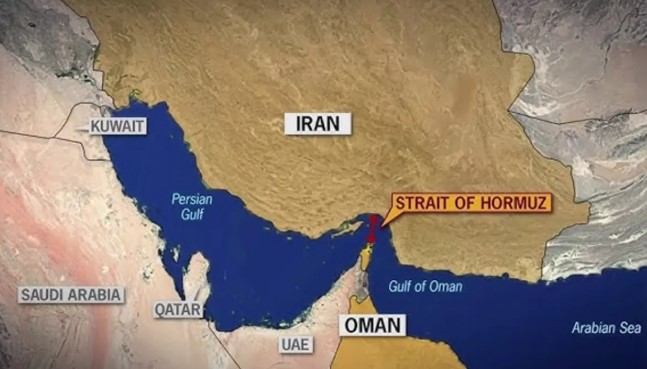
The return to negotiations followed several days of tit-for-tat military actions sparked by an Iranian projectile striking a cargo vessel in the Strait of Hormuz last week. Both nations had accused each other of violating an interim ceasefire, raising fears of prolonged disruption to one of the world’s most critical energy arteries. The latest pause in fighting offered investors a window to reassess positions, leading to modest gains across equities even as underlying economic concerns persisted.
Europe’s STOXX 600 index rose 0.1% in morning trading, while futures for the U.S. S&P 500 climbed 0.7%. Asian markets also pared earlier losses, with South Korea’s KOSPI down 0.2% and Japan’s Nikkei up 0.15%. Oil initially climbed on Monday following weekend strikes but then reversed, trading near its lowest level since the conflict began. Brent crude was little changed at $72.20 a barrel, marking a 22% decline for the month.
Register for the next Tekedia Mini-MBA.
Register for Tekedia AI in Business Masterclass.
Join Tekedia Capital Syndicate and co-invest in great global startups.
“The market can take some relief in the lower oil prices and its impact on the global economy,” said Mohit Kumar, chief European economist at Jefferies. “Lower oil prices should lead to a diversification trade and growth-sensitive sectors which have suffered in the last few months should outperform.”
This de-escalation provides a timely counterbalance to persistent worries about stretched valuations in AI-related stocks and rising expectations for tighter monetary policy in the United States. Easing energy costs could help moderate some inflationary pressures, but recent data have shown inflation jumping in the U.S. and elsewhere, reinforcing bets that the Federal Reserve may need to raise rates to contain price growth.
Rising odds of a rate hike have supported the dollar, with the dollar index trading at 101.25, just below the one-year high it touched last week. The Japanese yen slipped slightly to 161.80 per U.S. dollar, as fears of potential intervention from Tokyo prevented it from breaking through its lowest level in 40 years.

Investors are now pricing in at least one Federal Reserve rate hike this year, a sharp reversal from expectations of two cuts before the conflict intensified. Bank of America strategists have adopted an even more hawkish stance, forecasting three hikes, partly reflecting resilient U.S. jobs growth.
The stronger dollar has weighed on gold, which fell 0.6% to $4,061 per ounce. The yellow metal is on track for a 13% decline in the second quarter — its biggest quarterly drop since 2013.
Tech Valuations and Sector Rotation Dynamics
Investor unease over AI-related valuations has also lingered. Futures for the tech-heavy Nasdaq rose 1% on Monday, putting the U.S. index on track for a rebound after slumping more than 4% last week. The Bank for International Settlements has cautioned about the durability of the current AI investment surge, noting that supply bottlenecks and intense competition could lead to overinvestment reminiscent of previous boom-and-bust cycles.

“For this reason, traders have gravitated toward the defensive and cyclically oriented areas of the equity space in recent weeks,” said Jose Torres, senior economist at Interactive Brokers.
The ceasefire news encouraged some rotation back into growth-sensitive sectors that had been under pressure from higher energy costs and tighter financial conditions. This shift could gain further traction if lower oil prices translate into reduced input costs and improved consumer confidence.
U.S. Treasury yields were little changed on Monday as investors looked ahead to key jobs data later in the week while monitoring the fragile pause in U.S.-Iran hostilities. The benchmark 10-year Treasury yield rose less than a basis point to 4.376%, while the 2-year yield rose just over 1 basis point to 4.102%.
The 30-year bond yield declined less than one basis point to 4.861%. The bond market will be closed on Friday ahead of Independence Day celebrations. Investors will closely parse May’s JOLTS job openings data on Tuesday and the June nonfarm payrolls report on Thursday to gauge the health of the U.S. economy and refine their expectations for Federal Reserve policy.
A Fragile Diplomatic Window
The U.S. and Iran agreed to pause hostilities and allow commercial vessels to freely pass through the Strait of Hormuz following military clashes over the weekend that had threatened to derail negotiations aimed at ending the conflict.
“Technical talks are slated to continue on all areas of the MOU,” a U.S. official told CNBC on Sunday. “Both sides will stand down for now, and vessels can move freely.”
A sustained return to diplomacy could ease energy market tensions and reduce inflationary pressures globally. However, the situation remains fluid, with both sides quick to accuse the other of violations in recent days. Markets will be watching closely to see whether the latest pause holds and leads to a more comprehensive agreement.
For now, the de-escalation has provided investors with a reason for cautious optimism, allowing some rotation back into growth-sensitive areas that had been under pressure. Yet underlying concerns about inflation, monetary policy, and AI valuations suggest the path ahead remains uncertain.