

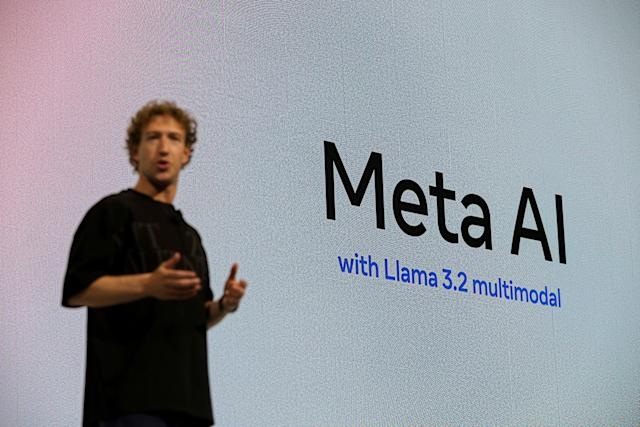
Meta Platforms has chalked up one of its clearest consumer victories in the generative AI race. Just 24 hours after unveiling Muse Spark on Wednesday, the Meta AI app shot from No. 57 to No. 5 on the U.S. App Store, according to Appfigures data.
The surge points to a wave of fresh installs driven by genuine curiosity about the company’s new flagship model.
The numbers tell a story of accelerating momentum. Worldwide, the Meta AI app has now been downloaded 60.5 million times across the App Store and Google Play, with 25 million of those coming in 2026 alone. Over the past five months, downloads have jumped 138 percent compared with the same stretch after the app first launched.
Register for Tekedia Mini-MBA edition 20 (June 8 – Sept 5, 2026).
Register for Tekedia AI in Business Masterclass.
Join Tekedia Capital Syndicate and co-invest in great global startups.
Register for Tekedia AI Lab.
India has become the biggest market, followed by the United States, Brazil, Pakistan, and Mexico—underscoring Meta’s ability to leverage its enormous global user base for rapid distribution.
Muse Spark is the first model to emerge from Meta Superintelligence Labs, the high-powered unit created last year under Alexandr Wang, the 28-year-old former CEO of Scale AI, whom Mark Zuckerberg poached in a deal that included a $14.3 billion investment in his old company. After Llama 4 failed to excite the market last year, Wang was handed the mandate to rebuild Meta’s AI efforts from the ground up.
The result is a deliberately compact, fast model optimized for real-world tasks rather than raw scale. It handles voice, text, and images, shines at health education and complex reasoning in science and math, and lets users generate websites or simple games from plain prompts. It can also spin up multiple sub-agents to divide and conquer a single query.

For now, the model powers the Meta AI app and website, with a sleek new interface that lets users toggle between specialized modes. Rollouts to WhatsApp, Instagram, Facebook, Messenger, and Meta’s AI glasses are slated for the coming weeks. Independent benchmarks show Muse Spark holding its own against rivals in some categories while still trailing in others, particularly coding and deeper reasoning.
Still, the early user response suggests Meta may finally have a credible seat at the frontier AI table.
Wang himself highlighted the ranking on X, noting the app was “still growing.” It was a rare public victory lap for a company that has spent billions hiring talent from OpenAI, Anthropic, and Google to close the gap.

The Unending Regulatory Scrutiny
Yet the upbeat AI moment arrives at a precarious time for Meta’s core social media empire. Late last month, the company suffered twin courtroom defeats that could reshape its legal exposure for years. In New Mexico, a jury hit Meta with a $375 million civil penalty, finding it violated consumer protection laws by misleading families about platform safety and failing to shield children from sexual predators on Instagram and Facebook.
A day later, a Los Angeles jury delivered a landmark “bellwether” verdict in the first major social media addiction trial. The now 20-year-old plaintiff, identified as K.G.M., was awarded $6 million in compensatory and punitive damages after jurors concluded that Instagram’s addictive features—infinite scroll, auto-play, face filters, and algorithm-driven engagement loops—had contributed to her depression, anxiety, and self-harm thoughts since childhood. Meta was found 70 percent responsible.
For more than two decades, platforms have leaned on Section 230 of the Communications Decency Act for broad immunity over user-generated content. The jury’s finding that Meta can be held liable for its own product design choices punches a hole in that shield.
Legal observers say the verdict could serve as a template for thousands of pending cases and has drawn comparisons to the 1990s tobacco litigation that forced Big Tobacco to change its ways.
Meta is already playing defense. It has begun yanking advertisements placed by plaintiff lawyers seeking clients for fresh addiction suits. Spots from firms such as Morgan & Morgan, which highlighted links between social media and anxiety, depression, withdrawal, and self-harm in children, have been removed.
A Meta spokesperson told Axios the company “will not allow trial lawyers to profit from our platforms while simultaneously claiming they are harmful,” citing the advertising standards that give it wide latitude to reject content contrary to its interests.
In its January earnings report, Meta warned investors of potential “material loss” this year tied to youth-related scrutiny. The company also quietly backed off a marketing push using Motion Picture Association PG-13 ratings to promote its new Teen Accounts after pushback from the MPA. Internationally, the pressure is mounting.
Australia’s December 2025 ban on social media for minors has inspired copycat moves; Greece and Indonesia joined the list in recent weeks.