

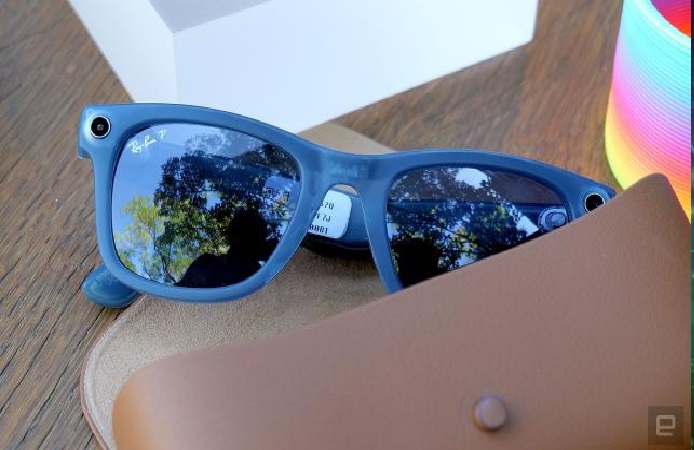
Meta has disabled the camera functions on thousands of its AI-powered glasses after detecting that users were physically tampering with the devices’ recording indicator lights, in an escalation of the company’s efforts to prevent people from secretly recording others in public.
The company confirmed on Tuesday that it had shut down the cameras on a small number of devices following a software update designed to detect attempts to circumvent the glasses’ privacy safeguards. Meta said the affected devices represented less than 0.1% of all Meta AI glasses sold.
Meta has not disclosed total lifetime sales of the glasses, which it launched in 2021. However, the company sold about 7 million pairs in 2025 alone, meaning an affected rate of 0.1% would translate to roughly 7,000 devices based on that year’s sales.
Register for the next Tekedia Mini-MBA.
Register for Tekedia AI in Business Masterclass.
Join Tekedia Capital Syndicate and co-invest in great global startups.
The enforcement action, first reported by Semafor, highlights a growing privacy challenge for wearable cameras: unlike smartphones, glasses can capture images from roughly eye level while appearing to the people around the wearer like an ordinary pair of eyewear.
Meta has long equipped its glasses with a small LED that illuminates when the camera is recording, providing a visible signal to bystanders. But some users have drilled out, covered, or otherwise interfered with the indicator, allowing them to record without the normal visual warning.
The issue has become contentious as Meta’s glasses have gained popularity. Critics have derisively referred to them as “pervert glasses”, while reports have documented attempts to use footage recorded with the devices to harass or embarrass people in public.

The controversy has forced Meta to defend not only the technology but also the privacy architecture built around it.
Meta CTO Andrew Bosworth said Monday in an Instagram question-and-answer post that the glasses were “the most privacy-forward camera” available to consumers.
“You haven’t had a camera that put a light on when it took a photo or video of somebody since you had like a VHS tape recorder in the 90s,” Bosworth said, pointing to the recording indicator.

He contrasted the feature with smartphones, which generally do not provide bystanders with a comparable external signal when their cameras are being used.
Meta has also launched a public-relations campaign to reinforce the privacy message. Billboards in Los Angeles describe the glasses as “designed for everyone” and “not just the people wearing them.”
But the company’s response goes beyond advertising.
A previous software update was designed to prevent recording when the indicator light had been tampered with. Users, however, discovered a loophole: the system checked for interference only when recording began. A person could therefore start recording normally, wait several seconds, and then cover the light without immediately triggering the restriction.
Meta’s latest update is designed to close that loophole by continuing to monitor the indicator during recording.
The consequences depend on how the indicator was disabled. Users who physically drilled out the LED will permanently lose camera functionality, according to Meta. Those who simply covered the light with a removable sticker can regain camera functionality after removing the obstruction.
Meta’s vice president of wearables, Alex Himel, said in a Thursday Threads post that only a “tiny minority of people” were attempting to tamper with the hardware. He said Meta would continue releasing software updates to ensure the recording LED can “reliably alert bystanders when photos or videos are being captured.”
The distinction between hardware tampering and temporary obstruction is important for Meta because the company is trying to preserve the glasses’ usefulness while establishing a credible privacy boundary. Permanently disabling cameras on modified devices may deter deliberate circumvention, but it also creates a more aggressive enforcement model than simply warning users or restricting individual recording sessions.
The broader issue is becoming more important as AI glasses evolve from novelty devices into mainstream consumer electronics. Meta’s glasses can capture photos and video hands-free, while AI capabilities allow users to interact with digital assistants and process information without reaching for a phone.
That convenience also changes the privacy equation. A smartphone being raised to eye level is usually an obvious indication that someone may be taking a picture. A camera embedded in glasses can be much less conspicuous, making the recording indicator one of the few mechanisms available to people nearby.
The challenge for Meta is therefore not simply preventing users from disabling a light. It is maintaining public trust in a category of devices designed to make cameras less visible and easier to operate.
The latest software intervention shows the company is prepared to treat attempts to circumvent that safeguard as a violation serious enough to result in loss of camera functionality. As wearable cameras become more common, the effectiveness of such safeguards could become a defining factor in consumers’ and regulators’ acceptability of them as ordinary consumer technology rather than intrusive surveillance devices.