

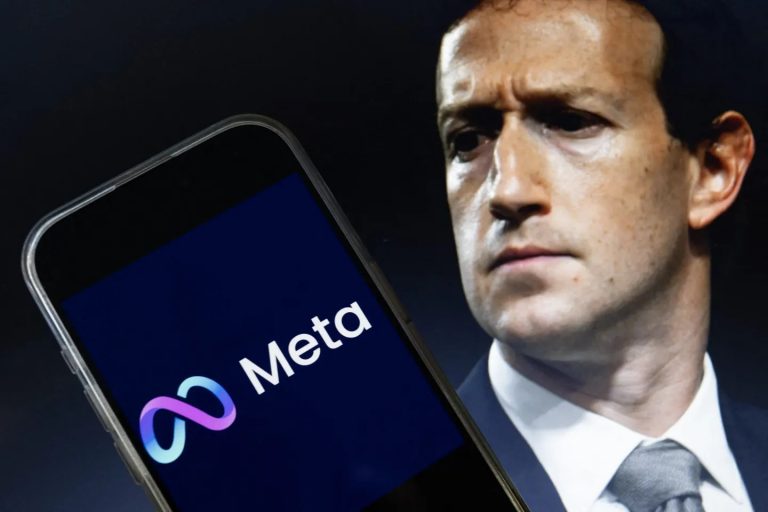
Meta Platforms has disclosed that four U.S. states are seeking $1.4 trillion in civil penalties in a landmark consumer protection lawsuit accusing the social media giant of deliberately designing Facebook and Instagram to addict young users while misleading the public about the platforms’ safety.
The unprecedented damages claim, revealed in a court filing on Monday, raises the stakes in one of the most consequential legal battles facing the technology industry, with the case expected to test how far social media companies can be held liable for the mental health effects of their products on children and teenagers.
The amount sought by the states is roughly equivalent to Meta’s $1.5 trillion market value, highlighting the enormous financial and regulatory risks confronting one of the world’s largest technology companies.
Register for the next Tekedia Mini-MBA.
Register for Tekedia AI in Business Masterclass.
Join Tekedia Capital Syndicate and co-invest in great global startups.
The disclosure came in Meta’s response to filings submitted by the attorneys general of California, Colorado, Kentucky, and New Jersey, who are asking the court to impose massive financial penalties should the states prevail at trial.
The social media behemoth argued the proposed penalties are legally unsustainable and vastly exceed any previous consumer protection enforcement action.
“A sanction of that size has no analog in the history of consumer protection enforcement,” the company said in its filing.

The attorneys general have not publicly commented on the figure because their penalty calculations remain under seal. The case is scheduled to go to trial in August before U.S. District Judge Yvonne Gonzalez Rogers in Oakland, California.
While the lawsuit originally involved a broader coalition of states, the August proceedings will specifically examine allegations brought by California, Colorado, Kentucky, and New Jersey under their respective consumer protection laws, alongside federal claims shared by multiple states.
At the center of the dispute are allegations that Meta intentionally engineered Facebook and Instagram with features designed to maximize user engagement among minors, even as the company publicly downplayed or denied potential risks to young people’s mental health.

How States Calculated The Record Penalty
Although the states’ detailed calculations remain confidential, court proceedings in June offered insight into how the proposed penalties were derived. According to statements made during the hearing, the attorneys general calculated potential fines by multiplying the number of alleged legal violations by statutory penalties established under each state’s consumer protection laws.
The number of violations was based on estimates of how many children and teenagers were allegedly exposed to Meta’s conduct over several years. The methodology reflects an increasingly aggressive legal strategy by state regulators, who argue that each affected child represents a separate violation warranting financial penalties.
The August trial will also address claims brought by 29 states under the Children’s Online Privacy Protection Act (COPPA). The states allege Meta illegally collected personal information from children without obtaining the parental consent required under federal law.
Beyond the federal privacy claims, California, Colorado, Kentucky, and New Jersey accuse Meta of violating state consumer protection statutes by making misleading public statements about the safety and addictiveness of its platforms.
The lawsuits argue that Meta continued expanding engagement features despite internal research allegedly identifying potential harms to younger users.
Meta Disputes Addiction Allegations
Meta has consistently denied the claims, arguing that the states cannot prove the company deceived consumers because “social media addiction” is not formally recognized as a psychiatric disorder. According to the company, statements asserting that Facebook and Instagram are not addictive, therefore, cannot be considered false or misleading.
Meta also maintains that it has invested heavily in parental controls, safety features, and age-appropriate protections while continuing to improve safeguards for younger users.
Last month, Judge Gonzalez Rogers rejected Meta’s request to dismiss the lawsuit before trial, ruling that substantial factual disputes remain unresolved.
Among the issues that must now be decided at trial are whether Facebook and Instagram were intentionally designed to encourage compulsive use, whether Meta knowingly misrepresented the nature of its products, and whether aspects of the platforms were deliberately directed toward children and adolescents.
The ruling represented an important procedural victory for the states and cleared the way for one of the largest technology consumer protection trials in U.S. history.
Following the decision, California Attorney General Rob Bonta accused Meta of prioritizing profits over children’s well-being. He said the company had violated consumer protection laws and pledged to hold Meta “fully accountable” for its alleged contribution to the youth mental health crisis.
Broader Legal Assault on Social Media Companies
The Meta litigation forms part of a much wider legal campaign targeting the social media industry. Thousands of lawsuits have been filed across federal and state courts against Meta, Snap Inc., Alphabet’s YouTube, and ByteDance’s TikTok, alleging that the companies knowingly designed algorithms and platform features that encourage excessive use among children and teenagers.
The lawsuits contend that recommendation systems, infinite scrolling, notifications, autoplay functions, and other engagement mechanisms were intentionally developed to maximize user retention despite evidence linking prolonged social media use to anxiety, depression, eating disorders, sleep disruption and other mental health concerns among young people.
Technology companies have broadly rejected those allegations, arguing that many factors contribute to adolescent mental health challenges and that their platforms provide users with extensive safety tools and parental controls.
The lawsuits have already produced significant legal setbacks for Meta. Earlier this year, New Mexico became the first state to take similar claims to trial, securing a $375 million jury award after jurors concluded the company had misled consumers.
The state is now pursuing additional financial penalties and a court order requiring Meta to make changes to Facebook, Instagram and WhatsApp.