

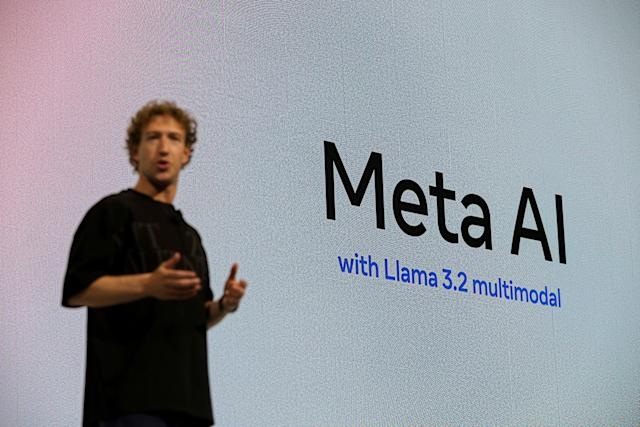
Meta has moved to suspend its work with Mercor following a recent cyber breach at the fast-growing AI training startup.
The development has sent fresh ripples through an industry already grappling with rising concerns over data security, vendor risk, and the hidden infrastructure behind artificial intelligence development.
The pause, first reported by Wired and later confirmed by Business Insider, comes as Mercor investigates a security incident linked to a supply-chain attack involving the open-source tool LiteLLM, a widely used software layer for managing large language model integrations.
Register for Tekedia Mini-MBA edition 20 (June 8 – Sept 5, 2026).
Register for Tekedia AI in Business Masterclass.
Join Tekedia Capital Syndicate and co-invest in great global startups.
Register for Tekedia AI Lab.
“The privacy and security of our customers and contractors is foundational to everything we do at Mercor. We recently identified that we were one of thousands of companies impacted by a supply chain attack involving LiteLLM,” Mercor said in a statement, referring to the open source project LiteLLM.
“Our security team moved promptly to contain and remediate the incident,” the company added. “We are conducting a thorough investigation supported by leading third-party forensics experts.”
Mercor, which was last valued at $10 billion in an October funding round, has rapidly emerged as one of the most important firms operating behind the scenes in the AI ecosystem. The company works with major technology groups, including Meta, by recruiting and coordinating thousands of contractors, researchers, and domain experts who help generate proprietary datasets used to train frontier AI models.

That role makes the breach especially sensitive.
Unlike consumer-facing AI companies whose products are visible to the public, Mercor occupies a far less visible but strategically critical layer of the value chain. Its business is built around supplying the raw human-generated data that underpins model training, evaluation, and reinforcement processes. In effect, Mercor helps create part of the intellectual foundation on which major AI products are built.
A breach at that level does not merely threaten operational continuity. It raises questions about whether sensitive project information, proprietary training methodologies, internal communications, and contractor data may have been exposed.

In a statement, Mercor said it was “one of thousands of companies impacted by a supply chain attack involving LiteLLM,” adding that its security team had moved quickly to contain and remediate the incident and that third-party forensic experts had been brought in to support the investigation.
Meta has declined public comment, but its decision to halt work with Mercor is a bold statement. For a company that has made artificial intelligence central to its long-term strategy, from large language models to generative assistants and AI-enhanced advertising systems, the integrity of its training-data pipeline is a matter of competitive and reputational importance.
The suspension suggests Meta is taking a cautious approach while it assesses the extent of the breach and any possible exposure of project-linked information. The implications, however, extend well beyond the two companies.
This incident lays bare one of the AI sector’s least discussed vulnerabilities: the growing dependence on third-party data vendors and open-source infrastructure. Much of the public conversation around AI has focused on chip supply, model performance, and regulation. Yet the industry’s operational backbone increasingly rests on external vendors, annotation firms, contractor marketplaces, and open-source libraries.
That makes supply-chain attacks potentially devastating. By compromising a trusted software dependency such as LiteLLM, attackers can bypass the hardened perimeter of large enterprises and gain access through a third-party tool embedded deep within internal workflows.
Cybersecurity specialists have long warned that this is becoming one of the most potent forms of attack in modern enterprise systems, particularly in fast-moving sectors like AI, where open-source adoption is widespread, and deployment cycles are rapid. Wired reported that other major AI labs are also reassessing their relationships with Mercor as they seek to understand the scope of the incident.
That is an important signal because Mercor’s client list extends beyond Meta and includes some of the most powerful names in artificial intelligence. If concerns spread across the sector, the breach could evolve from an isolated cybersecurity event into a broader trust crisis for one of the industry’s most highly valued startups.
But Mercor’s lofty valuation is built not only on growth expectations but on confidence that it can securely manage highly sensitive datasets and workflows for elite AI labs. Trust, in this business, is effectively part of the product. Thus, any perception that proprietary data, research pipelines, or contractor records may have been compromised could weigh heavily on future client relationships and fundraising prospects.
The situation is developing at a time when scrutiny of AI vendors has intensified globally. As competition between leading labs sharpens, training data has become one of the most closely guarded assets in the sector. Access to even partial information about dataset design, labeling protocols, or evaluation workflows can offer rivals valuable insight into how leading models are built and fine-tuned.
That is why breaches involving data contractors can be as strategically significant as direct attacks on model developers themselves. Against that backdrop, Meta’s immediate priority is likely risk containment, while for Mercor, the challenge is more existential: restoring confidence among clients, contractors, and investors that its security controls are robust enough for the increasingly high-stakes world of AI infrastructure.