

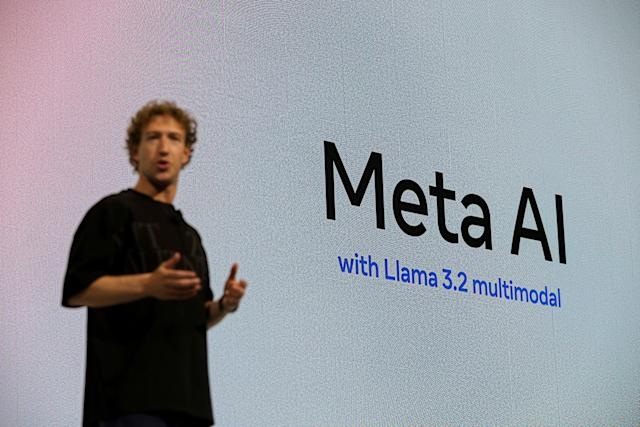
Meta Platforms is weighing sweeping layoffs that could affect 20% or more of its workforce as the social media giant attempts to manage the enormous costs of building artificial intelligence infrastructure.
The move is believed to be a part of the conglomerate’s preparation for a future in which AI systems perform many tasks once handled by large teams of employees.
Three people familiar with the discussions told Reuters that senior executives have begun signaling the potential cuts to other leaders inside the company and have asked them to examine ways to streamline their organizations. No final decision has been made on the timing of the layoffs or their precise magnitude, the sources said.
Register for Tekedia Mini-MBA edition 20 (June 8 – Sept 5, 2026).
Register for Tekedia AI in Business Masterclass.
Join Tekedia Capital Syndicate and co-invest in great global startups.
Register for Tekedia AI Lab.
If implemented at the level being discussed, the move would represent Meta’s largest workforce reduction since the restructuring campaign in 2022 and 2023 that chief executive Mark Zuckerberg labeled the company’s “year of efficiency.”
Meta employed nearly 79,000 people as of December 31, according to its latest regulatory filing. A 20% reduction would therefore translate to more than 15,000 jobs — a scale that would mark one of the biggest technology-sector layoffs in recent years.
A company spokesperson, Andy Stone, responded cautiously when asked about the reported plans, saying: “This is speculative reporting about theoretical approaches.”

AI spending reshaping Meta’s priorities
The internal discussions point to the growing financial strain created by Meta’s massive push into artificial intelligence. The company has outlined plans to spend as much as $600 billion building new data centers by 2028 in order to support the computing demands of increasingly powerful AI models.
These facilities are designed to house vast clusters of specialized processors capable of training and running large-scale machine-learning systems that power chatbots, recommendation engines, and autonomous digital agents. Such investments are becoming a defining feature of the global technology race as companies compete to develop advanced AI capable of performing complex reasoning tasks and generating content across text, images, video, and audio.
However, the spending surge has dramatically altered Meta’s cost structure. Alongside infrastructure investments, the company has been offering unusually large compensation packages to recruit elite artificial intelligence researchers. Some offers reportedly reach hundreds of millions of dollars over several years, reflecting the fierce competition for talent in the AI sector.

Efficiency Gains From AI
The potential layoffs also align with Zuckerberg’s view that artificial intelligence will enable companies to operate with significantly smaller teams. He indicated earlier this year that the company was already seeing productivity improvements from AI-assisted development tools.
“I’m starting to see projects that used to require big teams now be accomplished by a single very talented person,” Zuckerberg said in January.
Such comments suggest that Meta expects automation tools — including AI capable of writing software code, generating marketing material, and performing data analysis — to reduce the need for large organizational structures over time. The shift mirrors a broader transformation underway across the technology industry, where companies increasingly view AI not only as a product opportunity but also as a tool for internal efficiency.
A broader wave of AI-driven job cuts
Meta’s plans are part of a pattern emerging across major U.S. companies as executives reassess staffing needs in light of rapid improvements in artificial intelligence systems.
Earlier this year, Amazon confirmed plans to eliminate roughly 16,000 jobs, representing close to 10% of its workforce. Fintech company Block also cut nearly half of its staff, with chief executive Jack Dorsey pointing explicitly to the growing capabilities of AI tools that allow businesses to “do more with smaller teams.”
Across Silicon Valley, the narrative is increasingly consistent: artificial intelligence is expected to boost productivity to the point where fewer employees can accomplish the same amount of work.
Meta’s aggressive spending on artificial intelligence comes after a series of challenges that raised questions about its progress in the AI race. Last year, the company’s Llama 4 models drew criticism after researchers said early benchmark results had been presented in a way that overstated their capabilities. Meta later scrapped the planned release of the largest version of the model, internally known as “Behemoth,” which had been scheduled for launch in the summer.
The company’s newly formed “superintelligence” team is now working to regain momentum with a new model code-named “Avocado.” However, people familiar with the project have said the model’s early performance has lagged expectations compared with competing systems.
Meta has also turned to acquisitions to accelerate its artificial intelligence strategy. The company recently bought Moltbook, a social networking platform designed specifically for AI agents, reflecting a broader vision in which autonomous digital assistants interact with users across Meta’s services.
In addition, Meta is spending at least $2 billion to acquire Chinese artificial intelligence startup Manus, according to earlier Reuters reporting. These deals highlight the company’s attempt to build a full AI ecosystem that extends beyond traditional social media into areas such as automated content generation, intelligent assistants, and digital commerce.
Balancing Investment With Investor Expectations
While Meta’s long-term bet on artificial intelligence has been welcomed by some investors, the scale of spending has also raised concerns about profitability. Data centers, advanced chips, and AI research require enormous capital investment, and the financial returns from such spending may take years to materialize.
Cutting operating costs through layoffs could therefore become a key part of Meta’s strategy to reassure investors that the company can fund its AI ambitions without undermining margins.
However, the potential workforce reduction highlights how dramatically Meta’s priorities have shifted over the past decade. The company once expanded rapidly to support the growth of its core platforms — Facebook, Instagram, and WhatsApp — as well as ambitious projects such as virtual reality and the metaverse.
Now the focus has turned to building the infrastructure and research capacity needed to compete in the global race for artificial intelligence leadership.
If Meta ultimately proceeds with layoffs on the scale being discussed internally, it would mean not only a major restructuring for the company but also a broader turning point for the technology industry. It would broaden a trajectory in which AI is beginning to reshape not just the products companies build, but also the size and structure of the organizations behind them.