

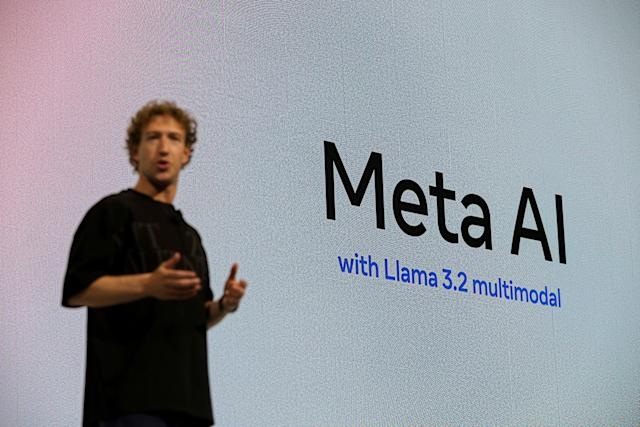
Meta is accelerating its push into enterprise artificial intelligence even as questions linger over delays to one of its most closely watched AI products, highlighting the challenges facing the social media giant as it attempts to catch up with rivals in the rapidly evolving AI race.
The company is reportedly facing setbacks in releasing the application programming interface (API) for Muse Spark, its flagship reasoning model unveiled earlier this year. According to the Wall Street Journal, Meta has repeatedly delayed plans to make the model available to developers and had no confirmed launch date as of Tuesday.
Meta, however, disputes suggestions of a major setback. A company spokesperson told Reuters that the API is already being tested with selected partners and remains on track for release this month.
Register for the next Tekedia Mini-MBA.
Register for Tekedia AI in Business Masterclass.
Join Tekedia Capital Syndicate and co-invest in great global startups.
“The muse spark API will be coming soon,” Meta’s Chief AI Officer, Alexandr Wang, said in an earlier post on X.
The delay comes at a critical moment for Meta’s AI strategy. Muse Spark was introduced in April as the first major model developed under Meta’s Superintelligence Labs initiative, a division established to narrow the gap with industry leaders such as OpenAI, Anthropic, and Alphabet.
The API rollout is particularly important because developer access is often what transforms an AI model from a research project into a commercial platform. Meta hopes to create an ecosystem that can compete with the growing enterprise adoption enjoyed by rivals by allowing software developers and businesses to integrate Muse Spark into applications and workflows.

The apparent delays, however, underscore a broader challenge confronting the AI industry. As models become more powerful, companies are increasingly prioritizing reliability, safety, and performance testing before broad public releases. The pressure to avoid errors, security vulnerabilities, and reputational damage has led many AI developers to take a more cautious approach to deployment.
At the same time, Meta is moving aggressively to expand its presence in the enterprise AI market.
During its Conversations conference in London, the company unveiled a new AI agent designed to help businesses automate routine operations. The system builds upon Meta’s existing business messaging tools on WhatsApp and Messenger by introducing more advanced “agentic” capabilities that allow AI assistants to perform tasks rather than simply answer questions.

The new agents can handle functions such as scheduling appointments, managing customer interactions, and assisting with sales activities. Meta said more than one million businesses are already using earlier versions of its AI chatbots across WhatsApp and Messenger.
The upgraded service will also be integrated into Instagram, creating a unified AI platform across Meta’s major applications.
“This is definitely an enterprise play,” Naomi Gleit, Meta’s head of product, told Reuters.
For years, Meta focused primarily on consumer-facing AI features integrated into social media platforms. Now it is increasingly targeting the lucrative enterprise software market, where businesses are spending billions of dollars to deploy AI tools that can improve productivity, automate workflows, and enhance customer service.
The opportunity is substantial. Enterprise AI has emerged as one of the fastest-growing segments of the technology industry, with companies seeking ways to integrate generative AI into daily operations. OpenAI has gained traction through ChatGPT Enterprise, Anthropic has expanded its Claude offerings for businesses, while Google and Microsoft continue embedding AI across their productivity software suites.
Meta’s competitive advantage lies in its vast communications ecosystem. With billions of users across WhatsApp, Facebook, Messenger, and Instagram, the company is uniquely positioned to offer AI-powered customer engagement tools directly within platforms that businesses already use to communicate with consumers.
The broader strategy also creates new revenue opportunities beyond advertising, which remains Meta’s dominant business. As AI agents become more capable of handling customer interactions, transactions, and operational tasks, businesses may be willing to pay for premium automation services integrated into Meta’s platforms.
However, the delayed rollout of Muse Spark highlights the challenge of executing on those ambitions. While Meta has invested heavily in AI infrastructure, talent, and model development, competitors continue to move quickly. OpenAI, Anthropic, and Google have all released increasingly advanced models and enterprise products over the past year, intensifying pressure on Meta to demonstrate that its technology can compete at the highest level.
Investors will likely view the enterprise agent launch as a positive sign that Meta is translating its AI investments into commercial products. But the success of the company’s broader AI strategy may ultimately depend on whether Muse Spark can deliver the performance and developer adoption needed to establish Meta as a serious platform provider rather than merely an AI-enabled social media company.