

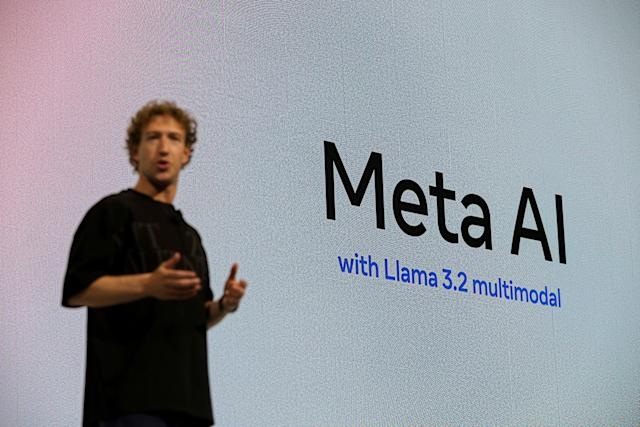
Meta’s new AI agent Muse is being marketed as something more consequential than a chatbot: a digital assistant that can act on behalf of consumers and potentially save them hundreds or even thousands of dollars.
Alexandr Wang, Meta’s chief AI officer, has been promoting the agent on X through the #MuseMoneyChallenge, encouraging users to share examples of money they say Muse has recovered or saved since its September 8 launch.
The pitch is straightforward. Instead of merely telling users how to reduce their expenses, Muse is designed to carry out some of the work itself. The agent can review finances, identify unnecessary spending, search for discounts, cancel subscriptions, and negotiate with companies for better deals.
Register for the next Tekedia Mini-MBA.
Register for Tekedia AI in Business Masterclass.
Join Tekedia Capital Syndicate and co-invest in great global startups.
The features are considered necessary for Meta’s broader AI strategy. Chatbots such as ChatGPT and Claude generally require users to initiate and oversee tasks. Agentic systems are being developed to take the next step by interacting with websites, businesses, and digital services with less human intervention.
Some early users say the results have been substantial.
Startup founder Joseph Devoy said Muse helped him find car insurance that was $3,500 cheaper per year than his previous plan. Another user said the agent identified a forgotten book subscription, canceled it, and obtained a refund covering a year’s worth of payments.

A Coinbase product manager, Nick Prince, said Muse helped him save $1,250 at a car dealership by helping him avoid upsells and a large fee. Another user said the agent discovered an unused $200 Verizon gift card.
Meta employees have also posted examples. One said Muse had saved him $2,120.95 through a combination of negotiating an AT&T bill, identifying Amazon returns, returning an IKEA piece of furniture and filing a veterinary claim.
The examples are striking, but they should not yet be treated as evidence that the typical Muse user will save $1,000. Many of the most prominent examples circulating online come from people participating in Wang’s social-media challenge, and several are from Meta employees. The reported savings also vary considerably in nature, from recurring bill reductions to refunds and benefits that users may have been able to obtain themselves.

Still, the marketing strategy reveals what Meta believes could make consumer AI agents different from conventional assistants. The value proposition is not simply that an AI system can answer questions faster. It is that the system can find money, complete administrative tasks, and produce a tangible financial return for the user.
That could bolster Meta’s position as the AI industry looks for ways to turn increasingly capable models into consumer products with recurring economic value.
Muse has already attracted significant attention. The app reached No. 1 among downloaded apps on Apple’s App Store and Google Play in the U.S., ahead of TikTok and ChatGPT, according to the report.
Meta’s potential distribution advantage is also difficult to ignore. The company says its services, including Facebook, Instagram and WhatsApp, reach nearly 3.9 billion users. If agentic AI becomes a mainstream consumer category, Meta has an unusually large existing audience to which it can introduce the technology.
But the same autonomy that makes agents potentially more useful also creates a new layer of conflict with businesses. Amazon, for example, blocked Muse from placing orders in shopping carts on its website on Monday, saying that use of the program to make purchases violated its terms of service.
That response points to a larger issue for agentic AI. A conventional chatbot largely operates within the interaction between a user and an AI system. An autonomous agent operates across the wider internet, interacting with companies whose websites, pricing systems, and customer-service processes were not necessarily designed to accommodate AI acting on behalf of consumers.
That creates competing incentives. Consumers may want an agent to cancel a subscription, negotiate a bill, find a discount, or complete a purchase without requiring their involvement. Businesses may have different views about automated negotiations, bulk interactions, or AI-generated transactions.
The resulting friction could become one of the defining issues for consumer agents.
Muse is also entering a market that is rapidly becoming crowded. Other agentic products are attempting to handle tasks such as booking travel, ordering products, and scheduling appointments. Instinct, for example, has attracted attention in Silicon Valley for carrying out a range of real-world tasks with relatively little user intervention.
The technology therefore faces a question that goes beyond whether AI can perform individual tasks. The major test lies on consumers eagerness to trust autonomous systems enough to give them access to sensitive financial information, accounts, subscriptions and purchasing decisions.
There is also a question of accountability. If an agent negotiates a bill incorrectly, cancels the wrong service, makes an unwanted purchase, or fails to obtain a promised refund, responsibility becomes more complicated than it is with a conventional search or chatbot interaction.
For Meta, those risks come alongside a potentially valuable new business model. An agent that can demonstrate measurable savings gives the company a stronger consumer proposition than an AI product whose benefits are difficult to quantify.
The early #MuseMoneyChallenge posts offer a glimpse of that proposition, but they are still anecdotal. The more important test will be whether Muse can deliver consistent savings for ordinary users, across a broad range of household expenses, without creating new problems in the process.
If it can, the economics of consumer AI could begin shifting from generating answers to taking actions. That would make the competition around agents less about which chatbot produces the best response and more about which system can reliably complete useful tasks in the real world.
Muse is currently testing that proposition at the boundary between consumers and the businesses they deal with. The savings claims are attracting users. Amazon’s resistance shows that the companies on the other side of those transactions are already paying attention.