

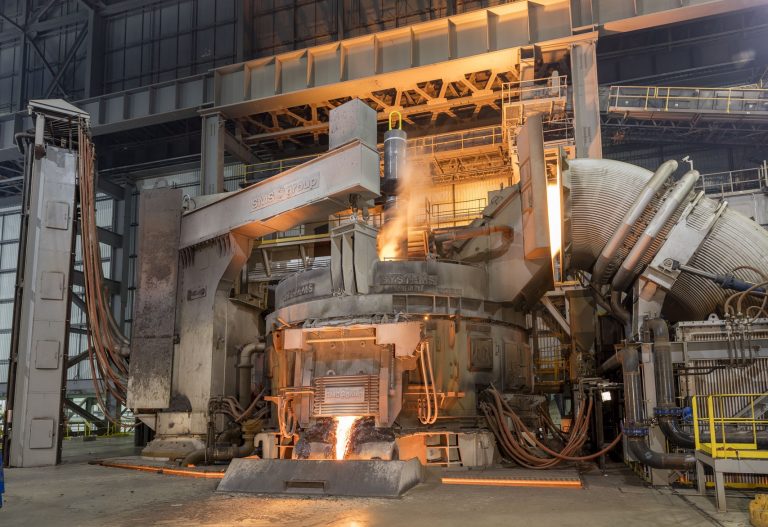
Mexico is tightening controls on steel imports from China and other countries to prevent foreign products from being rerouted into the United States through its territory, as the government seeks to secure tariff relief from Washington and protect access to its largest export market.
The measures are part of Mexico’s effort to demonstrate that its trade relationship with the United States is not being used to circumvent American restrictions on Chinese goods. Washington has placed growing emphasis on preventing Chinese steel and industrial inputs from reaching its market through third countries, making the issue a sensitive part of negotiations over tariffs and the future of North American trade.
Luis Rosendo Gutierrez, Mexico’s deputy economy minister for foreign trade, said on Wednesday that the government had strengthened product traceability and was checking that exports entering the United States through Mexico genuinely qualified for preferential treatment under the United States-Mexico-Canada Agreement (USMCA).
Register for the next Tekedia Mini-MBA.
Register for Tekedia AI in Business Masterclass.
Join Tekedia Capital Syndicate and co-invest in great global startups.
“We want to guarantee – and we are guaranteeing – that there is no triangulation of steel or other products that reach the United States taking advantage of our trade agreement,” Gutierrez told journalists.
Mexico has removed about 1,100 steel mills from its approved registry after discovering that many, particularly in Asia, did not actually exist. Gutierrez said the action helped reduce steel imports from Vietnam by 80% over the past several months.
The government has also cut steel and aluminum imports from third countries, including China, South Korea and India, by about 30%. The reduction represents approximately 13 billion pesos, or $698.54 million, in imports.

The figures give Mexico evidence that it is tightening oversight of supply chains at a time when Washington is demanding greater scrutiny of Chinese industrial goods entering North America. They also offer the Mexican government a basis for arguing that its exporters should not face the same tariff treatment as products originating in countries targeted by US trade restrictions.
Gutierrez said Mexico’s immediate priority was reducing the impact of US Section 232 tariffs on automobiles, steel and aluminum, rather than pursuing a wider review of the USMCA.
Section 232 tariffs are imposed by the United States on national security grounds. Their application to major Mexican export industries has created pressure on manufacturers and complicated the trade relationship, even as the countries remain closely integrated through regional supply chains.

About 80% of Mexican exports to the United States already enter tariff-free, Gutierrez said. However, the remaining exposure matters because automobiles, steel and aluminum are key to manufacturing activity and cross-border industrial trade. Tariffs on these products can raise costs for producers, complicate investment decisions and affect the competitiveness of goods assembled across North America.
Mexico is therefore seeking targeted relief rather than making a broader renegotiation of the trade agreement its immediate objective. Gutierrez said US officials had welcomed proposals presented by Economy Minister Marcelo Ebrard and that Mexico expected positive developments in the coming weeks before the end of the year.
The approach also signals Mexico’s attempt to separate its position from China’s in Washington’s trade policy. By tightening controls on imports and documenting the origin of industrial inputs, Mexico is seeking to show that its preferential access to the US market is based on genuine regional production rather than the movement of goods from outside the agreement.
The USMCA does not automatically make every product shipped from Mexico eligible for tariff-free entry into the United States. Goods must satisfy the agreement’s applicable rules of origin. Processing, assembly, or manufacturing in Mexico may qualify a product for preferential treatment under those rules, but simply routing foreign goods through the country does not.
Analysts have argued that Mexico is not a major hub for steel transshipment, in which products are moved through a third country primarily to avoid tariffs. However, a report last month by the Washington-based Center for Strategic and International Studies raised a more complicated issue: some goods may undergo substantial processing in Mexico before being exported to the United States.
This creates a more difficult policy question than simply identifying shipments that pass through Mexican ports or warehouses. The extent of processing, the origin of inputs, and the contribution of Mexican manufacturing all matter when determining whether products qualify under USMCA rules.
Washington’s concern is that Chinese manufacturers could use production or processing operations in Mexico to gain access to the US market while retaining significant links to Chinese supply chains. For Mexico, an overly restrictive approach could affect manufacturers that rely on imported steel and other industrial materials to produce goods for North American customers.
The government’s challenge is to demonstrate that its controls can distinguish legitimate regional manufacturing from arrangements designed primarily to obtain tariff advantages. Stronger traceability may help address US concerns, but it does not resolve every question surrounding the origin and transformation of industrial goods.
Mexico’s tariff negotiations are consequently tied to a wider debate over how North American trade rules should operate as Washington seeks to reduce its exposure to Chinese supply chains. The outcome will affect not only steel and aluminum producers but also automobile manufacturers and other industries that depend on cross-border production.
Mexico is offering tighter controls as evidence of cooperation. Its objective is to secure more favorable treatment for its exporters without weakening the regional manufacturing links that make the USMCA valuable to all three member countries.