

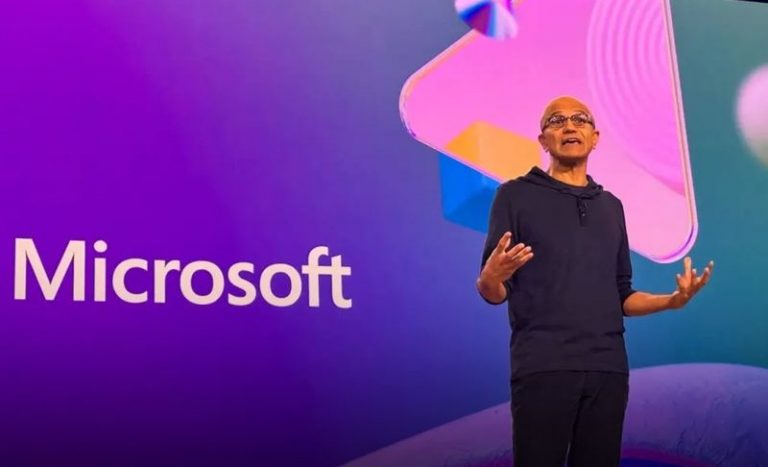
Microsoft is strengthening its artificial intelligence ambitions with the unveiling of six internally developed MAI models at its Ignite conference, signalling a major shift toward building more of its own AI technology rather than relying heavily on external partners.
The company claims that some of its new models deliver performance improvements over competing systems from OpenAI, highlighting its determination to become a stronger independent force in the rapidly evolving artificial intelligence industry.
The announcement represents an important development in Microsoft’s relationship with AI development. Although its multibillion-dollar partnership with OpenAI has played a central role in integrating advanced artificial intelligence into products such as Windows.
Register for the next Tekedia Mini-MBA.
Register for Tekedia AI in Business Masterclass.
Join Tekedia Capital Syndicate and co-invest in great global startups.
Microsoft 365 and Azure, the company is increasingly investing in proprietary models. Its MAI research initiative reflects a strategy to gain greater control over the technology powering its products while potentially reducing dependence on external AI providers.
The six models are designed to support different artificial intelligence applications, potentially covering language processing, reasoning, image generation and other enterprise-focused capabilities.
By developing models internally, Microsoft could optimise performance for its cloud infrastructure and software ecosystem. This approach may also give the company greater flexibility in pricing, deployment and product integration.

Microsoft’s claims of outperforming OpenAI systems are particularly significant because OpenAI has remained one of its most important technology partners.
However, performance comparisons depend heavily on the benchmarks, testing conditions and specific tasks involved. Strong results in selected evaluations do not automatically establish that Microsoft’s models are superior across every category of artificial intelligence.
The announcement demonstrates that Microsoft wants to compete across multiple layers of the AI market, from infrastructure and computing capacity to foundational models and consumer-facing applications.

Its ability to distribute these technologies through existing enterprise relationships could become a significant competitive advantage against Google, Anthropic and OpenAI.
Microsoft’s AI ambitions are unfolding alongside an embarrassing reliability problem affecting some of its most widely used services.
The company disclosed that a software bug, which had remained undetected since July, contributed to a global outage affecting Outlook and Microsoft Teams.
The disruption exposed the operational risks associated with maintaining large-scale cloud services used by businesses, government institutions and millions of individuals worldwide.
Outlook and Teams are essential communication tools for organisations that depend on email, virtual meetings, collaboration and document sharing.
Consequently, interruptions can affect productivity, delay important decisions and disrupt business operations across different industries.
Microsoft’s admission that the underlying bug existed for several months before being identified raises questions about its internal testing, monitoring and quality-control procedures.
Although complex software environments can contain hidden vulnerabilities, the incident highlights the importance of detecting problems before they develop into widespread service disruptions.
The outage illustrates a broader challenge facing major technology companies: innovation must be supported by reliability. As Microsoft expands its artificial intelligence offerings and integrates more advanced capabilities into its software ecosystem.
Maintaining dependable infrastructure will become increasingly important. The unveiling of six MAI models and the disclosure surrounding the Outlook and Teams outage reveal two contrasting sides of Microsoft’s technology strategy.
The company is making substantial progress toward AI independence while confronting the continuing responsibility of maintaining reliable digital services.
Its long-term success will depend not only on producing models capable of challenging OpenAI but also on delivering secure, stable and dependable products that customers can trust.