

The U.S. economy continues to post positive growth figures, with gross domestic product (GDP) expanding and consumer spending remaining relatively resilient. On the surface, these indicators suggest an economy that is successfully navigating a challenging environment marked by high interest rates, geopolitical uncertainty, and rapid technological change.
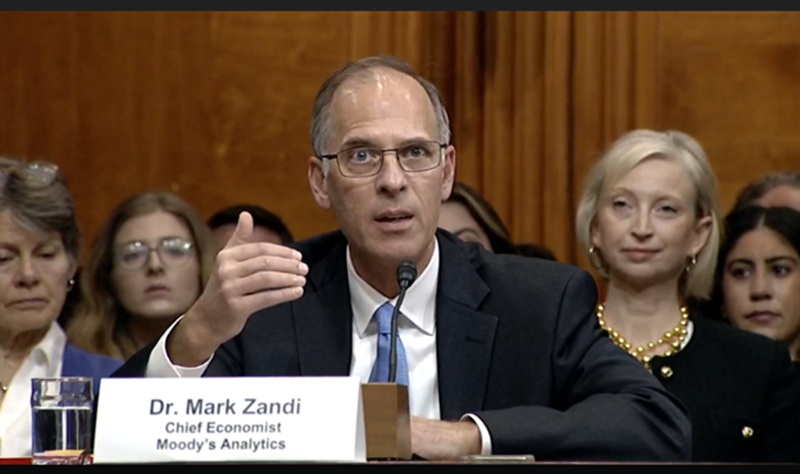
Yet according to economist Mark Zandi, chief economist at Moody’s Analytics, beneath the headline numbers lies a warning sign that policymakers, investors, and businesses should not ignore. Zandi has argued that while GDP growth remains positive, several underlying indicators point to a gradual weakening of economic momentum.
This divergence between strong headline growth and deteriorating fundamentals is often observed during the later stages of an economic cycle. The economy may still be expanding, but the engines driving that growth are beginning to lose power. One of the most concerning signals is the condition of the labor market. While unemployment remains relatively low by historical standards, hiring has slowed considerably compared to previous years.
Job openings have declined, businesses have become more cautious about expanding payrolls, and workers are finding it increasingly difficult to switch jobs for higher wages.
Register for the next Tekedia Mini-MBA.
Register for Tekedia AI in Business Masterclass.
Join Tekedia Capital Syndicate and co-invest in great global startups.
Labor markets tend to weaken gradually before broader economic activity slows, making employment trends a critical leading indicator. Consumer finances are also showing signs of strain. American households have largely supported economic growth through strong spending, but many consumers are increasingly relying on credit cards and other forms of borrowing.
Savings accumulated during the pandemic have been largely depleted, and higher interest rates have increased the cost of carrying debt. As borrowing becomes more expensive and financial cushions shrink, consumers may eventually reduce spending, removing one of the economy’s most important growth drivers. The housing market presents another challenge.
Elevated mortgage rates have cooled housing activity and limited affordability for many potential buyers. Although home prices have remained relatively firm in many regions, reduced transaction volumes indicate a market that is struggling to maintain momentum. Housing often plays a significant role in economic expansions, and prolonged weakness in the sector can have ripple effects throughout the broader economy.
Business investment has also become more selective. Companies remain interested in long-term opportunities, particularly those related to artificial intelligence and advanced technologies.

However, uncertainty surrounding economic conditions and financing costs has encouraged many firms to delay or scale back major investment decisions. This cautious approach may slow productivity growth and limit future economic expansion. Zandi’s warning is not necessarily a prediction of an imminent recession. Rather, it reflects concern that current GDP figures may be masking vulnerabilities that could become more apparent over time.
Economic growth can continue even as underlying conditions weaken, particularly when supported by government spending, temporary consumer resilience, or specific sectors experiencing rapid growth. The risk is that these supports may not be sustainable indefinitely.
For investors and policymakers, the key lesson is that GDP alone does not tell the entire story.
Economic health depends on a broad range of factors, including labor market strength, consumer confidence, household balance sheets, business investment, and financial stability. When several of these indicators begin to soften simultaneously, they can serve as early warning signals even if overall growth remains positive.

As the economy moves forward, the challenge will be determining whether these warning signs represent a temporary slowdown or the beginning of a more significant downturn. Mark Zandi’s message is clear: growth may still be visible in the headline data, but the economy’s foundation deserves closer scrutiny.