

Elon Musk is making his boldest move yet to make Tesla a chipmaking powerhouse. He has placed himself at the center of the company’s next technological leap, turning Tesla into something that looks as much like a semiconductor powerhouse as an automaker.
In a late-night post on X on Saturday, Musk threw the doors open to engineers who want to join the company’s AI chip team, and he made the invitation unusually personal: applicants should email Tesla directly with three short lines demonstrating their “exceptional ability.”
The tone of the message wasn’t corporate. It sounded more like a founder rallying a handpicked group of specialists for a mission running on limited time and endless ambition.
Register for Tekedia Mini-MBA edition 20 (June 8 – Sept 5, 2026).
Register for Tekedia AI in Business Masterclass.
Join Tekedia Capital Syndicate and co-invest in great global startups.
Register for Tekedia AI Lab.
“We are particularly interested in applying cutting-edge AI to chip design,” Musk said, laying out a goal that puts Tesla in contention with the biggest names in the semiconductor world.
He didn’t leave the timeline vague. Tesla, he said, aims to bring “a new AI chip design to volume production every 12 months,” a cadence that would outpace the entire industry.
“We expect to build chips at higher volumes ultimately than all other AI chips combined,” he added — a declaration that underscores how Tesla’s hardware push has swollen far beyond the confines of electric vehicles.

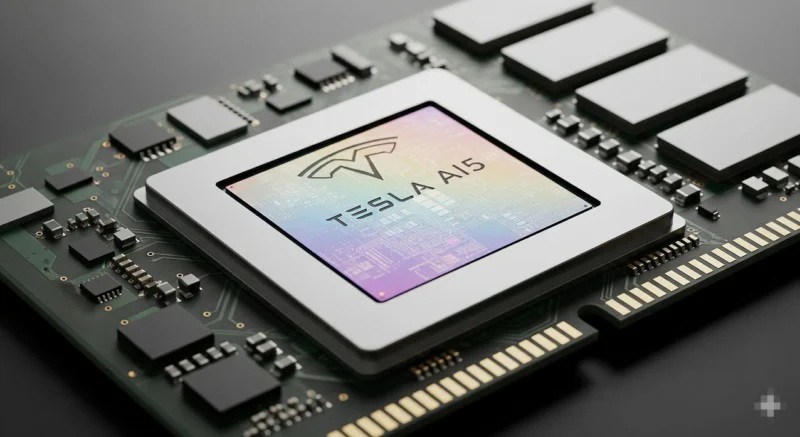
Inside Tesla’s cars today is the AI4 chip. Musk says the company is “close to taping out AI5,” the final stage before manufacturing begins. Work on AI6 has already started. Each generation is designed to push Tesla’s ambitions further into two domains Musk considers central to the company’s future: safer autonomous driving and advanced robotics.
“These chips will profoundly change the world in positive ways, saving millions of lives due to safer driving and providing advanced medical care to all people via Optimus,” Musk said.
Optimus is Tesla’s humanoid robot initiative, a long-running project that Musk believes could eventually become as important to Tesla’s operations as cars.

Over the past year, Tesla has rapidly elevated its hardware strategy. In July, the company signed a $16.5 billion deal with Samsung to manufacture the A16 chip at the tech giant’s new plant in Texas. It’s a partnership big enough to reorder chipmaking capacity in the United States, and, in July, Musk said he would personally oversee work at the plant. The Texas facility, located in the town of Taylor, is scheduled to open in 2026.
“This is a critical point, as I will walk the line personally to accelerate the pace of progress,” he wrote then, noting that the site is “conveniently located not far from my house.”
Tesla’s hiring push reflects the intensity of the project. The company has posted openings for engineering roles in its Palo Alto, California base, including positions for physical design engineers and signal and power integrity engineers who will help design, validate, and refine Tesla’s next-generation AI chips.
The physical design role carries high expectations: candidates need at least a decade of experience in integrated circuit design, the foundational work of chipmaking. The job involves crafting and integrating the building blocks that form Tesla’s AI hardware. It pays about $152,000 to $264,000 a year, plus cash, stock, and benefits.
The signal and power integrity engineer role covers chip testing and validation, and serves both Tesla vehicles and the Optimus robot program. That job pays between $120,000 and $318,000 a year, again including cash and stock options.
One thing Musk made clear is that he isn’t hovering above the engineering teams — he is sitting in the room with them.
“Deeply involved in the chip design,” he said, before noting that he holds design meetings “every Tuesday and Saturday.”
According to him, the Saturday meetings are focused on the intense short-term cycle needed to finish AI5, and they will taper off once that chip is taped out.
The habit is in line with the hands-on approach that has defined Musk’s management style for more than a decade. During Tesla’s Model 3 production crunch in 2018, he slept on the factory floor. When he took over Twitter (now X) in 2023, he ran the company’s reorganization by personally rewriting systems and restructuring internal teams.
What is different now is scale. Tesla is no longer only trying to build cars; it is trying to assemble a semiconductor ecosystem capable of producing proprietary AI chips at industrial volumes. If Musk delivers on the timeline he laid out, the company will be releasing new chips every year — a pace more commonly seen in consumer electronics, not autonomous vehicles or robotics.
His call for applicants hinted at the urgency. Tesla needs more engineers, more chip designers, more specialists capable of matching the world’s top semiconductor talent. And Musk is treating the recruiting drive as a personal project, the same way he is treating the architecture of Tesla’s AI hardware.
A few years ago, Tesla’s foray into chips looked like a supporting act for its self-driving goals. Now it resembles an entirely separate force inside the company — a fast-moving, CEO-led operation that Musk believes will shape Tesla’s future even more than new car models.