

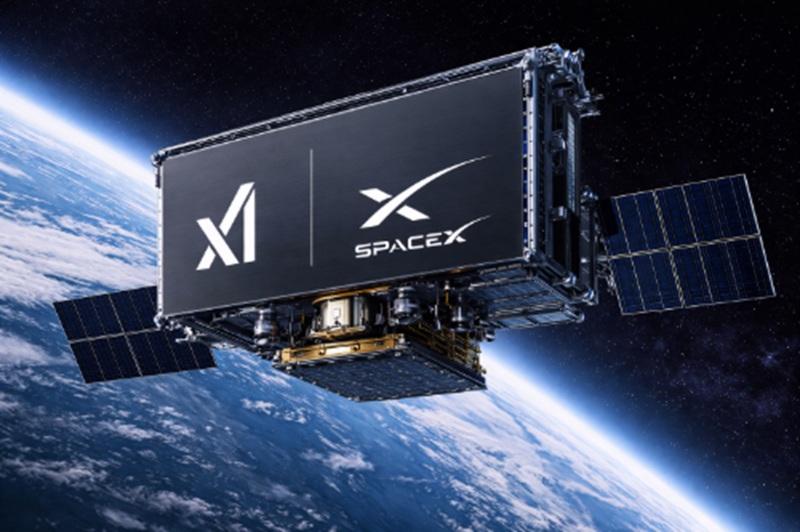
xAI has undergone a reorganization “to improve speed of execution,” Elon Musk said, as the company grapples with leadership exits, regulatory probes, and a blockbuster merger with SpaceX.
SpaceX CEO Elon Musk on Wednesday confirmed that his artificial intelligence company, xAI, has implemented a reorganization that resulted in the departure of some employees, marking another turning point for a firm already facing leadership churn and mounting regulatory pressure.
In a post on X, Musk said the restructuring “required parting ways with some people,” adding that the overhaul was designed “to improve speed of execution.” He did not specify which employees were affected or whether the exits were voluntary or part of workforce reductions.
“We are hiring aggressively,” Musk wrote.
Register for Tekedia Mini-MBA edition 20 (June 8 – Sept 5, 2026).
Register for Tekedia AI in Business Masterclass.
Join Tekedia Capital Syndicate and co-invest in great global startups.
Register for Tekedia AI Lab.
The reorganization follows a wave of high-profile departures. Earlier this week, co-founders Jimmy Ba and Tony Wu announced they were leaving the company. Their exits add to previous departures of founding members, including Igor Babuschkin, Kyle Kosic, Christian Szegedy, and Greg Yang. With these moves, roughly half of xAI’s original 12 co-founders have exited since the company’s 2023 launch.
The shake-up comes just days after Musk unveiled an all-stock transaction in which SpaceX agreed to acquire xAI. According to documents viewed by CNBC, the deal values SpaceX at $1 trillion and xAI at $250 billion following the merger.
The transaction consolidates Musk’s aerospace, social media, and artificial intelligence interests under a more tightly integrated structure. xAI already owns and operates the social network X and develops Grok, its generative AI chatbot and image system. Musk previously used xAI to acquire X in an all-stock deal announced in March 2025.

The SpaceX-xAI merger creates a combined entity valued at $1.25 trillion, positioning it among the most highly valued private technology groups globally. SpaceX is reportedly preparing for a public offering later this year, a move that would expose the newly consolidated structure to deeper investor scrutiny.
The reorganization at xAI appears aimed at aligning internal operations with that strategic integration. By centralizing decision-making and accelerating product cycles, Musk may be seeking to streamline AI development in tandem with SpaceX’s infrastructure ambitions, including large-scale data center deployment.
At the same time, xAI faces regulatory probes in multiple jurisdictions across Europe, Asia, and the United States. Authorities are investigating whether the company violated regional laws after Grok enabled the mass creation and distribution of non-consensual explicit images, commonly referred to as deepfake pornography.

The images reportedly involved photos of real individuals, including minors, raising potential legal exposure under child protection, privacy, and digital safety statutes. Regulators are examining platform moderation systems, content safeguards, and whether xAI complied with applicable obligations to prevent harmful synthetic media dissemination.
The investigations add to the operational complexity of reshaping the company’s structure. For a firm positioning itself as a competitor to OpenAI, Google, and Anthropic, regulatory compliance and reputational management now sit alongside engineering performance as core strategic priorities.
Competitive pressure in the AI race
Musk founded xAI in 2023 with 11 other researchers and engineers, stating at the time that the company’s goal was to “understand the true nature of the universe.” The launch followed Musk’s public criticism of OpenAI, which he co-founded but later left.
Since then, competition in generative AI has intensified. OpenAI and Anthropic continue to release increasingly capable models, while Google has expanded its Gemini platform across consumer and enterprise applications. To compete effectively, xAI must scale model training, improve inference performance, and secure sufficient computing capacity.
The integration with SpaceX may provide structural advantages. SpaceX’s capital base and satellite infrastructure could support Musk’s broader ambition to build data centers in space, a concept he has previously floated as a way to address energy and cooling constraints facing terrestrial AI infrastructure.
However, leadership stability is critical in high-performance AI labs, where research continuity and model iteration cycles depend on tightly coordinated teams. The departure of multiple founding technologists may affect institutional knowledge and product momentum.
IPO timing and investor scrutiny
The restructuring also comes as SpaceX prepares for a potential public listing. An IPO would subject the merged entity to enhanced disclosure requirements, including detailed reporting on governance, risk exposure, and regulatory proceedings.
Investors typically scrutinize founder-driven conglomerate structures, particularly where cross-holdings and related-party transactions are involved. Consolidating xAI under SpaceX simplifies ownership architecture but may also concentrate operational risk within a single corporate umbrella.
Musk’s statement that the company is “hiring aggressively” suggests that while some personnel were cut, recruitment continues as part of a broader reset. Whether the reorganization stabilizes leadership and accelerates product delivery will likely become clearer in the months leading up to any public offering.