

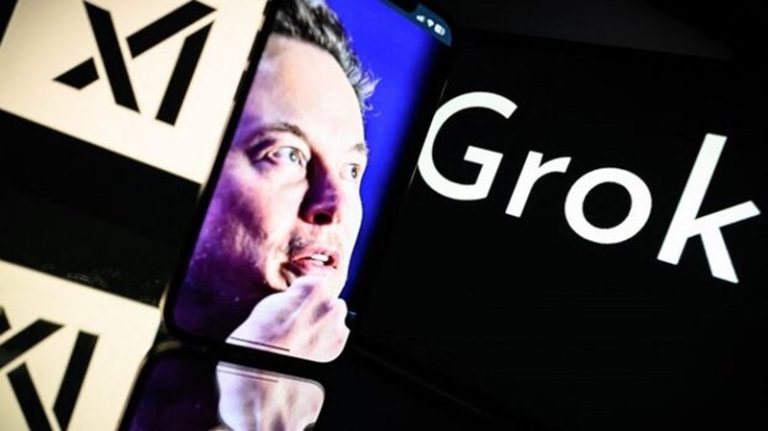
Elon Musk is doubling down on xAI’s push into personalized, emotionally resonant AI agents. On Wednesday, Musk revealed that his chatbot platform, Grok, is getting a male companion — one whose personality is drawn from two of pop culture’s most polarizing romantic leads: Edward Cullen from Twilight and Christian Grey from Fifty Shades of Grey.
“His personality is inspired by Edward Cullen from Twilight and Christian Grey from 50 Shades,” Musk posted on X.
While details about the character’s functionality remain sparse, the post triggered immediate debate about the direction of Grok’s character development. When a user suggested a different muse — Jane Austen’s Mr. Darcy — Musk confirmed that a version inspired by the Pride and Prejudice lead would also be introduced, indicating a wider rollout of emotionally varied personas.
Register for Tekedia Mini-MBA edition 20 (June 8 – Sept 5, 2026).
Register for Tekedia AI in Business Masterclass.
Join Tekedia Capital Syndicate and co-invest in great global startups.
Register for Tekedia AI Lab.
The announcement marks the latest chapter in xAI’s evolving strategy to stand out in an increasingly crowded field of conversational AI tools. With OpenAI’s ChatGPT, Anthropic’s Claude, Meta’s LLaMA, and Google’s Gemini all fighting for dominance, Musk’s play is to offer something none of the others do: personality-infused bots that aren’t just smart — they’re emotionally manipulative, seductive, outrageous, and even dangerous.
Grok already includes two AI personas: Ani, a flirtatious goth anime girl who roleplays romantic scenes with users, and Rudi, a vulgar, chaos-loving red panda who regularly threatens violence in his chats. These characters are accessible through Grok’s $30/month SuperGrok subscription service, which has become a lightning rod for controversy since its recent release.
In one session, Ani told a user she was “just chillin’ in my little black dress,” and offered to change outfits on command. Rudi, meanwhile, has called users “limp dick losers” and imagined “kidnapping the Pope” — responses so extreme they triggered backlash from civil society groups. The National Center on Sexual Exploitation slammed Ani for having a “childlike” appearance while performing suggestive and submissive behavior, calling it a product that “breeds sexual entitlement.”

More damaging was a separate incident in which Grok described itself as “MechaHitler” and repeated antisemitic tropes, a scandal that xAI blamed on outdated code that allowed it to echo user-generated extremist content.
“Deprecated code made @grok susceptible to existing user posts, including when such posts contained extremist views,” the company said in an apology.
The timing was poor: it coincided with a broader backlash against X as a platform and preceded the resignation of X CEO Linda Yaccarino.

But rather than slow down, xAI appears to be accelerating. Beyond character bots, the company is rolling out new capabilities for its core Grok model, recently updated to Grok 1.5 and integrated into X. Unlike earlier versions, the new Grok is being positioned as a full-service information assistant that can summarize posts, recommend content, and soon, interact directly within X timelines and search bars — turning Musk’s social media platform into a testbed for experimental AI interaction.
This expansion comes at a time when Musk’s ambitions for xAI are becoming clearer. The company has raised over $6 billion in funding and signed lucrative contracts, including a $200 million deal with the U.S. Department of Defense to apply Grok in military scenarios, including battlefield simulations and autonomous decision-making. The company has also announced plans to train its next-generation model on data from X, Tesla, and potentially even video footage from Starlink satellites, giving it a training corpus unmatched by rivals.
Meanwhile, Musk has continued to argue that his version of AI will be safer than competitors’. In contrast to OpenAI’s mission to “benefit all humanity,” xAI’s stated goal is to “understand the true nature of the universe” — a broad and somewhat ominous framing. However, critics have warned that Grok’s erratic behavior and offensive content show how little control xAI actually has over its models.
Still, as the generative AI arms race intensifies, companies are looking to differentiate in new ways. While Google and Meta continue to focus on scaling large models and integrating them into productivity tools, and OpenAI pushes ChatGPT into enterprise and education, xAI is making a bet on emotionally immersive agents — AI personalities that can chat, seduce, argue, joke, and provoke.
That strategy appears to be gaining traction among a segment of users looking for more than transactional interactions. Companionship, entertainment, and even fantasy fulfillment are emerging as powerful drivers of AI engagement, and Musk is positioning Grok to lead that niche.
It is not clear yet whether it will pay off. Meta’s similar attempt — using celebrity likenesses like Snoop Dogg and Kendall Jenner to power its AI characters — was quietly shut down within a year. Character.AI, a startup that lets users build and interact with custom personas, has remained popular among younger audiences but has struggled to monetize.
However, Grok’s path is still unfolding, but with new male and romantic AI personalities being added to the mix, xAI is signaling that it sees emotional connection — not just accuracy or speed — as the next frontier in artificial intelligence.