

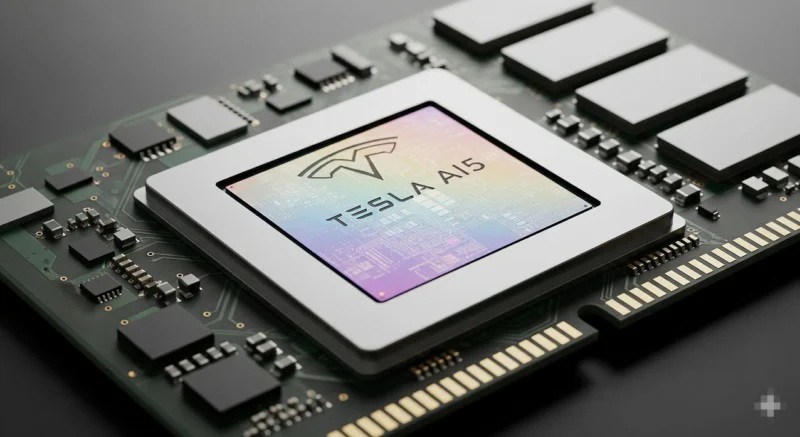
Elon Musk has taken his most direct step yet toward controlling the supply of computing power that underpins his expanding empire, outlining plans for a semiconductor facility in Austin that would be jointly run by Tesla and SpaceX, per Bloomberg.
The project, dubbed “Terafab,” is being pitched as a response to what Musk sees as a looming shortage of advanced chips as demand accelerates across artificial intelligence, robotics, and space systems.
“We either build the Terafab or we don’t have the chips, and we need the chips, so we build the Terafab,” he said, reducing a complex industrial undertaking to a blunt supply constraint.
Register for Tekedia Mini-MBA edition 20 (June 8 – Sept 5, 2026).
Register for Tekedia AI in Business Masterclass.
Join Tekedia Capital Syndicate and co-invest in great global startups.
Register for Tekedia AI Lab.
At its core, the plan is an attempt to do in semiconductors what Musk has done in electric vehicles and rockets: compress supply chains, internalize critical components, and move faster than incumbents. The difference is that chipmaking is far less forgiving.
Musk said the initial phase would involve an “advanced technology fab” capable of producing and testing a wide range of chips, before scaling into a larger facility. He has previously suggested the plant would target leading-edge nodes, including 2-nanometer chips, though he offered no timeline or cost estimate in his latest remarks.
Building a competitive semiconductor fab typically requires tens of billions of dollars, years of construction, and access to a tightly controlled ecosystem of suppliers, from lithography systems to specialty chemicals. Even established players struggle to bring new capacity online on schedule.

Tesla’s pivot toward autonomy, humanoid robotics, and AI-driven services, alongside SpaceX’s growing data and communications ambitions, is rapidly increasing its need for compute. Musk suggested existing suppliers, including Taiwan Semiconductor Manufacturing Company and Micron Technology, will not be able to meet that demand at the pace he expects.
That concern is widely shared, though few have responded by attempting to build their own fabs. The capital intensity and technical barriers have kept most technology companies reliant on specialist manufacturers. Musk is effectively proposing to collapse that model, bringing design, production, and deployment under one umbrella.
The chips themselves would reflect that integration. One category would be optimized for edge and inference workloads, powering Tesla’s vehicles, robotaxi platform, and its Optimus humanoid robots. The second would be high-performance processors designed for space, feeding into SpaceX’s longer-term plans for orbital computing.

Those plans are becoming more concrete. During the presentation, Musk unveiled a concept for compact AI data center satellites, each capable of around 100 kilowatts of power, with future iterations potentially reaching the megawatt scale.
“We expect future satellites to probably go to the megawatt range,” he said.
The implication is that computing infrastructure could eventually move beyond terrestrial data centers, a shift that would require not just new hardware, but an entirely different approach to power, cooling, and connectivity. Musk’s vision ties that infrastructure directly to his companies, with xAI expected to consume much of the output.
“The future I want to see: I want us to live long enough to see the mass driver on the moon,” Musk said, referring to the contraption that would launch satellites from the lunar surface, “because that’s going to be incredibly epic.”
But there is a financial dimension as well. SpaceX is preparing for a potential initial public offering that could raise tens of billions of dollars, capital that would be needed to fund both launch capacity and the infrastructure required for space-based computing.
Texas, meanwhile, stands to gain from the concentration of these efforts. The proposed fab would sit near Tesla’s existing operations in Austin, reinforcing the state’s growing role in advanced manufacturing. Governor Greg Abbott was present at the announcement, a reminder of how aggressively states are competing to attract semiconductor investment.
Still, the gap between ambition and execution remains wide – meaning the plans are not coming to life anytime soon.
The semiconductor industry is defined by precision and incremental progress, not speed. Leading-edge manufacturing depends on a handful of specialized firms, including ASML for extreme ultraviolet lithography, and a network of suppliers that has taken decades to develop. Entering that ecosystem at scale is a formidable challenge, even with significant capital.
Musk’s track record offers mixed signals. His companies have delivered breakthroughs in areas once thought impractical, particularly in reusable rockets and electric vehicles. At the same time, timelines have often slipped, and projects have required sustained capital injections before reaching viability.
Terafab sits at the intersection of those tendencies. It is both a logical extension of Musk’s push toward vertical integration and one of the most technically demanding bets he has made.
The broader context is an industry under strain. Demand for compute is rising sharply, driven by AI training, inference, and data processing. Supply, while expanding, remains constrained by the complexity of scaling advanced manufacturing. Governments are pouring subsidies into domestic chip production, but results will take years to materialize.
Musk’s conclusion is that waiting is not an option.
“That rate is much less than we’d like,” Musk said.