

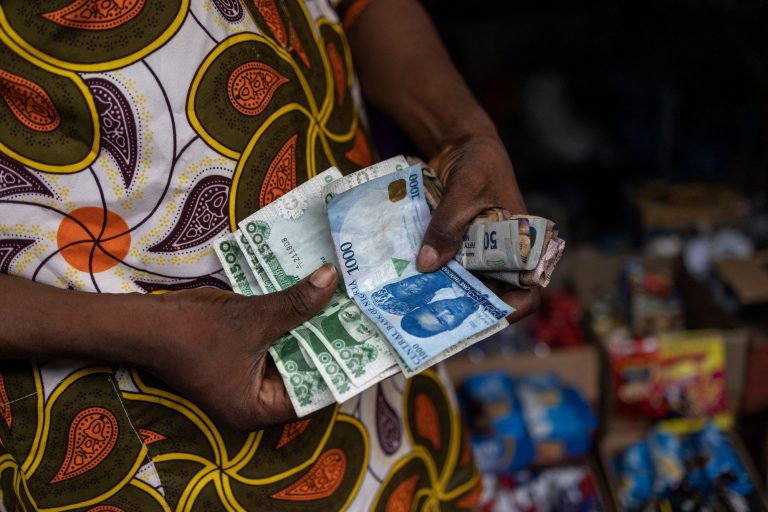
Nigeria’s naira, long at the heart of policy debates, has now been declared the most overvalued currency in Africa by Renaissance Capital Africa (Rencap), which estimates it is overpriced by as much as 30% when measured against the real effective exchange rate model (REER).
The investment house’s findings land at a delicate moment for the economy. The exchange rate is trading at one of its strongest levels in more than a year, supported by external reserves that recently touched $41 billion. Yet, beneath this appearance of stability, the report argues, lies a distortion that could eventually unwind with painful consequences.
A clash over inflation data
Rencap points to Nigeria’s peculiar inflation story as a major contributor to the mispricing of the naira. The country has been experiencing food price deflation throughout 2025, the firm says, which means the official inflation numbers are overstating reality.
Register for Tekedia Mini-MBA edition 20 (June 8 – Sept 5, 2026).
Register for Tekedia AI in Business Masterclass.
Join Tekedia Capital Syndicate and co-invest in great global startups.
Register for Tekedia AI Lab.
The National Bureau of Statistics (NBS) reported inflation above 20% in August. But Rencap’s models suggest inflation was already closer to 12% in October, headed for 10% in December, and potentially as low as 6% in 2026.
The discrepancy stems from Nigeria’s updated Consumer Price Index (CPI) basket, introduced in January 2025, which altered the weighting of items. While the update dragged headline inflation down from 34.8% in December 2024 to 24.48% in January 2025, Rencap argues the revisions created fresh distortions.
For instance, non-alcoholic beverages now account for 12% of the CPI basket — a heavier weight than transport at 11%, and nearly four times telecoms at just 3%. These anomalies, Rencap insists, have caused official CPI to drift away from actual price trends, leaving policymakers with faulty data.

The knock-on effect, according to Rencap, is that the Central Bank of Nigeria (CBN) has been “keeping policy excessively tight.” Despite inflation running closer to 10% in real terms, the policy rate remains at 27%. This places Nigeria’s real interest rate among the highest in the world at 17%. For comparison, Egypt’s real rate stands at 14%, while Argentina’s is just 6%.
Such a tight policy has, in Rencap’s view, engineered artificial stability in the naira. A mix of high interest rates, a relatively steady exchange rate, and a current account surplus has kept the currency anchored at levels that do not reflect its true value.
But stability, the report warns, is fragile. Rencap expects the naira to hold steady at around N1,400–N1,450 to the U.S. dollar through the end of 2025. The real risk lies ahead: once interest rates are eventually cut and credit growth resumes, imports will likely surge. That scenario could trigger a sharp 30% depreciation in the naira between 2026 and 2027.

The report arrives just as foreign portfolio investors are reassessing African markets. With global oil prices stuck in the $60–70 per barrel range and the dollar forecast to weaken, both Nigeria and Ghana are increasingly seen as attractive destinations for local debt.
Rencap notes the two economies are diverging in important ways. Nigeria, with President Bola Tinubu eyeing re-election in 2027, may see its central bank deliberately delay aggressive rate cuts until after the polls. This political calculation could prolong the naira’s artificial strength, keeping it supported in the near term even as fundamental pressures mount.
In short, while investors may be lured by Nigeria’s high yields and apparent currency stability, Rencap’s analysis paints a picture of fragility beneath the surface — an economy propped up by data distortions, political timing, and unusually high interest rates. When the props are removed, the naira could face its sternest test yet.
A history of questionable data
Beyond Rencap’s findings lies a broader debate about the credibility of Nigerian data itself. In recent years, agencies such as the NBS have faced increasing scrutiny over the accuracy of their figures. Critics accuse the bureau of publishing inflation numbers that understate the severity of price pressures in order to shield the government from backlash over economic policies.
Nigeria has a long history of contested economic data, particularly when it comes to growth and inflation. From the controversial GDP rebasing in 2014 that suddenly repositioned Nigeria as Africa’s largest economy, to persistent disputes over unemployment and poverty statistics, data credibility has repeatedly been questioned by analysts, investors, and even lawmakers.
Rencap’s latest critique flips the script. While NBS has often been accused of underreporting inflation, the investment firm now suggests official data may actually be overstating the rate. However, many have pointed to unabating high cost of living in defense of allegations of inaccurate data by NBS. Now, Rencap’s report has created conflicting narratives, deepening doubts over whether policymakers are working with reliable numbers.
Renaissance Capital Africa is a colonial institution controlled by Russians. Why did it leave Europe to come to Africa? This is the purpose, to undermine our economic trust and attack our government. Renaissance Capital said that the Nigerian Bureau of Statistics overestimated inflation, but why question the Bureau of Statistics hiding the actual inflation rate? The Russian ruble has plummeted by 200%. Let these white dogs get out of here
In fact, Renaissance Capital was originally doing business in Europe, but due to the company’s unprofessional and highly deceptive financial products, Europeans drove it away. It laid off a large number of employees and focused on the African market because they believed it was easier to conduct business here. This article is foolish as it simply combines interest rates, inflation, and exchange rates. Nigeria’s exports are surging, foreign exchange is clearer, imports have surged, and currency liquidity has increased. African governments must pay attention to Renaissance Capital and drive out White Dog Company