

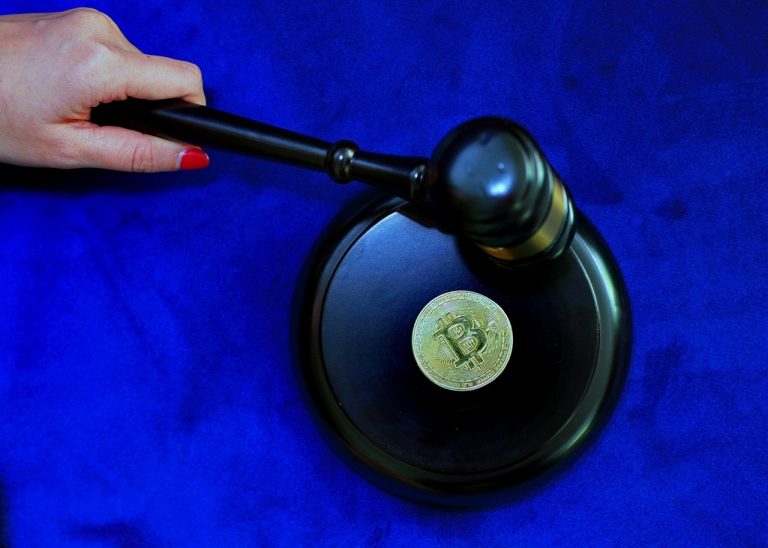
Nauru, the world’s smallest island nation with an area of 21 square kilometers and a population of about 12,500, passed legislation to become a hub for cryptocurrency, digital banking, and Web3 innovation. The law establishes the Command Ridge Virtual Asset Authority (CRVAA), an autonomous regulator tasked with overseeing virtual asset service providers (VASPs), including crypto exchanges, initial coin offerings, non-fungible tokens, lending, staking, yield farming, decentralized finance services, and stablecoin issuance.
The legislation defines cryptocurrencies as commodities, not securities, and excludes payment tokens from investment contract status, providing legal clarity for blockchain applications. This move formalizes crypto trading, which was previously legal but unregulated in Nauru. The CRVAA will enforce a licensing framework, ensuring compliance with international anti-money laundering and financial transparency standards, aligning with Financial Action Task Force (FATF) recommendations.
Nauru’s President David Adeang described the law as a “leap toward economic modernization,” aiming to diversify revenue streams and bolster resilience against economic and environmental vulnerabilities, as highlighted by Nauru’s listing on the United Nations Multidimensional Vulnerability Index. Minister for Commerce and Foreign Investment Maverick Eoe emphasized that the framework positions Nauru competitively with leading digital economies, potentially attracting investment and creating local jobs.
Register for Tekedia Mini-MBA edition 20 (June 8 – Sept 5, 2026).
Register for Tekedia AI in Business Masterclass.
Join Tekedia Capital Syndicate and co-invest in great global startups.
Register for Tekedia AI Lab.
The tax system enhances Nauru’s appeal: no corporate income tax, VAT, or capital gains tax on international income for crypto firms, distinguishing it from jurisdictions with higher fiscal burdens. However, as an offshore jurisdiction, Nauru faces challenges with international banking access, requiring VASPs to undergo rigorous verification to prove compliance and reliability.
While the legislation signals ambition, Nauru’s small scale and history as a tax haven raise concerns about regulatory capacity and potential misuse. The nation’s past, including unregulated financial activities and scrutiny over money laundering, underscores the need for robust oversight. The global crypto community is watching closely, as Nauru’s move could inspire similar frameworks in other small nations, though its success hinges on transparent implementation and international credibility.
Nauru’s move to become a crypto hub through the Command Ridge Virtual Asset Authority (CRVAA) and its new legislation has several implications, both for the nation and the global crypto landscape. Nauru, heavily reliant on phosphate mining (now depleted) and foreign aid, aims to diversify its economy. Attracting crypto firms could generate licensing fees, create jobs (e.g., in compliance or tech), and boost GDP. The tax-free regime (no corporate income tax, VAT, or capital gains tax on international income) is a strong incentive for firms.

The small population (12,500) and limited infrastructure may constrain scalability. Over-reliance on crypto could expose Nauru to the sector’s volatility, as seen in past crypto market crashes (e.g., 2022’s $2 trillion market drop). By defining cryptocurrencies as commodities and excluding payment tokens from securities, Nauru offers regulatory clarity, appealing to firms frustrated by stricter regimes (e.g., U.S. SEC’s approach). Its alignment with FATF standards may build trust with global regulators.
Nauru competes with established crypto hubs like Singapore, Dubai, and the Cayman Islands, which have better infrastructure and banking access. Its history as a tax haven could deter firms wary of reputational risks. Compliance with FATF anti-money laundering rules could improve Nauru’s global standing, potentially easing banking restrictions faced by offshore jurisdictions.
Nauru’s past scrutiny for money laundering (e.g., 1990s “shell bank” scandals) may invite skepticism. Weak enforcement by the CRVAA could lead to sanctions or blacklisting by bodies like the OECD or EU. Revenue from crypto could fund climate resilience projects, critical for Nauru given its vulnerability to sea-level rise (per the UN Multidimensional Vulnerability Index).

Crypto mining, if pursued, is energy-intensive, and Nauru’s limited renewable energy capacity could strain resources or increase emissions, contradicting environmental goals. Success could inspire other small island nations (e.g., Tuvalu, Kiribati) to adopt similar frameworks, leveraging digital economies to offset geographic and economic limitations.
Failure or regulatory scandals could deter such experiments, reinforcing perceptions of small states as high-risk jurisdictions. Nauru sees crypto as a way to bypass traditional economic barriers, akin to how mobile phones leapfrogged landlines in developing nations. However, its small workforce and limited tech infrastructure (e.g., internet reliability) may hinder effective regulation and service delivery. Training locals for high-skill roles in crypto compliance or blockchain development will take time.
The clear legal framework (crypto as commodities, not securities) positions Nauru as forward-thinking. Yet, its history as a tax haven and past FATF gray-listing (2000s) create a trust gap. Firms may hesitate if Nauru struggles to secure correspondent banking relationships, a common issue for offshore centers. The tax-free regime is a draw, but it limits direct fiscal gains. Nauru will rely on licensing fees and indirect economic activity, which may not suffice if few firms relocate or if global crypto adoption slows (e.g., due to regulatory crackdowns elsewhere).
Nauru taps into the growing crypto market (global market cap ~$2.5 trillion in 2025). However, crypto’s volatility (e.g., Bitcoin’s 30% swings in 2024) and potential for fraud (e.g., $3.7 billion in crypto scams in 2022) pose risks. A major scandal involving a Nauru-based firm could cripple the initiative. Nauru asserts economic independence through this legislation, reducing reliance on aid (e.g., from Australia). But larger nations (e.g., U.S., EU) may pressure Nauru to tighten regulations if it becomes a haven for illicit finance, as seen with Panama post-Panama Papers.
Proponents see Nauru’s law as empowering financial inclusion and innovation. Critics fear it could enable money laundering or tax evasion, especially given Nauru’s limited enforcement capacity. Nauru’s regulated approach contrasts with DeFi’s ethos of bypassing intermediaries, creating tension for firms navigating both worlds.
Nauru’s crypto legislation is a bold gamble to reshape its economy, leveraging regulatory clarity and tax incentives to attract global firms. It could pioneer a model for small nations, but success depends on robust CRVAA enforcement, international trust, and navigating crypto’s volatility. The divide between opportunity and risk underscores the high stakes: Nauru could either become a niche digital hub or face reputational and economic setbacks if oversight falters.