

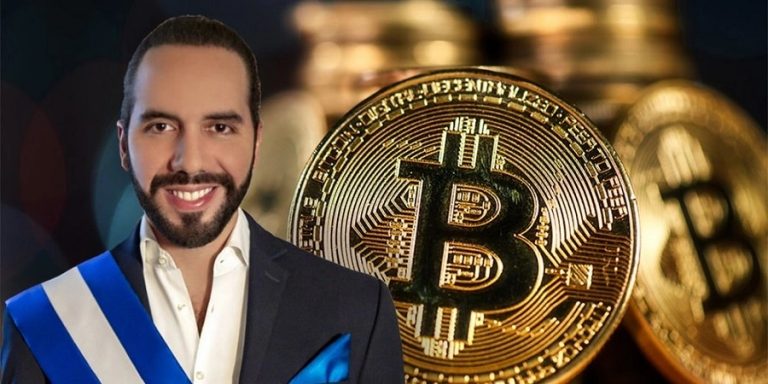
El Salvador’s President Nayib Bukele is reportedly scheduled to visit the White House in April 2025 to meet with U.S. President Donald Trump, marking his first formal visit as a Western Hemisphere leader during Trump’s current term. The visit, confirmed by Bukele’s press secretary Ernesto Sanabria and reported by Bloomberg follows El Salvador’s cooperation with the U.S. on immigration enforcement, notably Bukele’s agreement to detain hundreds of alleged Venezuelan gang members deported from the U.S. While no official date is set and plans could shift, Bukele has playfully hinted at bringing “several cans of Diet Coke” for Trump, reflecting their cordial rapport.
This meeting builds on prior interactions, including a January 23, 2025, call where the leaders discussed tackling illegal immigration and transnational gangs like Tren de Aragua. Bukele’s pro-Bitcoin stance—pioneering El Salvador’s national Bitcoin reserve, now at 6,130.18 BTC (over $512 million)—and Trump’s recent support for a U.S. Bitcoin reserve (holding roughly 200,000 BTC) suggest cryptocurrency could be a discussion point, though no agenda has been confirmed. Bukele’s White House visit underscores a deepening U.S.-El Salvador partnership, blending security, migration, and potentially financial innovation, against the backdrop of his controversial yet popular “iron-fist” governance style.
President Nayib Bukele’s scheduled White House visit in April 2025 to meet with President Donald Trump could have significant impacts across diplomatic, economic, and geopolitical spheres. The visit signals a warming relationship, driven by shared priorities like immigration control and gang suppression. Bukele’s cooperation on detaining deported Venezuelan gang members aligns with Trump’s hardline border security stance, potentially deepening bilateral trust and collaboration.
Register for Tekedia Mini-MBA edition 20 (June 8 – Sept 5, 2026).
Register for Tekedia AI in Business Masterclass.
Join Tekedia Capital Syndicate and co-invest in great global startups.
Register for Tekedia AI Lab.
A White House invitation could bolster Bukele’s international standing, despite criticism of his authoritarian tendencies (e.g., mass incarcerations, constitutional overhauls). U.S. endorsement might mute some human rights critiques from Western allies, enhancing his domestic and regional influence. Success here could encourage other Central American leaders to align with U.S. policies on migration and security, reshaping dynamics in the Northern Triangle (El Salvador, Guatemala, Honduras) and beyond.
With El Salvador holding 6,130.18 BTC and the U.S. owning around 200,000 BTC (seized assets Trump has vowed to retain as a reserve), cryptocurrency could emerge as a focal point. A joint push for Bitcoin adoption or integration—say, Trump endorsing Bukele’s model—might accelerate global acceptance, boosting El Salvador’s economy and its $512 million Bitcoin stash. Closer ties could unlock U.S. investment in El Salvador, particularly in infrastructure or energy (e.g., Bukele’s “Volcano Bonds” for geothermal Bitcoin mining). However, El Salvador’s small GDP ($32 billion) limits its economic leverage compared to U.S. priorities elsewhere.
With 25% of El Salvador’s GDP from U.S.-based remittances, a friendly U.S. stance ensures this lifeline remains secure, especially if Trump’s immigration policies ease deportations of Salvadoran migrants. Bukele’s pivot toward the U.S. could weaken China’s influence in Central America, where Beijing has courted nations with loans and infrastructure (e.g., Honduras’ recent switch from Taiwan). A U.S.-El Salvador Bitcoin alliance might also challenge Russia’s crypto experiments amid sanctions. Joint efforts against Tren de Aragua and MS-13 could disrupt transnational crime networks, affecting Venezuela (a Tren de Aragua base) and pressuring Maduro’s regime indirectly.

This aligns with Trump’s anti-socialism rhetoric, potentially escalating U.S.-Latin America tensions. Bukele’s high approval ratings (over 80%) and Trump’s backing could position El Salvador as a regional leader, overshadowing neighbors like Guatemala or Honduras. His “cool dictator” persona might inspire populist movements elsewhere, for better or worse. The visit could further cement Bukele’s grip on power, framing him as a global player and justifying his security-focused policies (e.g., jailing 1% of the population). Critics, already sidelined, may struggle to counter this narrative. If Bitcoin talks falter or U.S. support wanes, El Salvador’s heavy bet on BTC (and its $1.4 billion IMF debt talks) could backfire, leaving its economy exposed to crypto volatility.
Hosting Bukele plays to Trump’s base, showcasing action on immigration and gang violence while flirting with crypto enthusiasts—a growing voter bloc. The Diet Coke quip adds a populist, relatable touch. Success could push Trump’s Bitcoin reserve idea forward, influencing U.S. financial policy and debates over digital assets in a potential 2025 bull market. Human rights groups may decry U.S. coziness with Bukele, straining relations with progressive allies or NGOs, though Trump’s administration is unlikely to prioritize such concerns.