

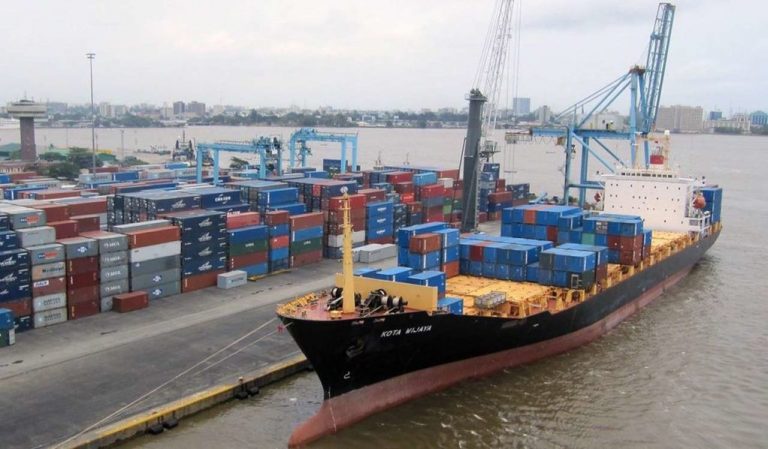
Nigeria’s push to diversify its economy away from oil dependency gained fresh momentum in the first quarter of 2025, with non-oil exports surging by nearly 25% compared to the same period last year.
According to the Nigeria Export Promotion Council (NEPC), the country recorded $1.791 billion in non-oil exports between January and March 2025 — up from $1.436 billion in Q1 2024.
The Council’s Director-General, Dr. Nonye Ayeni, revealed this during the public presentation of the First Quarter Progress Report on Non-Oil Export Performance in Abuja on Monday. She described the uptick as a promising signal of growth in Nigeria’s export diversification agenda.
Register for Tekedia Mini-MBA edition 20 (June 8 – Sept 5, 2026).
Register for Tekedia AI in Business Masterclass.
Join Tekedia Capital Syndicate and co-invest in great global startups.
Register for Tekedia AI Lab.
“In the first quarter of 2025, a total of 197 distinct products were exported,” Ayeni said, a clear improvement from the 162 products recorded in Q1 2024. The list includes manufactured and semi-processed goods, industrial extracts, and a wide range of agricultural commodities.
Cocoa and its derivatives — cocoa butter, cocoa liquor, and cocoa cake — were the dominant exports, making up 45.02% of the total. Urea/fertilizer followed with 19.32%, while cashew nuts accounted for 5.81%. Other key products included sesame seeds, soya bean meal, rubber, gold dore, aluminum ingots, and copper ingots.
The volume of exports also rose sharply. According to the NEPC, Nigeria shipped out 2.416 million metric tons of non-oil products in the quarter — a staggering 243.44% increase from the 1.937 million metric tons reported in Q1 2024. Dr. Ayeni said the leap indicates that more stakeholders are tapping into the country’s expanding non-oil export landscape.

Corporate exporters such as Indorama Eleme Fertilizer and Chemical Ltd, Starlink Global and Ideal Ltd led the charge, contributing 12.07% and 10.00% respectively of the total export value.
Boost from PAPSS and Regional Integration
While the export gains highlight growing confidence in Nigeria’s non-oil sector, they also reflect broader efforts by the Bola Tinubu administration to embed Nigeria more firmly into regional and continental trade frameworks.
One of the key pillars designed to support this effort is the Pan-African Payment and Settlement System (PAPSS), a cross-border financial infrastructure designed to facilitate payments in local currencies across African nations. PAPSS allows businesses to settle transactions efficiently, reduce costs, and mitigate currency risks by eliminating the need for third-party currencies like the U.S. dollar in intra-African trade.

The NEPC report noted that Nigeria’s exports to 10 ECOWAS countries grew significantly — reaching $63.060 million in Q1 2025, an increase of 223.10% from the $19.517 million recorded in the same period last year. Exports to other African countries stood at $32.732 million, representing 1.83% of total non-oil exports.
Officials believe there will be improvement in the next quarter due to the PAPSS initiative, which has been promoted as a major lever under the African Continental Free Trade Area (AfCFTA). Launched by the African Export-Import Bank (Afreximbank) in collaboration with the African Union and AfCFTA Secretariat, PAPSS aims to harmonize trade payments, improve liquidity, and strengthen economic integration across the continent.
Through PAPSS, Nigeria is positioning itself to capitalize on AfCFTA’s goal of creating a single market of over 1.3 billion people with a combined GDP of over $3 trillion. In practical terms, this could mean faster transactions, lower banking fees, and improved competitiveness for Nigerian exporters within the continent.
Dr. Ayeni emphasized that the NEPC is working closely with the Federal Ministry of Industry, Trade and Investment to drive the implementation of export-focused initiatives. This includes scaling up trade facilitation, simplifying export documentation, improving logistics infrastructure, and expanding support to small and medium-scale exporters.
In January, the NEPC reported the highest annual non-oil export value in its 49-year history — rising from $4.517 billion in 2023 to $5.456 billion in 2024, a year-on-year increase of 20.77%. The Q1 2025 numbers suggest that the country may be on course to surpass last year’s figures if the current momentum is sustained.
“The Council’s strategy aligns with the national agenda to diversify Nigeria’s economy, reduce over-reliance on oil revenues, and build a more sustainable, export-driven economy,” Ayeni said.
Analysts say that by coupling export growth with tools like PAPSS and strategic engagement with AfCFTA, Nigeria is gradually beginning to shift the structure of its trade relationships — from oil-centric exports to a broader portfolio of value-added products across multiple African markets.