

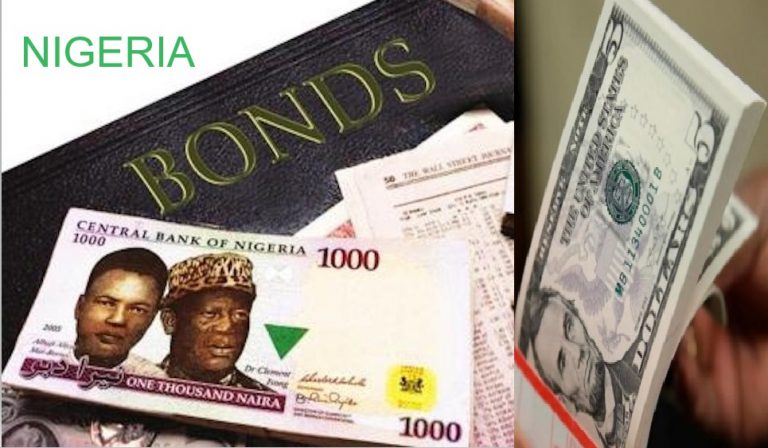
Nigeria has returned to the international debt market with a strong showing, raising $2.25 billion through a dual-tranche Eurobond sale on Wednesday despite rising global tensions and threats from U.S. President Donald Trump of potential military action.
The successful sale marks Nigeria’s first major return to the Eurobond market in nearly two years and underscores a broader resurgence in emerging market borrowing, as global investors pile into high-yield assets amid easing global financing conditions.
According to market data seen by Reuters, Nigeria’s ten-year and twenty-year bonds were priced at 8.625% and 9.125%, respectively—both below initial price guidance. The offering was oversubscribed, signaling strong investor confidence in Nigeria’s fiscal direction despite the country’s economic strains and Trump’s warning on Sunday that the United States could take military action if Nigeria failed to stop attacks on Christians.
Register for Tekedia Mini-MBA edition 20 (June 8 – Sept 5, 2026).
Register for Tekedia AI in Business Masterclass.
Join Tekedia Capital Syndicate and co-invest in great global startups.
Register for Tekedia AI Lab.
Market participants appeared largely unfazed by the geopolitical noise. Analysts said investors were instead focusing on Nigeria’s recent fiscal and monetary reforms under President Bola Tinubu, who has dismantled costly fuel subsidies and allowed the naira to float more freely—two moves that have been painful for households but applauded by financial markets.
The deal adds to a wave of frontier-market issuances this year, as borrowing costs fall sharply from the highs seen during the global inflation and rate-tightening cycle. According to JPMorgan data, only four emerging market countries now have bond spreads above 1,000 basis points over U.S. Treasuries—the level generally seen as a barrier to affordable borrowing. The narrowing spreads have drawn several African nations back to the Eurobond market, including the Congo Republic, Angola, and Kenya.
Congo Republic, which carries one of the lowest credit ratings on the continent at CCC+, also issued its first Eurobond in nearly two decades on Wednesday—an indication of how eager investors are to chase yields even in riskier markets.

Thys Louw, a portfolio manager at London-based asset manager Ninety One, said the rebound was long overdue.
“African frontier borrowers had issued very little external debt since 2022, helping support spreads and investor demand,” he noted. “They’ve been so reliant on local debt markets, and this is true across Africa, that it now starts to make sense to start to diversify funding sources once again at these yield levels.”
The broader context is a global surge in emerging market debt issuance. Data from JPMorgan and other banks show that dollar-denominated bond sales by developing economies have already surpassed the record volumes seen during the pandemic years. Analysts say that for countries like Nigeria, the window for accessing affordable foreign capital could be brief, as markets remain sensitive to further rate decisions by the U.S. Federal Reserve.

The proceeds from the $2.25 billion sale are expected to help Nigeria shore up reserves and support government spending at a time of heavy fiscal pressure. While Tinubu’s reforms have improved Nigeria’s credit perception, they have also unleashed inflation, which rose to record highs this year. The government is betting that investor confidence will strengthen as the reforms take hold and growth stabilizes.
Louw added that other African countries, including Egypt, Ivory Coast, South Africa, and Benin, may soon follow Nigeria’s lead with new issuances.
He indicated that at these yield levels, it’s an opportune time for well-managed sovereigns to test the market again.
Nigeria’s return to the Eurobond market appears to have achieved what Tinubu’s administration sought: a show of investor faith that Africa’s fourth-largest economy remains creditworthy—and open for business.