

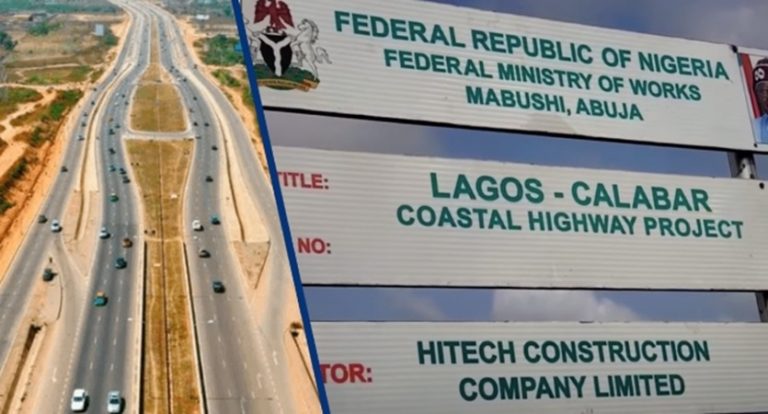
The Nigerian Government is making significant changes to the Lagos-Calabar Coastal Highway, opting for a redesigned route that eliminates nearly 90% of planned bridges across key states, including Ondo, Delta, Rivers, Akwa Ibom, and Bayelsa.
This major shift in strategy is aimed at reducing construction costs while maintaining the project’s economic and infrastructural impact.
Minister of Works David Umahi, speaking at a stakeholders’ engagement meeting in Lagos on Sunday, explained that instead of building costly bridges over water bodies, the government is redirecting the highway to upland areas. This approach is expected to save billions of naira, ensuring that the road remains both cost-effective and profitable.
Register for Tekedia Mini-MBA edition 20 (June 8 – Sept 5, 2026).
Register for Tekedia AI in Business Masterclass.
Join Tekedia Capital Syndicate and co-invest in great global startups.
Register for Tekedia AI Lab.
Why the Redesign?
Originally, the Lagos-Calabar Coastal Highway included multiple bridges, some stretching as long as three kilometers, to accommodate the network of rivers, creeks, and wetlands across the coastal corridor. However, Umahi revealed that these bridges posed a significant financial challenge.
“For the sections of Ondo, the section of Delta, the section of Port Harcourt, the continuous section in Akwa Ibom and Bayelsa, we are confronted with a lot of bridges, some as long as three kilometers. We don’t want to do that. That is going to cost us a fortune,” Umahi said.
The decision to shift the road inland is not just about saving money; it is also about ensuring that the highway is built efficiently, maintained sustainably, and generates a return on investment. By reducing the number of bridges, the government aims to simplify construction, reduce maintenance costs, and speed up completion timelines.

Why Was This Not Done in Lagos?
The decision to redesign the highway in other states has led many Nigerians to ask a critical question: Why was a similar approach not taken in Lagos, where businesses worth billions of naira were destroyed?
While Umahi framed the redesign as a cost-saving measure, many have asked the above question about Lagos, where the government demolished thriving multibillion-dollar businesses to make way for the project.
This contradiction has raised concerns over the government’s priorities, especially given that there are other critical but neglected road projects, such as the East-West Road, that many believe should have been prioritized over the Lagos-Calabar Coastal Highway. The East-West Road, which has been in a state of disrepair for years, is a vital transport corridor for the oil-rich Niger Delta region.

The most prominent casualty of the highway project in Lagos was the Landmark Beach Resort, a popular tourism hub that was completely demolished despite multiple appeals from business owners, stakeholders, and the public.
The Landmark Beach Resort, located along the Lekki coastline, housed a range of commercial activities, including beachfront restaurants, bars, event spaces, and leisure facilities. It was a major tourist attraction, generating significant revenue and employment opportunities. However, the government insisted on demolishing it to ensure that the highway maintained its coastal alignment—a justification that now appears contradictory in light of the recent redesign decisions.
This double standard has sparked criticism, with many believing that the government’s decision to rush into demolitions in Lagos without exploring alternative routes has ethnic sentiments.
Is It Still a Coastal Road?
With the latest redesign, a significant portion of the highway will no longer follow a coastal route, effectively making it an upland highway rather than a true coastal road. This has reignited debate over the project’s purpose. Many have noted that if the government abandoned its coastal alignment, it should not have embarked on the project in the first place.
One of the most crucial sections of the highway is the Lekki Free Zone, where an 80-meter-span bridge has been designed to facilitate truck movement around the Dangote Refinery and other major industrial hubs. This section is expected to significantly ease logistics for businesses operating in the zone, ensuring that goods and raw materials can be transported seamlessly and efficiently.
Umahi assured stakeholders that consultations had been completed, and all necessary approvals—including land revocation and enumeration—had been signed off by the Lagos State Government. This clearance paves the way for uninterrupted construction in the region.
The Government’s Economic Justification
Despite the growing criticism, the government insists that the project is more than just a road and bridge initiative—it is an economic investment corridor designed to spur commercial activities, tourism, and renewable energy projects such as windmill power generation.
“This is beyond roads and bridges. It is an investment. Along the corridor, we’re going to have a lot of commercial activities. Tourism is going to grow in a very dignified and intensified manner. We’re going to have windmill energy. This coastal highway is going to be connected to the existing roads—a lot of them, we inherited,” he said.
Balancing Cost, Efficiency, and Economic Impact
The N15 trillion Lagos-Calabar Coastal Highway remains one of the most ambitious infrastructure projects in Nigeria. While cutting down bridge construction is expected to drastically lower costs, the government still faces the challenge of funding the massive project. Concerns have been raised over budget transparency, the potential for delays, and whether the inland realignment could impact communities or businesses along the coast.
Many Nigerians are now wondering if the project will face the same delays and budget overruns that have plagued previous infrastructure projects.
However, the Federal Government insists that its approach will ensure the long-term viability of the project, making it a critical driver of national development.