

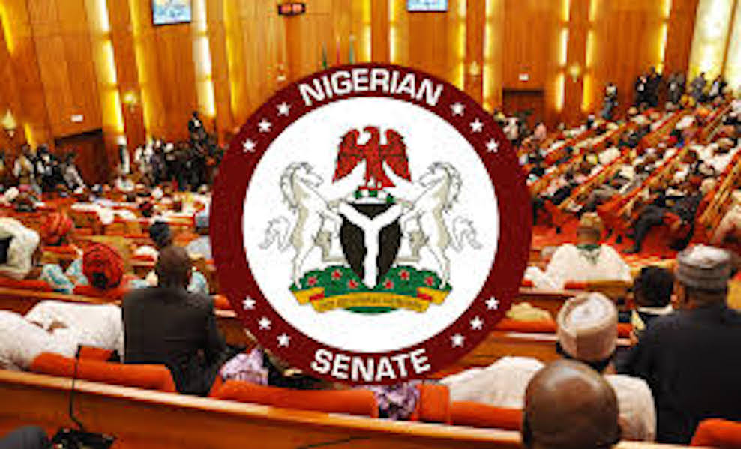
The Nigerian Senate on Tuesday passed for a second reading a Bill seeking to amend the Nigeria Data Protection Act, 2023, to mandate multinational social media companies to establish physical offices within Nigeria.
The proposed legislation, titled “A Bill for an Act to Alter the Nigeria Data Protection Act, 2023, to Mandate the Establishment of Physical Offices within the Territorial Boundaries of the Federal Republic of Nigeria by Social Media Platforms, and for Related Matters, 2024” (SB. 648), was sponsored by Senator Ned Munir Nwoko (Delta North).
The Bill was read for the first time on November 21, 2024.
Register for Tekedia Mini-MBA edition 20 (June 8 – Sept 5, 2026).
Register for Tekedia AI in Business Masterclass.
Join Tekedia Capital Syndicate and co-invest in great global startups.
Register for Tekedia AI Lab.
Leading the debate, Nwoko emphasized the importance of the Bill in protecting Nigeria’s digital sovereignty, boosting the economy, and ensuring better regulation of online platforms. He noted that despite Nigeria being one of the largest social media user bases globally, platforms such as Facebook, X (formerly Twitter), Instagram, YouTube, and TikTok do not maintain physical offices in the country.
“Nigeria ranks first in Africa and second globally in daily social media usage, yet these multinational companies operate here without any physical presence,” Nwoko said. “This creates a gap in addressing regulatory concerns, managing content policies, and building local partnerships.”
The lawmaker outlined three key concerns arising from the absence of physical offices for these platforms: limited local representation, missed economic opportunities, and difficulty in legal redress.

“The lack of a local presence creates a disconnect between the platforms and their Nigerian user base,” he said. “Resolving user complaints, addressing regulatory concerns, or managing content moderation issues specific to Nigeria often takes longer due to the geographical and cultural distance.”
Nwoko also highlighted the economic impact, stating, “Economically, it denies Nigeria the benefits of job creation in areas such as customer service, content moderation, legal compliance, and marketing. Imagine the thousands of young Nigerians who could be employed by these companies, gaining valuable skills and contributing to our economy.”
He further stressed the legal implications, arguing that “without physical offices in Nigeria, enforcing data protection laws, resolving disputes, and safeguarding user rights becomes a complex process. This Bill seeks to simplify this process by ensuring that these platforms are physically present to respond to the unique needs of their Nigerian users and comply with our laws.”

However, this is not the first time Nigeria has attempted to compel social media platforms to establish offices in the country. Under former President Muhammadu Buhari, the government made similar moves, widely regarded then as an attempt to stifle free speech. The most notable incident was the 2021 ban on Twitter, following the platform’s removal of a tweet by Buhari that was deemed to violate its policies. The government justified the ban on the grounds of national security, but it was seen as a punitive measure against dissenting voices.
Digital rights advocates have criticized the new legislative push, noting that it is just another attempt to control social media and silence critics. Citing the Twitter ban and various crackdowns on the press, many note that this government, like the previous one, is not comfortable with a free and open digital space.
Additionally, the Bill proposes that all bloggers operating in Nigeria must have a verifiable office in any of the country’s capital cities and belong to a recognized national association of bloggers headquartered in Abuja. Nwoko said this measure would enhance professionalism and accountability in the digital media space.
Free speech advocates have pointed to a pattern, noting that every time the government feels challenged by the media, whether traditional or digital, they introduce regulations to curtail its reach. Against this backdrop, this Bill, while framed as an economic and security measure, is believed to be a ploy by the government to enforce compliance from tech companies in a way that limits free expression.
The Bill was unanimously supported by senators.
Senate President Godswill Akpabio acknowledged the debate and stated, “This Bill is not about censorship but about ensuring that Nigeria benefits economically from the vast digital space it helps sustain. It will also improve regulatory oversight and create jobs for our people.”
The Bill was thereafter referred to the Senate Committee on ICT and Cyber Security for further legislative action.