

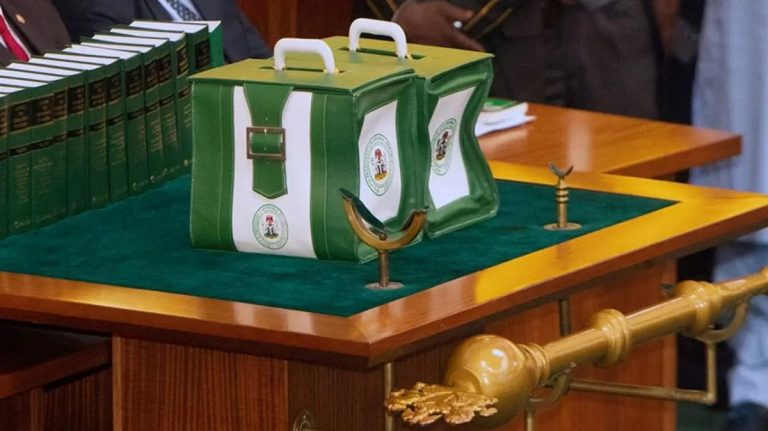
The National Assembly has approved the extension of the 2024 Budget’s lifespan to June 2025, a decision aimed at ensuring the continuity of fiscal operations and the uninterrupted execution of critical government projects.
The announcement was made by the President of the Senate, Godswill Akpabio, during a joint session of the National Assembly where President Bola Ahmed Tinubu presented the 2025 Appropriation Bill.
This extension, widely seen as a strategic move to accommodate the government’s reform agenda, has sparked debate among economists and fiscal analysts, some of whom argue that running two budgets concurrently could complicate the nation’s fiscal framework.
Register for Tekedia Mini-MBA edition 20 (June 8 – Sept 5, 2026).
Register for Tekedia AI in Business Masterclass.
Join Tekedia Capital Syndicate and co-invest in great global startups.
Register for Tekedia AI Lab.
In his opening remarks, Senator Akpabio praised President Tinubu for his bold reforms, describing them as pivotal steps toward addressing Nigeria’s economic challenges and laying the groundwork for sustainable development. He highlighted the administration’s legislative initiatives, including the Tax Reform Bill and the Nigerian Revenue Service Establishment Bill of 2024, as evidence of Tinubu’s commitment to a prosperous and technologically advanced Nigeria.
Akpabio asserted that these measures were necessary for modernizing the country’s fiscal policies and aligning them with contemporary realities.
The Senate President emphasized the need for accountability in the budget process, urging Ministries, Departments, and Agencies (MDAs) to take their roles in budget defense seriously. He warned that the National Assembly would not tolerate delays or non-compliance by MDAs, pledging decisive action against any that fail to appear for budget defense sessions.

Details of the 2025 Budget Proposal
Tinubu presented an N47.9 trillion budget proposal for 2025, highlighting allocations to critical sectors, a significant deficit, and ambitious macroeconomic targets. Defense and Security received the largest share of the budget, amounting to N4.91 trillion, underscoring the government’s focus on addressing Nigeria’s pervasive security challenges.
Infrastructure was allocated N4.06 trillion, in a show of the administration’s seeming commitment to tackling the country’s infrastructural deficits.
Education received N3.5 trillion, emphasizing the importance of human capital development, while N2.4 trillion was earmarked for Health to strengthen Nigeria’s struggling healthcare system.

Debt servicing remained a significant concern, with N15.81 trillion allocated to meet the country’s debt obligations. This represents a substantial portion of the budget, further highlighting Nigeria’s mounting fiscal challenges. The budget proposal also included a projected revenue of N34.8 trillion, leaving a deficit of N13 trillion, which will be financed through borrowing and other sources.
Inflation and Exchange Rate Projections
Tinubu projected a decline in Nigeria’s inflation rate from 34.3% to 15% by the end of 2025, alongside an improvement in the exchange rate from N1700/$ to N1400/$. These projections are seen as ambitious, with analysts noting that their realization will depend on the success of ongoing reforms and broader macroeconomic stability.
Economists Criticize Concurrent Budgets
Economists have warned that such overlap might lead to inefficiencies in project execution and undermine transparency in public expenditure. They contend that this could lead to inefficiencies in project funding and implementation, as resources might be spread too thin or mismanaged due to competing priorities.
Analysts also expressed concerns about transparency, noting that tracking expenditures across two fiscal years could pose significant challenges for oversight bodies. They argue that while the extension might ensure the continuity of projects, it could also delay the initiation of new initiatives outlined in the 2025 Budget.
Debt Servicing and Other Concerns
The allocation of N15.81 trillion to debt servicing in the 2025 budget reflects the escalating burden of Nigeria’s public debt. Observers note that this level of debt servicing severely limits the government’s ability to fund development projects and social programs, effectively crowding out other critical expenditures. The budget deficit of N13 trillion further worsens concerns about Nigeria’s fiscal sustainability, with calls for more aggressive measures to boost revenue generation and reduce borrowing.
While the substantial allocation to defense and security highlights the government’s recognition of Nigeria’s ongoing security challenges, analysts argue that the impact of these funds depends on their efficient utilization. Nigeria’s fragile security situation remains a significant deterrent to foreign direct investment (FDI), with potential investors often citing the risks posed by widespread insecurity. Addressing this issue effectively could play a crucial role in reversing the country’s declining FDI inflows.
Although many are critical of the budget extension and 2025 proposals, others argue that the measures are necessary to support the Tinubu administration’s ambitious reform agenda. Akpabio expressed confidence that the reforms would yield significant benefits for the country’s economy and citizens.