

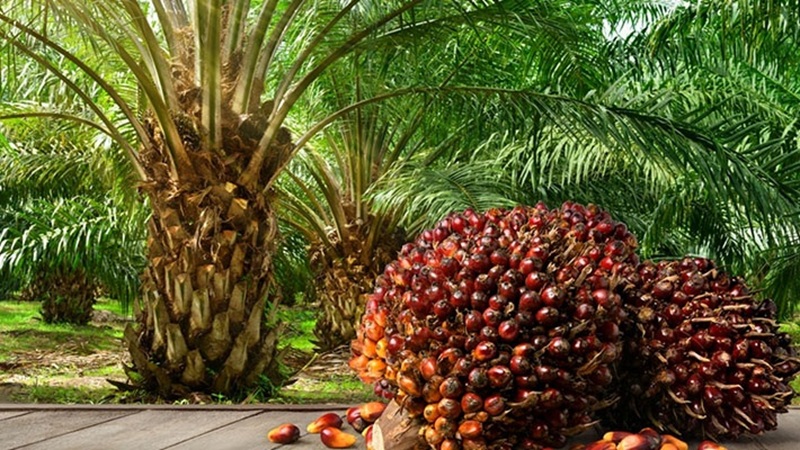
Nigeria’s palm oil output has climbed to 1.57 million tonnes in 2025, with rising profits at Okomu and Presco signaling renewed commercial momentum even as the country faces a supply gap of over 1 million tonnes.
Nigeria’s palm oil production has risen to 1.57 million tonnes in 2025, extending a five-year growth trend and reviving discussions about the country’s ambition to regain greater influence in the global vegetable oil market.
The production figures were disclosed during a mission visit to Abuja by the Council of Palm Oil Producing Countries, according to the News Agency of Nigeria. The visit reinforced ongoing efforts to deepen technical and policy collaboration between Nigeria and major palm oil-producing nations.
Register for Tekedia Mini-MBA edition 20 (June 8 – Sept 5, 2026).
Register for Tekedia AI in Business Masterclass.
Join Tekedia Capital Syndicate and co-invest in great global startups.
Register for Tekedia AI Lab.
Output has increased from 1.28 million tonnes in 2020 to 1.57 million tonnes in 2025, indicating gradual but consistent gains. However, domestic consumption has also risen — from 2.45 million tonnes to 2.61 million tonnes over the same period — leaving a supply deficit of more than 1 million tonnes that continues to be covered by imports.
Nigeria spends an estimated $600 million annually on palm oil imports despite oil palm being indigenous to West Africa, and the country once ranked among the world’s leading producers before Southeast Asian nations overtook it.
Corporate Earnings Reflect Sector Momentum
Beyond aggregate production figures, Nigeria’s progress is increasingly visible in the financial performance of its leading listed palm oil companies.

Okomu Oil Palm Company Plc reported a pre-tax profit of N87.3 billion for the year ended 31 December 2025, representing a 63.64% increase from N53.3 billion recorded in 2024, according to its unaudited financial statements. The sharp rise underscores improved pricing conditions, stronger operational efficiency, and sustained demand for locally produced palm oil.
Similarly, Presco Plc posted a profit before tax of N178.56 billion for the year ended December 31, 2025, marking a 57.3% increase from N113.53 billion in 2024, according to its unaudited financial statements filed with the Exchange on January 30, 2026.
The combined earnings performance of Okomu and Presco suggests that large-scale, vertically integrated producers are benefiting from improved yields, expanded plantation acreage, and stronger domestic pricing. Their profitability also reflects the protective effect of import gaps, which can support local producers when domestic demand outstrips supply.

While the performance of leading companies signals progress, Nigeria’s broader palm oil ecosystem remains dominated by smallholder farmers, who account for more than 80% of national output. Many operate with aging trees, limited access to improved seedlings, and outdated processing techniques, resulting in low yields and inefficiencies along the value chain.
CPOPC Secretary-General Izzana Salleh emphasized that the oil palm’s origins in West Africa present an opportunity for Nigeria to reclaim competitiveness through coordinated action among producing nations.
“Together, producing nations can shape a stronger, more coordinated global voice. One that protects farmer livelihoods, advances food security, and ensures balanced, development-oriented sustainability frameworks,” she said.
Dr. Alphonsus Inyang, President of the National Palm Produce Association of Nigeria, said full membership in CPOPC would enable Nigeria to access improved technologies, hybrid planting materials, and capacity-building programs that could raise the country’s Oil Extraction Ratio for both palm oil and palm kernel.
Improving yields per hectare remains central to narrowing the supply deficit. Replanting programs, mechanized mills, and stronger rural infrastructure are widely viewed as critical to lifting national output beyond incremental gains.
Balancing Growth With Self-Sufficiency Goals
Nigeria’s rise to 1.57 million tonnes represents measurable progress, yet consumption growth continues to absorb much of the increase. Achieving self-sufficiency would require either a significant acceleration in production or structural reforms that boost productivity across smallholder networks.
The strong financial results of Okomu and Presco indicate that commercial-scale operators are positioned to capitalize on favorable market dynamics. Their expansion strategies, reinvestment capacity, and access to capital markets could play a pivotal role in driving further sector consolidation and modernization.
At the same time, policymakers face the task of aligning trade policy, agricultural financing, and sustainability standards to reduce import dependence while ensuring competitiveness in global markets.
Nigeria’s palm oil revival is gathering pace, as reflected in both rising national output and record corporate earnings. But it remains a challenge to translate the momentum into a decisive narrowing of the supply gap.